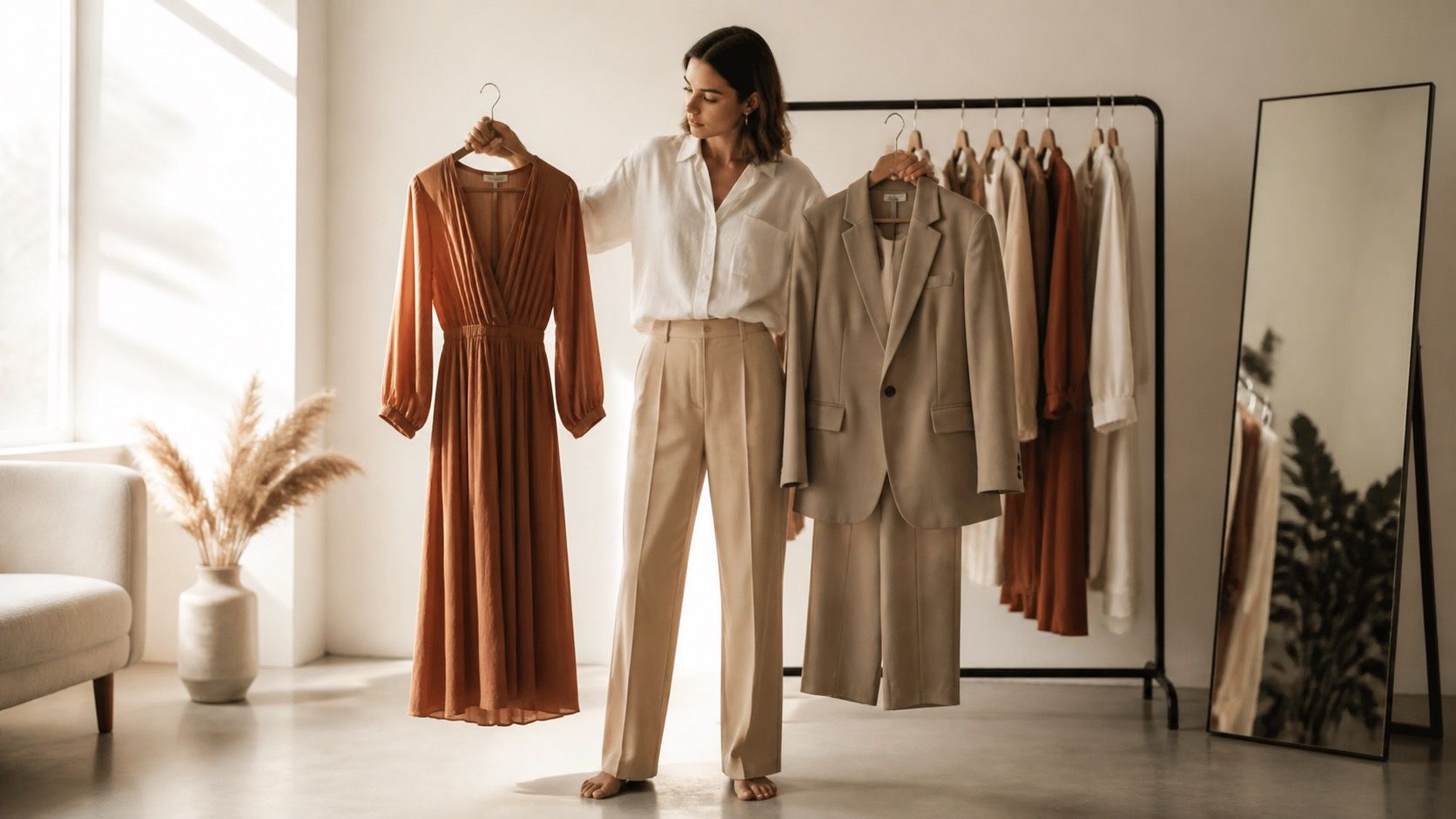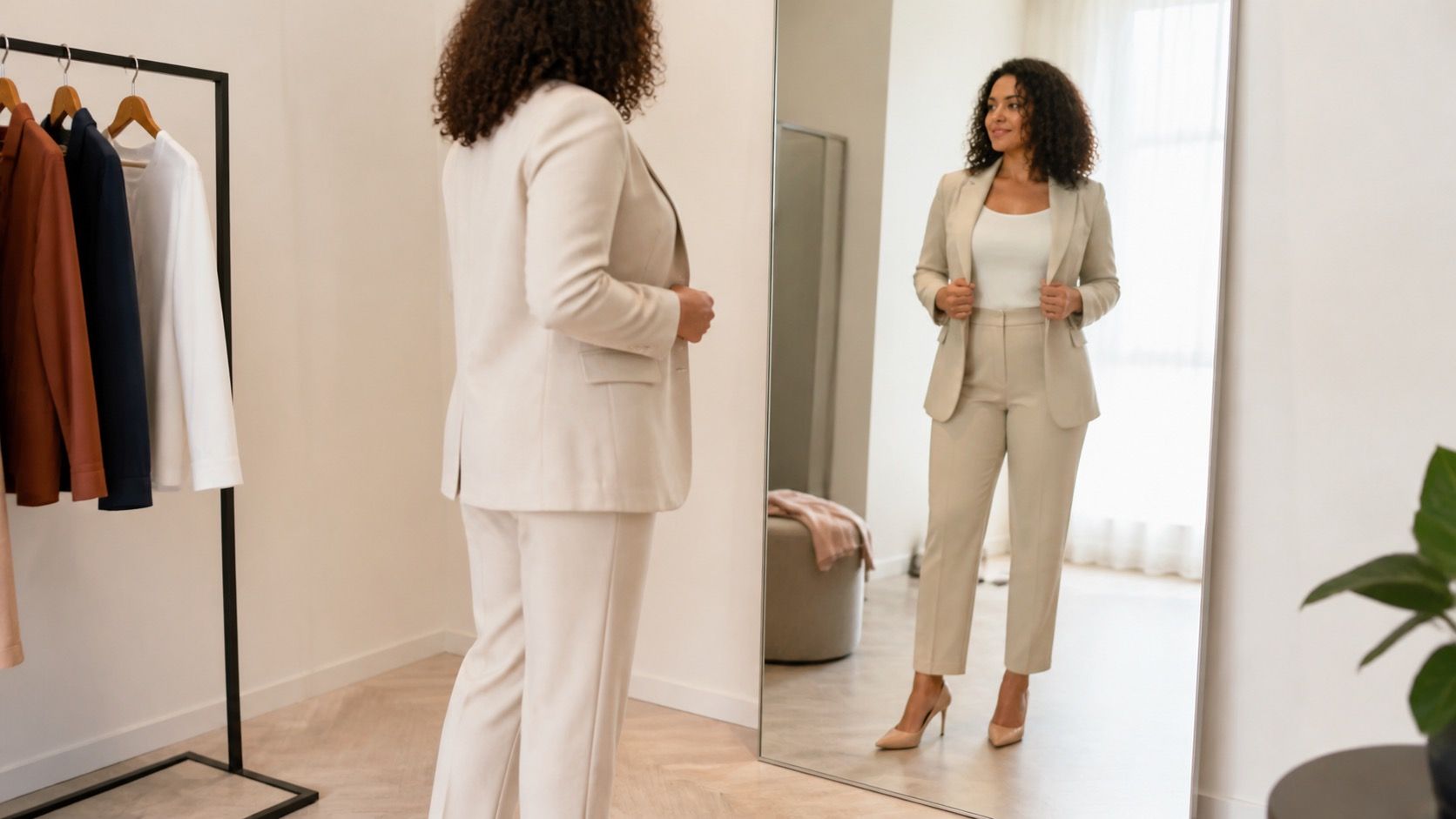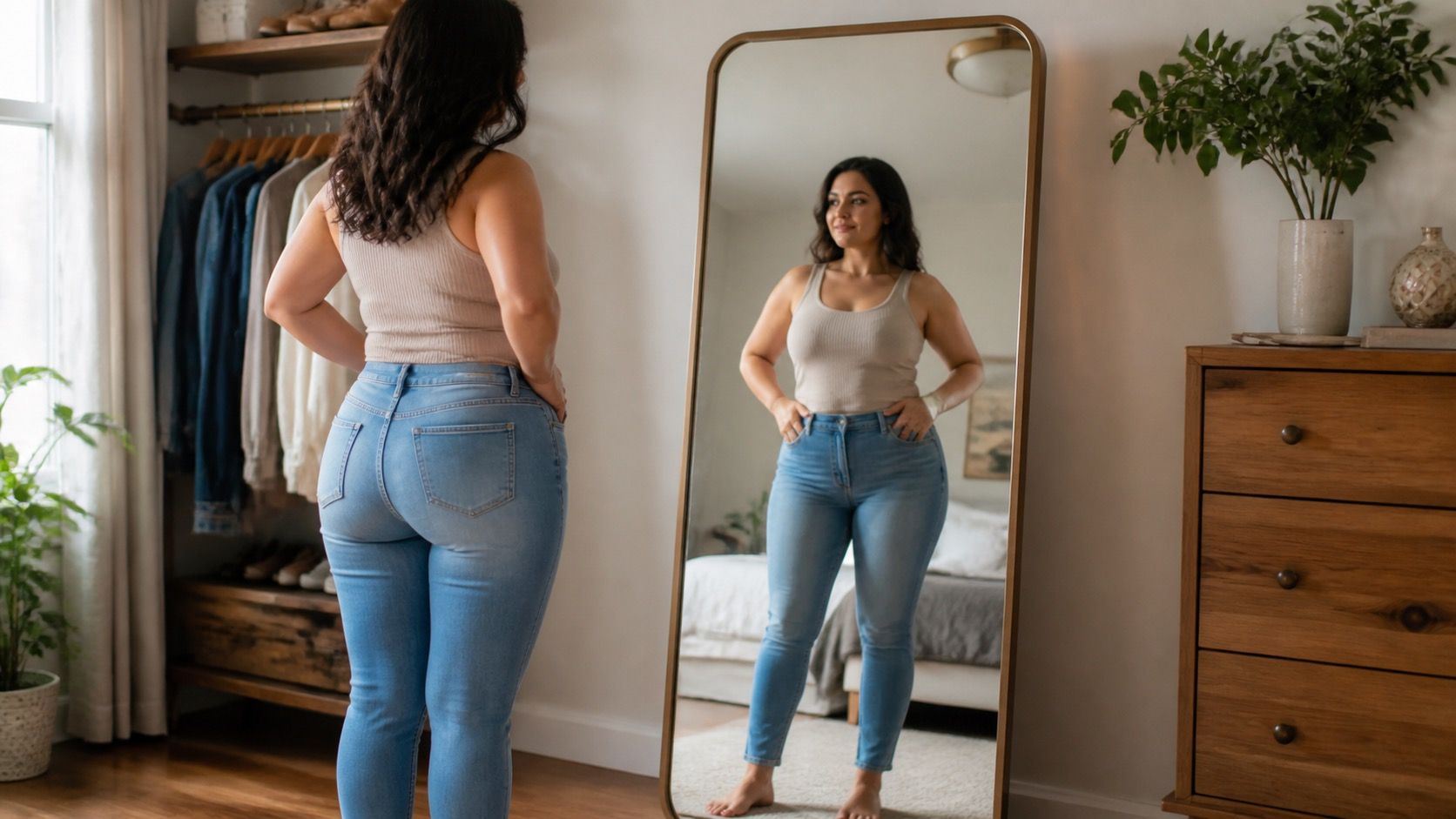
Apple body shape style works best when it starts with the feeling of the clothes, not with an attempt to disguise a body. If a waistband digs in, a knit twists across the stomach, or a jacket pulls when you reach for a bag, the outfit will feel wrong long before anyone notices its silhouette. The useful goal is a calm, continuous line through the body, with enough room to move and a few deliberate points of definition.
Start with comfort and movement before studying proportions
An apple shape often carries visual fullness through the bust, ribcage, or midsection, while the legs may look comparatively long and slim. That does not mean every outfit needs to float away from the torso. It means fit has to be checked in motion. Put on a top, sit at a table, raise both arms, and turn sideways. A garment that looks neat for ten seconds in a mirror can become a problem if its hem climbs or its buttons strain.
Create a long, clean vertical line without looking boxed in
Vertical line is less about dressing in one color from neck to ankle than about letting the eye travel without stopping at every seam. An open cardigan, unbuttoned shirt, long blazer, or lightweight coat can create that path over a simple column of top and trousers. The outer layer should hang from the shoulder rather than cinch tightly at the fullest point of the midsection.
Neckline depth matters here. A modest V, open collar, scoop, or soft square neckline gives the upper body some breathing room. The right depth depends on bust fit and personal comfort; it should frame the face, not turn into a costume. High crew necks can still work, especially in fine knitwear, but they often benefit from an open layer or a longer necklace to restore a sense of length.
Keep contrast under control when building round body shape outfits. A pale cropped jacket over a dark top can cut the torso in half, while a similar-value jacket over the same outfit reads as one longer shape. This is a tool, not a ban. Strong contrast can be enjoyable when it lands at the shoulder, cuff, shoe, or bag rather than across the middle.
Choose tops and dresses that do not pull or hover awkwardly
The easiest tops usually skim rather than grip. A woven blouse with gentle drape, a soft wrap-inspired front, or a knit with side gathering can give room through the torso while keeping a clear shape. The important check is where the fabric settles after five minutes. If it catches on the bust and balloons below, the size, fabric, or cut is probably wrong.
Empire waists can be comfortable, but only when the seam sits high enough to move freely and the skirt falls cleanly from it. A seam placed directly across a full bust tends to ride up. Dresses with a raised but not rigid waist, soft waist shaping, or a controlled A-line skirt often offer more reliable options. Avoid treating every loose dress as an automatic answer; too much unsupported volume can make the whole outfit feel unfinished.
Hem length changes the result. A tunic that ends at the widest part of the hip can look abruptly cut off, while one that reaches slightly below it may form a smoother line over narrow trousers. With dresses, test both knee and midi lengths in the shoes you will actually wear. The difference between a confident hem and an awkward one is often two inches.
Make trousers, shoes, and layers work as one outfit
Straight trousers, soft wide legs, bootcut jeans, and trousers with a flat front are dependable starting points because they continue the line below the torso. The best rise is the one that stays put when sitting. A very low rise can make the top ride up; a sharply elasticized high waist can pinch. There is no prize for choosing the trendiest rise if it creates a line you spend all day adjusting.
| Piece | Useful detail | Fit check |
|---|---|---|
| Open blazer | Light shoulder structure and a hem below the waist | It should fall straight when unbuttoned |
| Straight trouser | Flat front and enough room at the upper thigh | Waist stays comfortable while seated |
| Soft dress | Drape with a gentle point of definition | Fabric does not catch under the bust |
| Long cardigan | Fine to medium gauge, open front | It does not bunch at the side seams |
Jacket structure can help, provided it is not rigid. A clean shoulder seam and a softly shaped lapel bring definition near the face; excessive padding or a short, square hem may create bulk instead. Longer layers do not have to be oversized. A close-but-easy fit through the shoulders and upper arms is usually more polished than a jacket that is large everywhere.
Shoes can quietly support the vertical line. A shoe close to the trouser color lengthens the lower half, while a contrasting ankle strap adds a deliberate break. Neither is wrong. The practical question is whether the rest of the outfit already has enough visual stops.
Check the outfit in ordinary life, not only in a mirror
When learning how to dress an apple shape, take a quick phone photo from the front, side, and back after you have moved around. Then look for the actual issue: a neckline that gapes, a sleeve that pulls, a waistband that folds, or an outer layer that keeps sliding backward. It is easier to solve one specific fit problem than to label the whole outfit unflattering.
Use a small repeatable test: sit in your usual chair, walk for three minutes, carry a tote, and lift your arms as if reaching for a shelf. If the outfit survives that routine, it will probably survive work, travel, or dinner. The mirror still matters, but it should be the final check, not the only one.
A clear vertical line can come from an open layer, a long trouser, an uninterrupted color story, or simply a garment that hangs properly. Keep the pieces that make your body feel easy to inhabit. That is a more durable style rule than any chart of forbidden silhouettes.
Build a small reference rail from outfits that already work: perhaps a soft V-neck knit, straight dark jeans, a hip-length blazer, and a midi dress that skims rather than clings. Wear each piece on an ordinary day and note what happens after breakfast, a commute, and a few hours at a desk. That record is more useful than a fitting-room verdict. It also reveals whether the issue is really proportion or something mundane, such as a sleeve that is too tight, a bra that changes the neckline, or a fabric that becomes static after an hour. When a piece succeeds, identify the reason before buying five versions of it. You may love its open neckline, the weight of the fabric, the long hem, or the fact that it leaves room for lunch. Those details can guide future choices without turning your wardrobe into a uniform.