Body shape and style essence are often presented as competing systems, which leaves people with a closet full of contradictory advice. They are more useful as two lenses aimed at different parts of the same outfit. One helps you assess fit and silhouette; the other helps you decide what visual character belongs on top of that structure.
Ask each framework the question it can answer
Body shape is a practical starting point for proportion. It can help you notice where a garment needs room, whether a waistline is placed well, and how a hem changes the balance between torso and legs. Kibbe image identity takes a broader view of line, considering the relationship between vertical, width, curve, and sharpness. Neither system has to dictate a list of banned clothes. Their value is in making fit problems easier to describe.
Start with fit before adding aesthetic detail
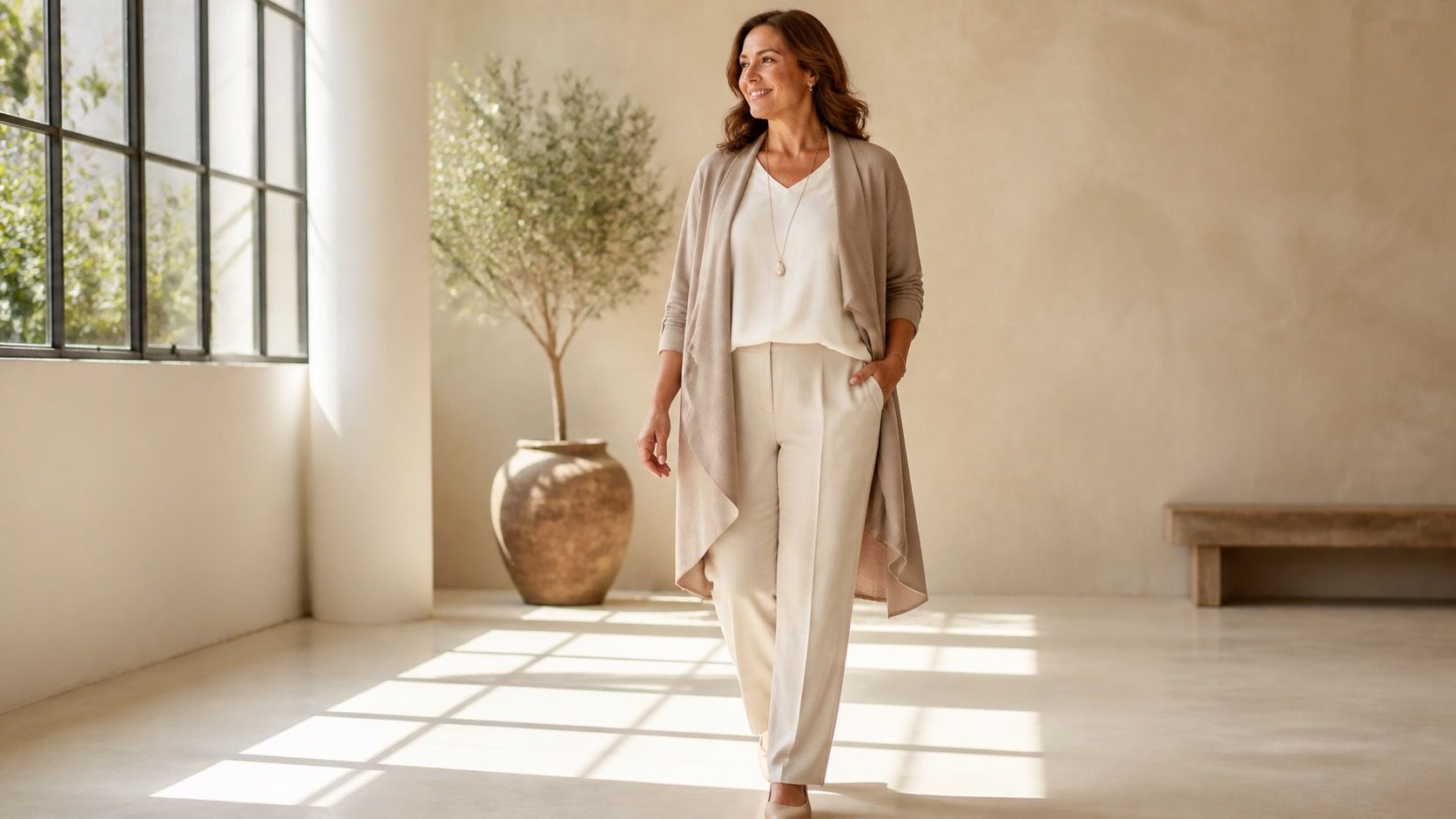
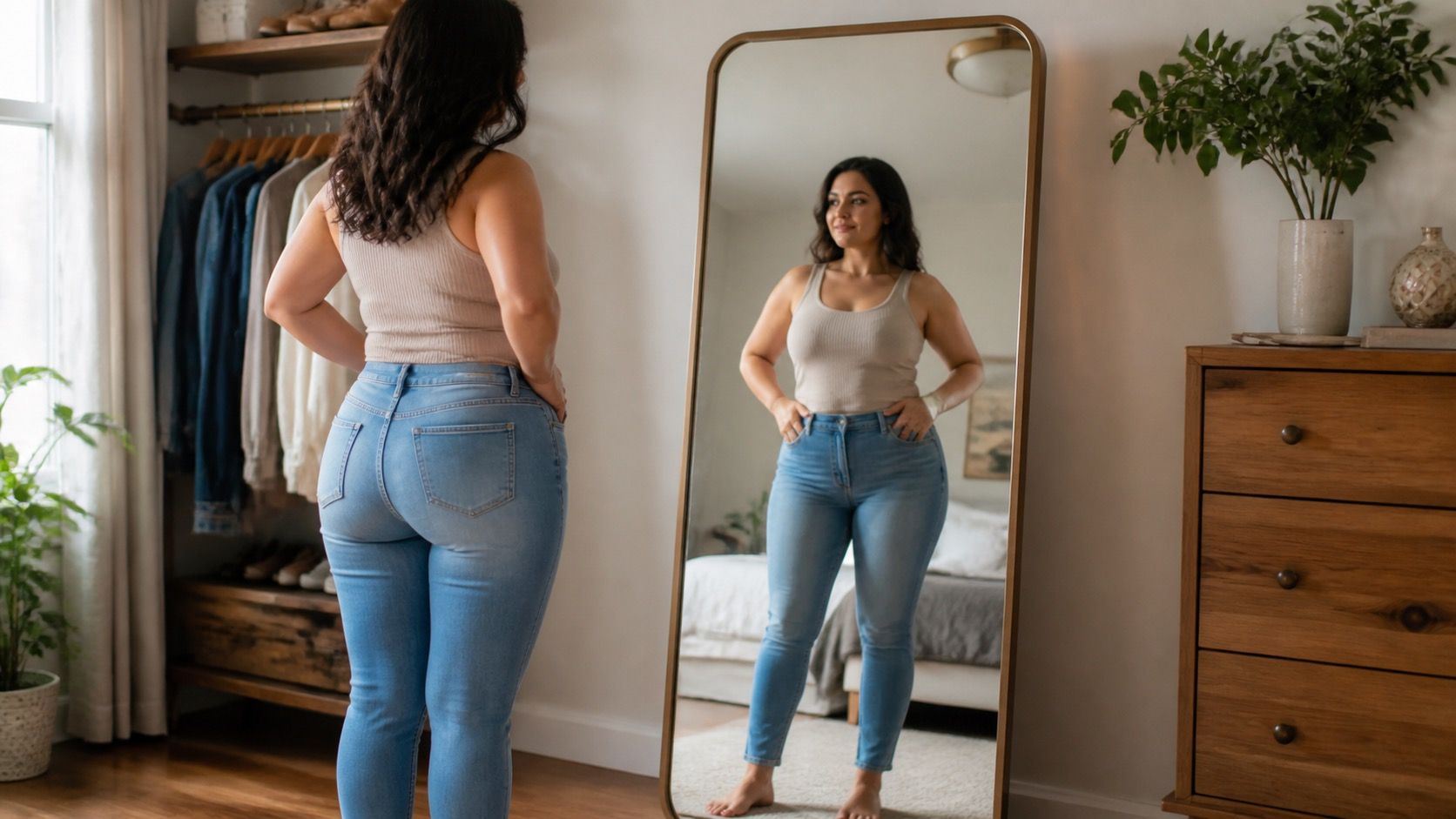
A simple outfit formula makes this easier: choose trousers, jeans, or a skirt that you can sit in; add a top that does not pull across the bust or shoulders; then select an outer layer that does not erase the body’s useful line. Take photos from the front, side, and while walking. The goal is not to create a perfect outline. It is to find a base that looks stable and feels normal for several hours.
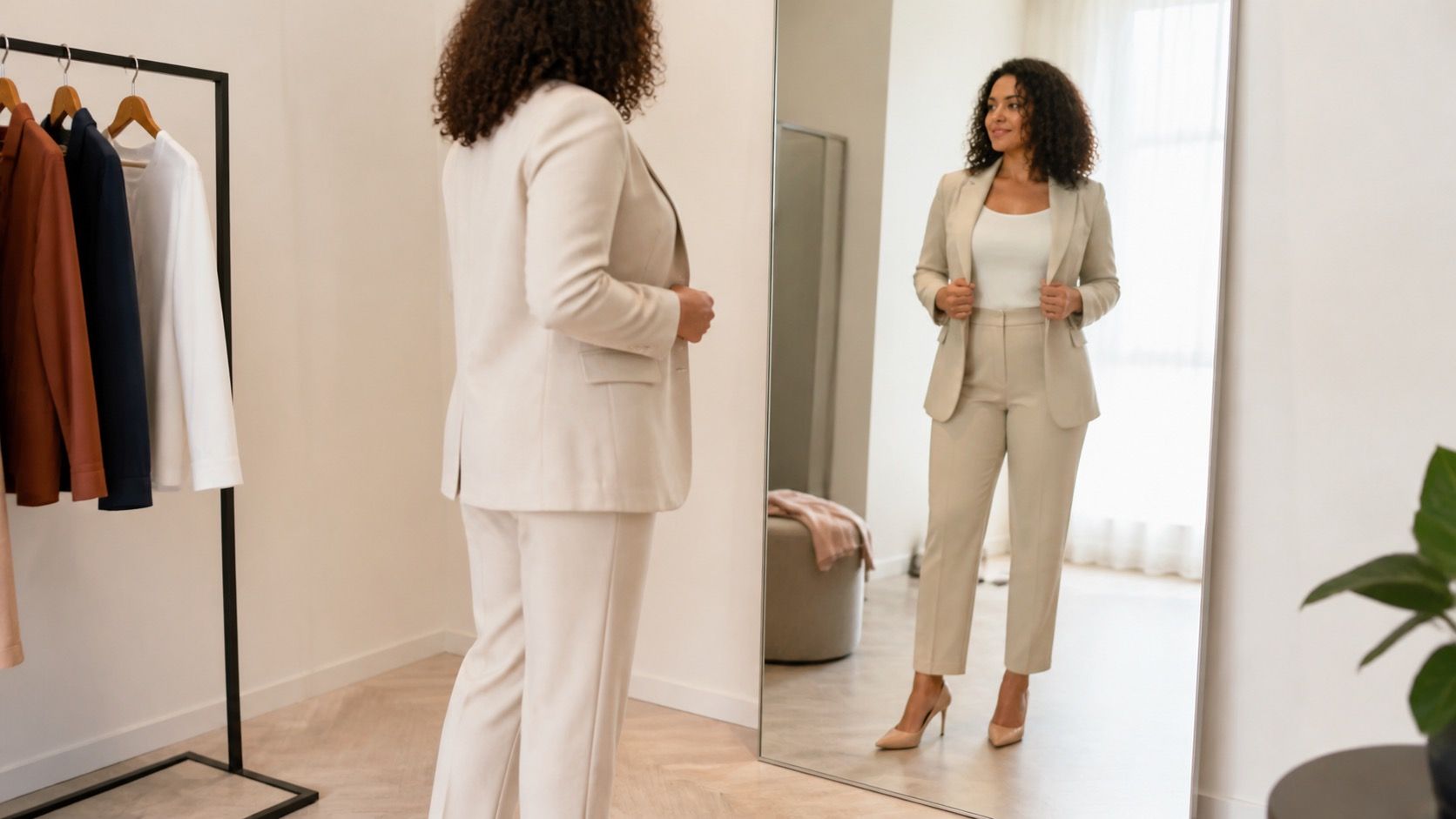
Fit checks are specific. Look at the armhole, the rise, the waist placement, the distance between hem and shoe, and whether the fabric bunches only because it is too stiff. A blouse that is one size too small may be labelled “feminine” because it is fitted, when it is actually just strained. A blazer that is too large may be called “relaxed” when the shoulder seam has dropped so far that it changes the whole proportion. Honest fit gives every later styling choice a better chance.
Once the base works, details become easier to read. You can tell whether a curved neckline adds softness or whether it merely distracts from a poor fit. You can decide whether an angular boot gives welcome definition or just makes an already rigid outfit feel harsher. This is the quiet advantage of beginning with the physical layer: it removes one source of noise before you make aesthetic judgments.
Use body shape and Kibbe line for silhouette choices
Silhouette is the large-scale arrangement of an outfit: long and continuous, compact and broken up, softly shaped, broad and relaxed, or narrowly tailored. Body shape can help you test where emphasis feels best, but it should not be used to chase a corrective illusion. A belt does not have to manufacture an hourglass. It can simply mark a comfortable waist and keep a soft dress from becoming a vertical tube.
Kibbe image identity can add useful language to this. Someone responding well to curve may prefer fabric that drapes around the body and a waist that is acknowledged. Someone who benefits from vertical may feel more settled in longer unbroken lines. Someone who needs width may find that rigid narrow shoulders feel cramped even if the garment technically closes. Treat these as observations to test against real clothes, not as a verdict based on a single mirror photo.
Try the same top with three bottoms: a straight trouser, a softly tapered trouser, and a skirt with movement. Notice not only which one looks balanced, but which one lets the top fall naturally. Then repeat with an open and closed jacket. These controlled comparisons reveal more than buying an entire category because it has been recommended to your body type.
| Decision | Body shape or Kibbe line can guide | Style essence can guide |
|---|---|---|
| Jacket | Length, shoulder room, waist placement, openness | Soft, structured, sharp, relaxed, or compact finish |
| Dress | Drape, seam placement, volume, and hem balance | Neckline mood, print character, trim, and jewellery |
| Shoes and bags | Scale relative to the overall silhouette | Rounded, angular, polished, textured, playful, or delicate character |
| Outfit contrast | How breaks affect visible proportion | How strong or quiet the visual message feels |
Let essence decide texture and finishing details
After silhouette, style essence has room to do its best work. A Natural influence may make textured leather, substantial knits, and a relaxed collar feel more plausible. A Classic influence may prefer smooth surfaces, clear balance, and moderate jewellery. Dramatic qualities often respond to sharper contrast or a defined edge. Romantic qualities may come through curved shapes, sheen, drape, and smaller ornament. Gamine, Ingenue, and Ethereal can influence how compact, delicate, playful, or airy a finish feels.
Detail should not fight the line you established. A soft draped dress might need only a small curved earring to feel complete; piling on lace, bows, a busy belt, and ornate shoes can turn one good idea into visual clutter. A long, clean outfit with vertical flow can accept a sharper shoe or a dramatic cuff, but may lose its calm if every item has hard contrast. Think of essence as editing the final ten percent, even when that ten percent has a strong effect.
Facial impression matters because accessories sit close to the face. If large rustic earrings make you look costume-like while a small polished hoop brightens the same outfit, that is usable evidence. If a matte textured scarf makes your features look more relaxed than a glossy silk one, keep that observation. You do not need to justify it with a perfect essence label; the result in daylight is enough.
Build a two-column wardrobe experiment
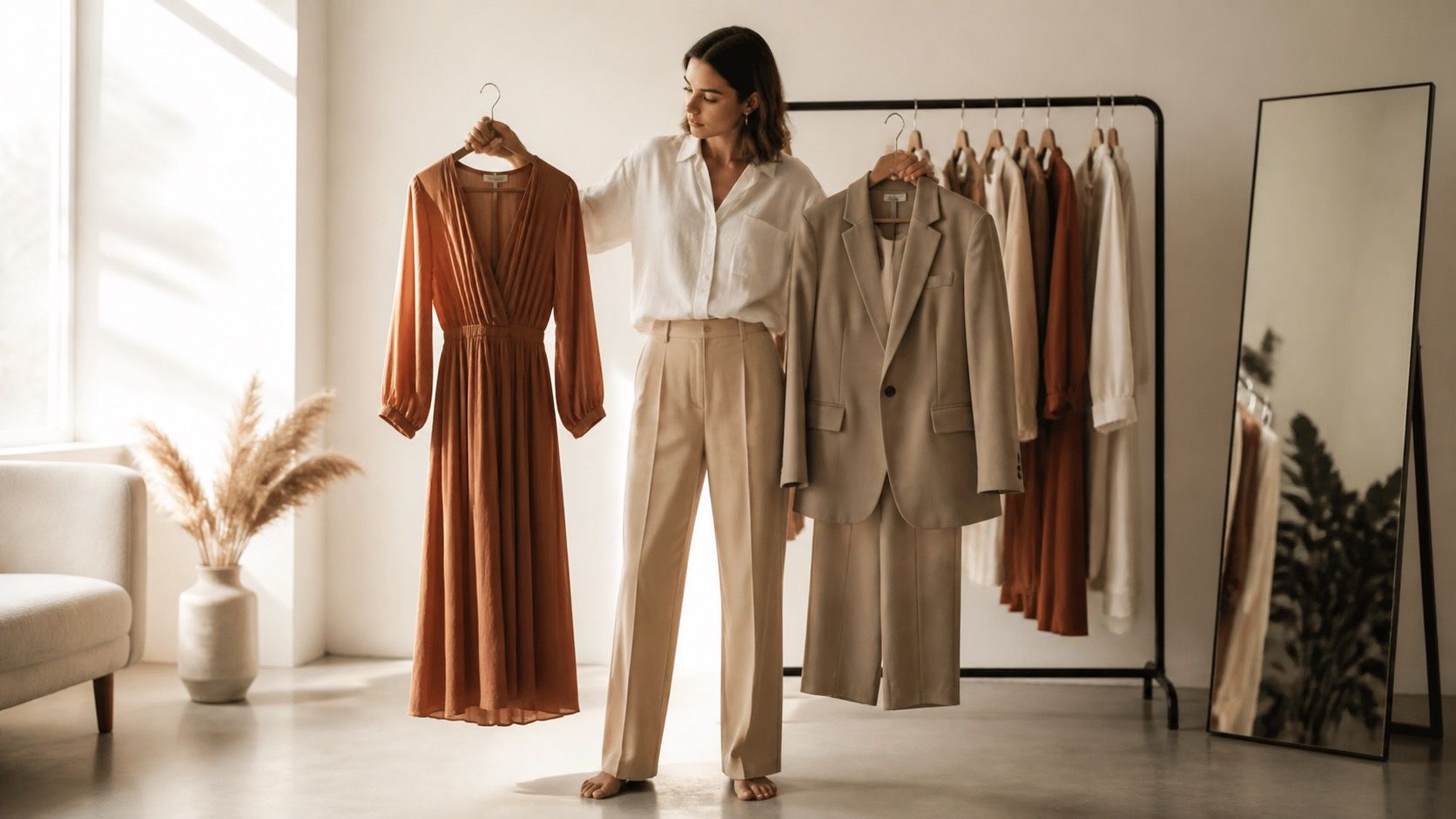
Choose five garments you wear often and make a two-column note. In the first column, record the silhouette facts: fitted or relaxed, short or long, straight or curved, structured or draped, where the waist sits, and what happens when you move. In the second, record the style signals: polished, rugged, soft, sharp, playful, delicate, airy, or plain. This separates the garment’s physical behaviour from its visual tone.
Then make three outfits from the same base. Keep the trousers and top fixed, but change the outer layer, shoes, and accessories. One version can lean Classic, another Natural, another Romantic or Dramatic. Wear them in ordinary conditions rather than standing still for ten minutes in a bedroom mirror. Sit at a desk, carry a bag, walk outside, and check whether the outfit still makes sense after the day has added its own wrinkles and practical demands.
Record the outcome in direct language. “The cropped jacket made my legs look longer but felt too fussy with this bag” is useful. “The overshirt was comfortable but swallowed the waist” is useful. “The pointed boot brought the outfit together” is useful. Vague notes such as “not my essence” are harder to act on later. The experiment works because it turns an abstract personal style system into repeatable choices.
Resolve conflicts without forcing a perfect label
Sometimes the silhouette you need and the aesthetic you enjoy appear to disagree. You may love relaxed Natural texture but prefer a more defined waist. You may need a long vertical line but feel most like yourself in small Gamine contrast. The answer is usually to let one framework lead the large shape and let the other appear in a controlled detail. A long coat can be made in textured wool; a shaped knit can have compact contrasting buttons; a flowing skirt can be paired with a sharper boot.
Do not treat one difficult garment as evidence that a whole framework is wrong. A stiff blazer may fail because its shoulders are narrow, its waist is too high, and its lapels are too severe all at once. Change one element before drawing a conclusion. In personal style, several small mismatches often feel like one mysterious problem until you separate fit, line, and finish.
Keep the framework tied to real life
The best body shape and style essence advice should save time, not create a new homework assignment. Build a short list of dependable formulas for your actual week: one work outfit, one casual outfit, one social outfit, and one weather-proof layer. Give each a sound silhouette first, then include the textures and accessories that make it feel personal. This is more useful than collecting dozens of example images with no connection to your closet.
Preferences also change with climate, work, health, and confidence. A style system can keep up when it is treated as a tool for noticing patterns rather than a fixed identity. Return to the same questions when you shop: Does this fit and move well? Does the line support the body rather than fight it? Does the detail make the outfit feel clearer? If the answer is yes, the garment has earned a place regardless of how neatly it fits a label.