If you have ever tried a body shape calculator and received an answer that did not quite match the mirror, you are not doing it wrong. Measurements are useful information, but they are not a complete portrait of proportion. The most reliable way to find your body shape combines a few calm measurements with what your shoulders, waist, hips, posture, and clothes actually do in ordinary life.
Why one set of numbers is not the whole answer
Most calculators compare bust, waist, and hip circumference, then assign the closest familiar category. That can be a starting point, but it misses the shoulder line, ribcage shape, torso length, and the way fabric sits on you. A person with similar bust and hip numbers may look balanced in a wrap dress yet need extra room across the back in a button-up. Another person may measure as a rectangle but have a very clear waist once a garment has the right rise and seam placement.
Take measurements that help with real clothes
Use a flexible tape measure over light clothing or underwear, and keep it parallel to the floor. Measure the fullest part of the bust, the natural waist where your torso bends when you lean sideways, and the fullest part of the hips and seat. Take each measurement twice without pulling the tape tight. You are looking for a stable range, not an official number to defend. Record it beside the size charts of brands you actually buy from.
Shoulders deserve a separate practical check. Rather than trying to measure a complicated curve by yourself, put on a shirt or jacket with a clear shoulder seam. The seam should sit near the shoulder edge without pulling inward or collapsing down the arm. This tells you more about future blazers and structured shirts than a bust measurement alone. Notice whether sleeveheads wrinkle, whether buttons strain, and whether the collar stays flat when you move.
| Check | How to do it | Useful conclusion |
|---|---|---|
| Bust | Measure the fullest point with normal breathing | Whether darts, buttons, and knit stretch matter |
| Waist | Find the bend in the torso, not a preset trouser line | Where belts and dress seams may feel natural |
| Hips | Measure the widest seat and hip area | How much ease skirts and trousers need |
| Shoulder fit | Check a seam while moving your arms | Which tailored shapes are worth trying |
Do not use measurements to reject clothes before trying them. Sizing is inconsistent, and a garment may be designed with more ease than its chart suggests. Use the tape to narrow options online, then let movement be the final check: sit, bend, reach, and take a few unposed steps. A garment that only works while standing still is giving you incomplete information.
Compare shoulder, waist, and hip relationships in the mirror
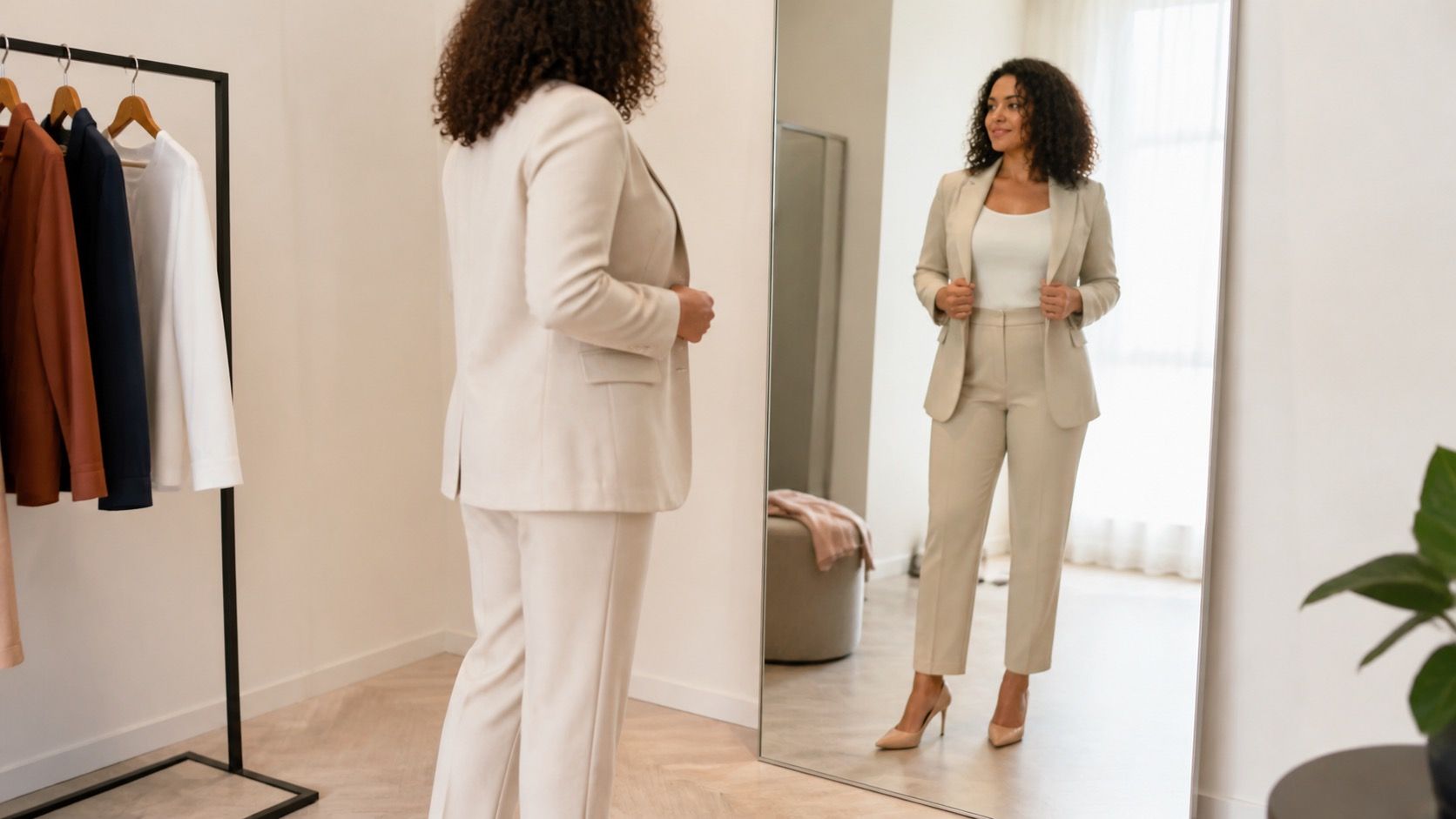
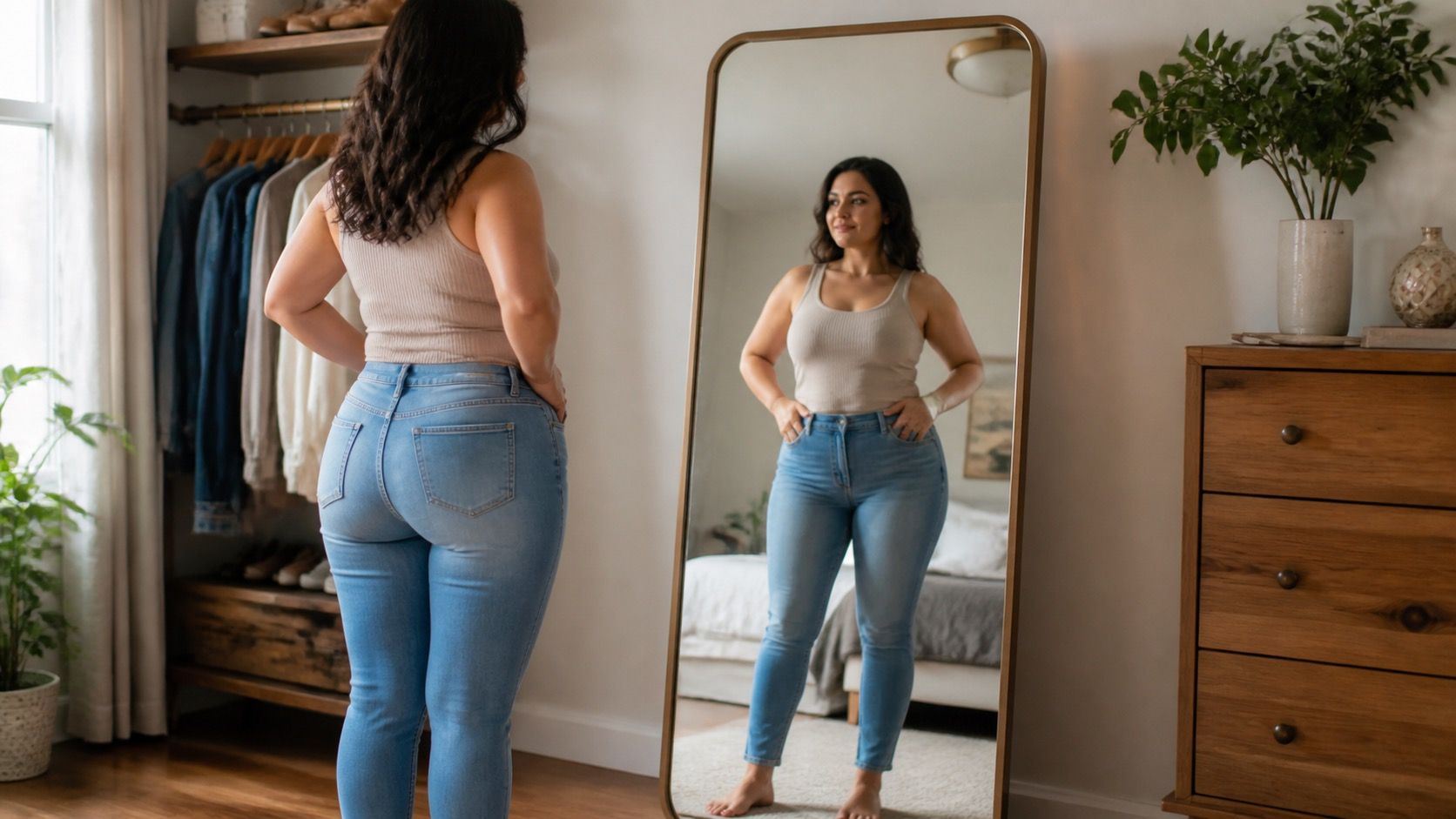
A full-length mirror check is easiest in fitted leggings and a simple tank or T-shirt. Stand normally, not with your shoulders pulled back or your stomach held in. First compare the apparent width of shoulders and hips. Then see where the torso narrows and where the legs appear to begin. The goal is not to draw hard lines on yourself; it is to notice which areas create the dominant horizontal and vertical lines in an outfit.
Take a front and side photo from several steps away, with the camera around waist height. This avoids the distortion of holding a phone too close. In the side view, notice posture and the way a waistband sits. A forward shoulder, a pronounced lower-back curve, or a high hip can change the fit needs of a dress or jacket without changing your category. That is normal pattern-fitting information, not a flaw to hide.
Try the same top untucked, half-tucked, and fully tucked into a pair of mid-rise trousers. Then add a cropped cardigan or an open jacket. You may find that your body does not need “waist definition” so much as a clear break between top and bottom. Or you may find that a long, uninterrupted column feels better than any belt. The mirror is useful when it becomes a comparison tool, not a place to search for defects.
What to do when you sit between body-shape types
Many people sit between types, and it is usually the most realistic answer. You may have shoulders and hips that look similar from the front, a waist that is more visible from the side, and a longer torso that changes the effect of high-rise trousers. You may also wear different sizes on top and bottom. None of this means the framework has failed. It means you need a combination of fit preferences rather than a single prescription.
Choose two or three observations that show up consistently. For example: the shoulder seam needs to be accurate, waistbands are most comfortable just below the natural waist, and jackets look best either cropped above the hip or long enough to pass it. That small set of filters is more precise than calling yourself a mixture of three labels. It also helps when shopping because you can read product photos for seam position, rise, and length.
Be careful with advice framed as correction. If you have fuller hips, you do not need to disguise them; you may simply prefer trouser pockets that lie flat and a jacket that does not stop at their widest point. If you have broad shoulders, you do not need to narrow them; you may enjoy a V-neck or a relaxed sleeve, or you may love a strong shoulder in a coat. The useful question is what creates the mood and movement you want.
Turn observations into shopping filters
Once you have a working picture, make your next purchase a small experiment rather than a complete wardrobe solution. For trousers, check rise, hip measurement, fabric stretch, and inseam before color. For tops, check shoulder construction, bust darts, and where the hem will land when untucked. For dresses, look for the waist seam, skirt volume, and whether the fabric has enough give for sitting. These filters are practical regardless of the body shape name you use.
Keep a note on your phone with successful cuts and failed ones, including the reason. “Wide-leg trousers worked in drapey fabric but not rigid denim” is better than “wide legs work.” “The shirt needed a lower armhole and one more inch at the bust” is better than “button-ups never suit me.” Over a few purchases, the notes become a personal body shape guide based on evidence rather than generic rules.
Finally, let comfort count. A balanced outfit can still be wrong if you are pulling at the neckline, avoiding a chair, or worrying about the waistband all day. The most helpful body-shape knowledge should make getting dressed quieter: fewer surprise returns, fewer almost-right items, and more clothes that support the way you actually move through a day.