Body shape guide
PROPORTION / FIT / YOUHow to Determine Your Body Shape: Proportions, Measurements, and Balance
To determine your body shape, compare the horizontal balance of your shoulders or bust and hips, then notice how much your waist curves inward. Hourglass, pear, apple, rectangle, and inverted triangle are useful reference shapes for describing those relationships. They describe an outline, not your size, weight, health, or a fixed identity. Measurements can help you compare areas consistently; a mirror check shows how the outline looks in clothing. If two descriptions seem close, use both as starting points rather than forcing a single label.
| Reference shape | First clue to compare |
|---|---|
| Hourglass | Upper and lower body look balanced, with a clearly indented waist. |
| Pear | Hips look wider than the upper body. |
| Apple | The middle and upper body appear fuller relative to the hips. |
| Rectangle | Upper body and hips look balanced, with a gentler waist indentation. |
| Inverted triangle | Shoulders or bust look wider than the hips. |
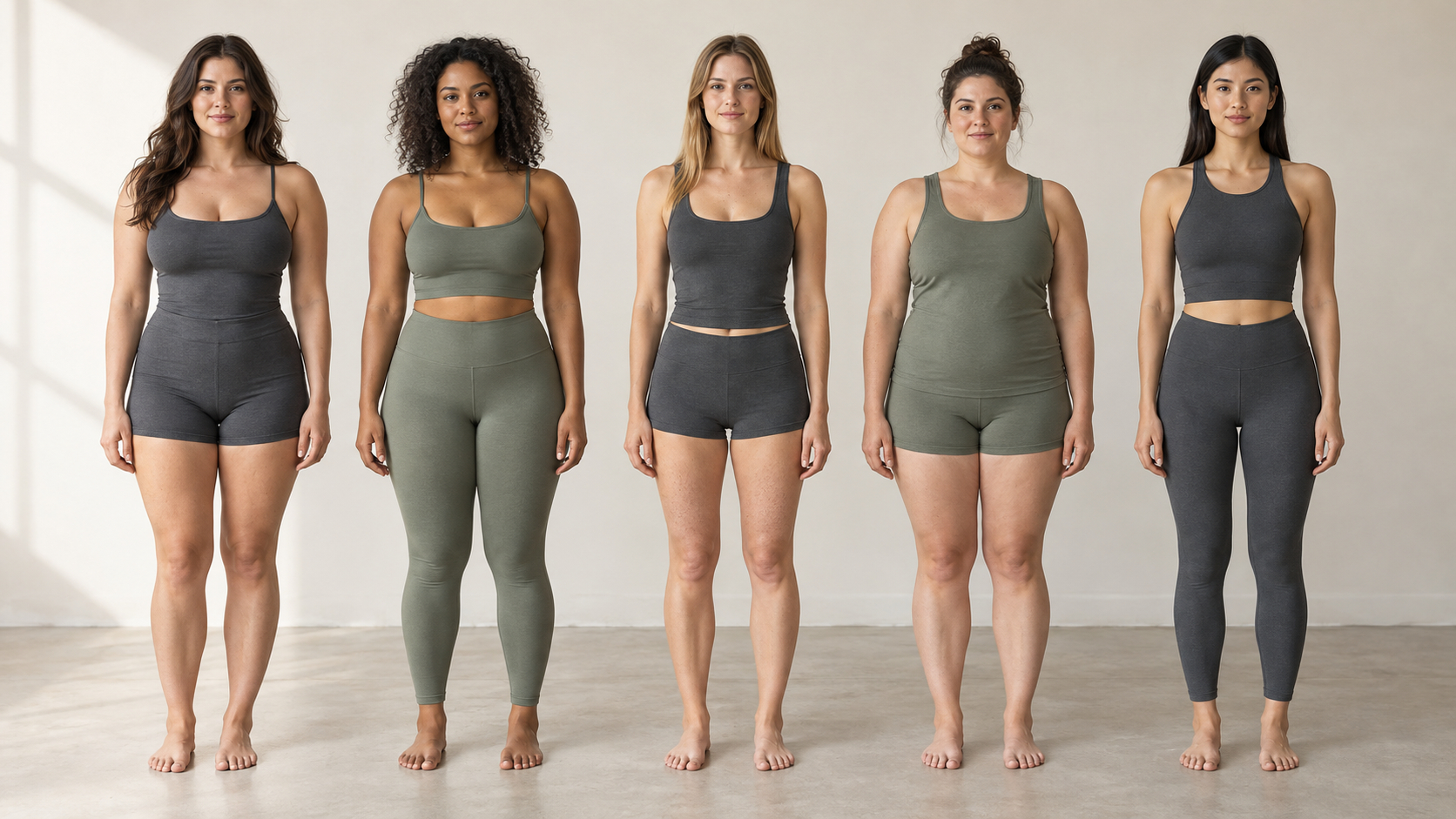
Understanding the Proportions and Anatomy of the Silhouette
Start with four landmarks: the outer shoulder line, the fullest part of the bust, the natural waist, and the fullest part of the hips. Shoulder breadth and bust circumference answer different questions, so they can suggest different shape labels. Compare like with like: use a shoulder-based method throughout, or a bust-based method throughout, and note any difference between them.
Clothing size tells you whether one garment may fit, not how these landmarks relate to one another. Two people can wear the same size and have different waist definition or upper-to-lower balance. A garment can also change the apparent outline through padding, gathers, stiffness, or drape. For a repeatable check, measure your shoulders, waist, and hips and compare the result with a relaxed front view in clothing that follows your shape without compressing it.
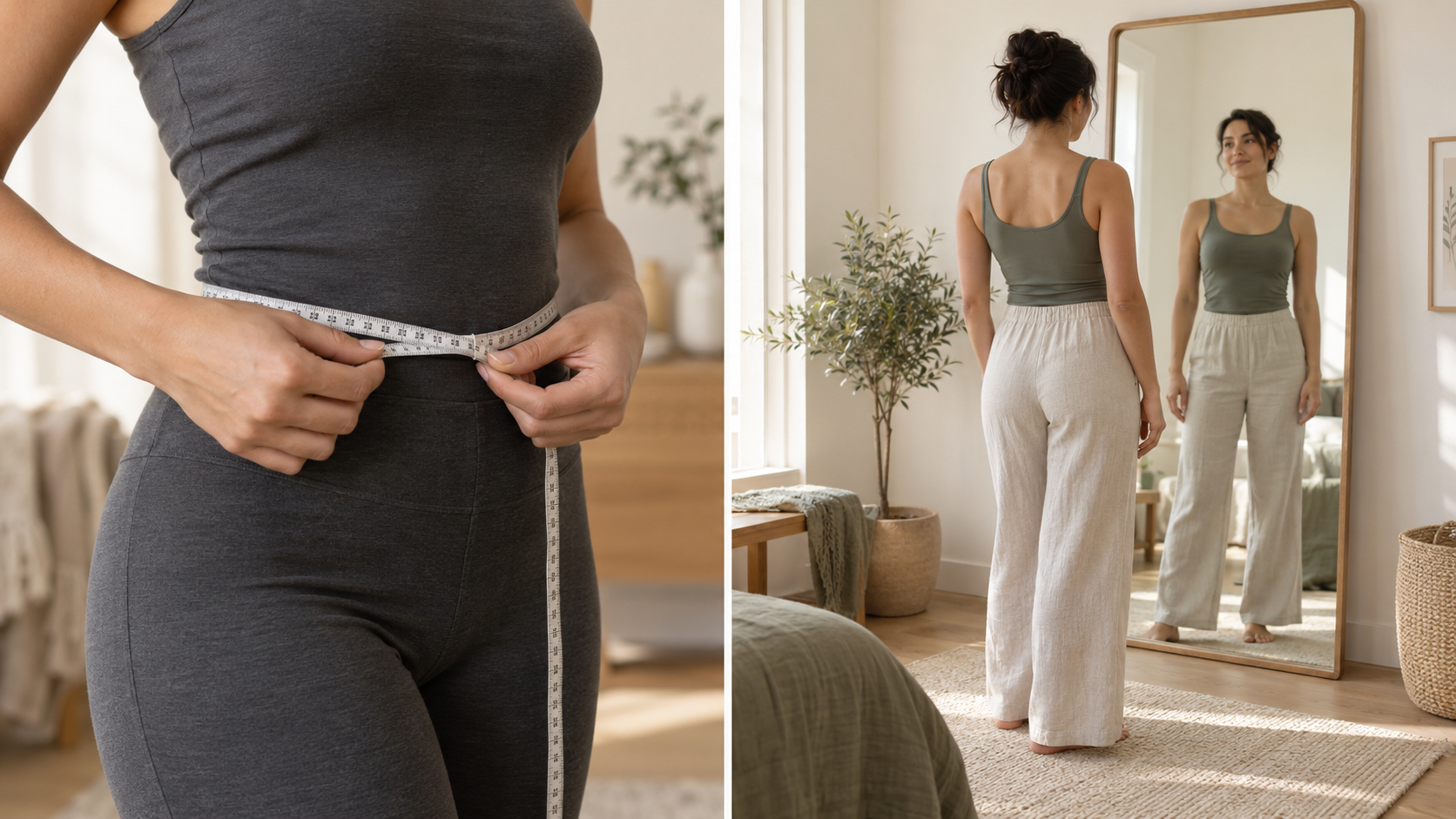
Identifying the Silhouette: Key Visual Signs and Formulas
Write down your bust or shoulder, waist, and hip measurements in the same unit. To compare two circumferences, subtract the smaller from the larger, divide by the larger, and multiply by 100. For example, a 40-inch hip and 38-inch bust differ by 5% of the hip measurement. This is a comparison tool, not a universal cutoff. The Concept Wardrobe’s body-shape guide uses 5% to describe when bust or shoulders and hips are close, and 25% waist difference in its hourglass example. Other guides may set different boundaries.
On a small screen, swipe the comparison table sideways to read each column.
| Shape | Useful measurement pattern | Visual cross-check | Nearby description to consider |
|---|---|---|---|
| Hourglass | Bust or shoulders and hips are close; waist is distinctly smaller. | Clear inward curve at the waist. | Rectangle if the waist indentation is gentle; pear if hips lead. |
| Pear | Hips exceed bust or shoulders. | More visual width below the waist. | Hourglass if upper and lower widths look close. |
| Apple | Midsection and upper body are relatively prominent beside the hips. | The outline is fullest through the middle or upper body. | Rectangle if the outline is straighter throughout. |
| Rectangle | Bust or shoulders and hips are close; waist difference is less marked. | Sides look relatively straight. | Hourglass if the waist is more clearly indented. |
| Inverted triangle | Bust or shoulders exceed hips. | More visual width across the upper body. | Hourglass if the hips look similarly broad. |
The pattern matters more than a single percentage. Shoulder structure, bust size, posture, and clothing can affect the visual check. A high or low waist and a longer or shorter torso change where a seam looks balanced even when the horizontal shape label stays the same. See body proportions and vertical balance for that separate comparison. Mild asymmetry is normal; use the overall line, not a perfect left-to-right match.
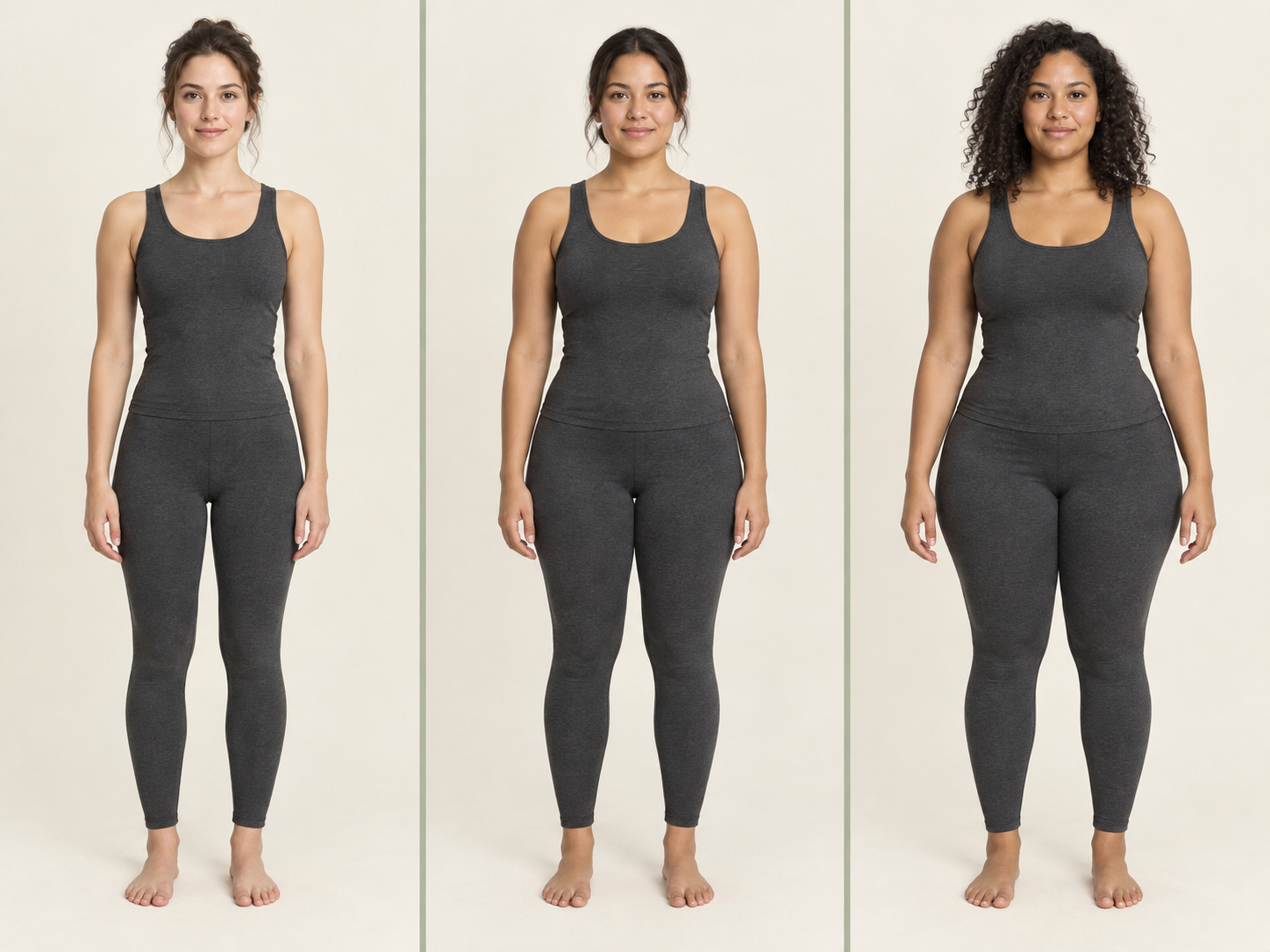
Styling Principles: Balance, Drapery, and Fabric Choice
Use your observations to decide where you want an outfit to draw attention. A cut can widen a visual line, follow it, or let fabric fall past it. Try garments on, sit and move in them, and keep the versions that feel comfortable and look the way you want. None of the shapes requires a prescribed wardrobe.
Strategic Necklines and Shoulder Cuts
A boatneck or strong shoulder seam can extend the visual line across the upper body; that may appeal if you want more emphasis above the waist. A V-neck draws the eye toward the center, while a raglan seam softens a defined shoulder edge. Compare the neckline with the garment’s actual shoulder fit: a wide neckline does not compensate for a sleeve seam that pulls.
Waistlines and Midsection Drape
A high-rise waist or a wrap that closes at your natural waist makes that point visible. A mid-rise waistband can keep the torso line longer, while an empire seam moves the visual break above the natural waist. Fluid fabric can skim the midsection; a structured fabric can hold a clearer outline. Check where the seam lands on your torso, since the same label can produce different effects on different people.
Hemlines and Trouser Silhouettes
An A-line skirt adds room and visible movement below the waist. Straight trousers keep a relatively continuous line; wide-leg trousers create more width from the hip downward. A cropped hem makes a visible break at the lower leg, so compare it with a full-length version in the mirror. Fabric weight and footwear can change the result as much as the cut name.
Common Misconceptions and Dressing Nuances
You do not have to fit exactly one category for life. Bodies and clothing change, and two methods can give different answers when shoulder and bust proportions differ. A shape name also does not ban a neckline, color, or silhouette. Use it to form a specific experiment: “Would I prefer a stronger shoulder line with these trousers?” Then compare actual outfits.
Geometric body-shape labels focus on horizontal proportions. Kibbe’s Image Identity approach and Kitchener’s style essences are distinct styling frameworks with their own terminology. A pear or rectangle label does not determine a Kibbe identity or a Kitchener essence. If those systems interest you, start with the separate Kibbe guide and style essences guide rather than treating the names as interchangeable.
Frequently Asked Questions
How do I know if I have this body shape or a neighboring one?
Compare the main difference between the two descriptions. For pear versus hourglass, ask whether your upper and lower widths look similar or the hips clearly lead. For rectangle versus hourglass, look at the waist indentation. If the answer changes with clothing or measurement method, keep both descriptions in mind.
Can weight gain or loss change my primary silhouette?
It can change the relative measurements or visual outline, but there is no reliable rule that predicts the same change for everyone. Recheck your current proportions when the clothes you own begin to fit differently; the old label does not need defending.
What is the single most flattering clothing formula for everyday wear?
There is no single formula for every person or preference. Start with one comfortable top and bottom that fit, then compare two changes at a time: for example, a defined versus relaxed waist and a straight versus wider leg. Keep the combination whose outline and movement you prefer.
How does vertical proportion affect a body-shape label?
Torso and leg length do not replace the horizontal comparison. They affect where a waistband, jacket hem, or color break lands. Try the same silhouette with two rise heights or hem positions to see which proportion you like.
Explore Your Personal Proportions
Use the table to identify the one or two descriptions closest to your current outline, then test a clothing detail you can actually change. If you would rather start with a photograph and a short questionnaire, the body type test is planned as a separate flow and is not available yet.