Style system guide
LINE / DRAPE / YOUKibbe Body Types: Understanding Image Identities, Yin and Yang, and Lines
Kibbe body types, more precisely Image Identities, are David Kibbe’s approach to building a complete personal style around a balance of yin and yang. In this vocabulary, yin suggests softness and rounded shape; yang suggests length, angularity, or a more open structure. The framework considers the whole visual line, including bone structure, flesh, and how clothing falls over them. It is different from comparing bust, waist, and hip measurements to assign a fruit-shape label. Use the ideas below to notice garment effects, not to diagnose yourself from one photograph.
| Start with | Notice in an outfit |
|---|---|
| Vertical | Whether a continuous line or several clear breaks shapes the overall impression. |
| Width | Whether a garment needs room across the upper body to fall freely. |
| Curve | Whether fabric follows a rounded outline or pulls against it. |
| Balance and contrast | Whether even proportions or deliberate changes in scale create the effect you want. |
Understanding the Proportions and Anatomy of the Silhouette
In Kibbe’s system, an Image Identity describes an overall impression and a head-to-toe styling direction. Shoulder line, bust, waist, and hips all affect the outline a garment makes, but no one landmark supplies the answer. Bone structure and soft tissue interact with the cut of a jacket, the room in a sleeve, and the fall of a skirt. David Kibbe’s description of his Image Identity system emphasizes the individual and the complete look, while the publisher’s description of David Kibbe’s Power of Style presents his current method as a guided exploration of personal style.
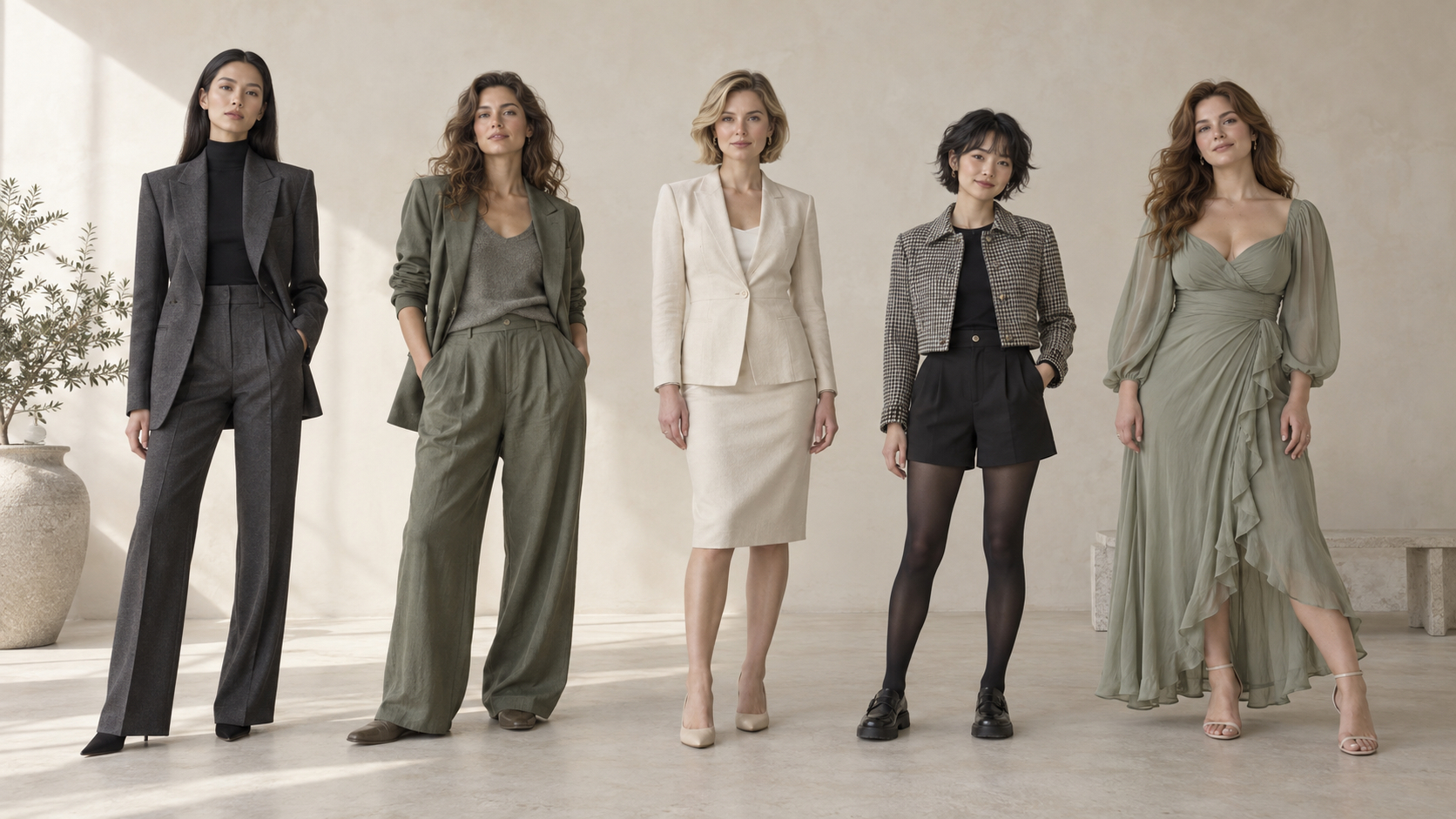
Clothing size, body weight, and a single tape measurement cannot establish an Image Identity. Measurements can still help you understand fit: measure your shoulders, waist, and hips when selecting a size or comparing garments. For a geometric overview of those relative widths, use the body-shapes guide. Keep that comparison separate from Kibbe’s whole-line approach.
The five families and the original 13 identities
Kibbe’s original Metamorphosis described 13 Image Identities across five families. His later account of the system refers to ten archetypes. The table shows the original names readers commonly encounter, including the three pure family names no longer used in the later ten-identity presentation. These are names in a styling framework, not categories a photograph can verify.
| Family | Original identities | Broad visual idea |
|---|---|---|
| Dramatic | Dramatic; Soft Dramatic | Strong vertical and sharper line, with softness in Soft Dramatic. |
| Natural | Flamboyant Natural; Natural; Soft Natural | An open or relaxed line, with varying vertical and curve. |
| Classic | Dramatic Classic; Classic; Soft Classic | Evenness and moderation with a sharper or softer inflection. |
| Gamine | Flamboyant Gamine; Gamine; Soft Gamine | A compact mix of contrasting line qualities. |
| Romantic | Theatrical Romantic; Romantic | Rounded softness, with a sharper accent in Theatrical Romantic. |
This is a reading map, not a body-measurement chart. A person cannot be assigned one of these identities by matching a percentage in a table.
Identifying the Silhouette: Key Visual Signs and Formulas
Start by looking at the line an entire outfit creates, then change one garment at a time. Does a long uninterrupted layer keep the look coherent? Does extra room at the shoulder let the fabric fall cleanly? Does a curved seam follow the body without pulling? Does a balanced set of similar-sized details feel more natural to you than sharp contrast? These are observable fit and design questions. There is no bust-to-waist formula or percentage cutoff for a Kibbe identity. If you want a numerical shoulder, waist, and hip comparison, that belongs to the separate geometric body-shape method.
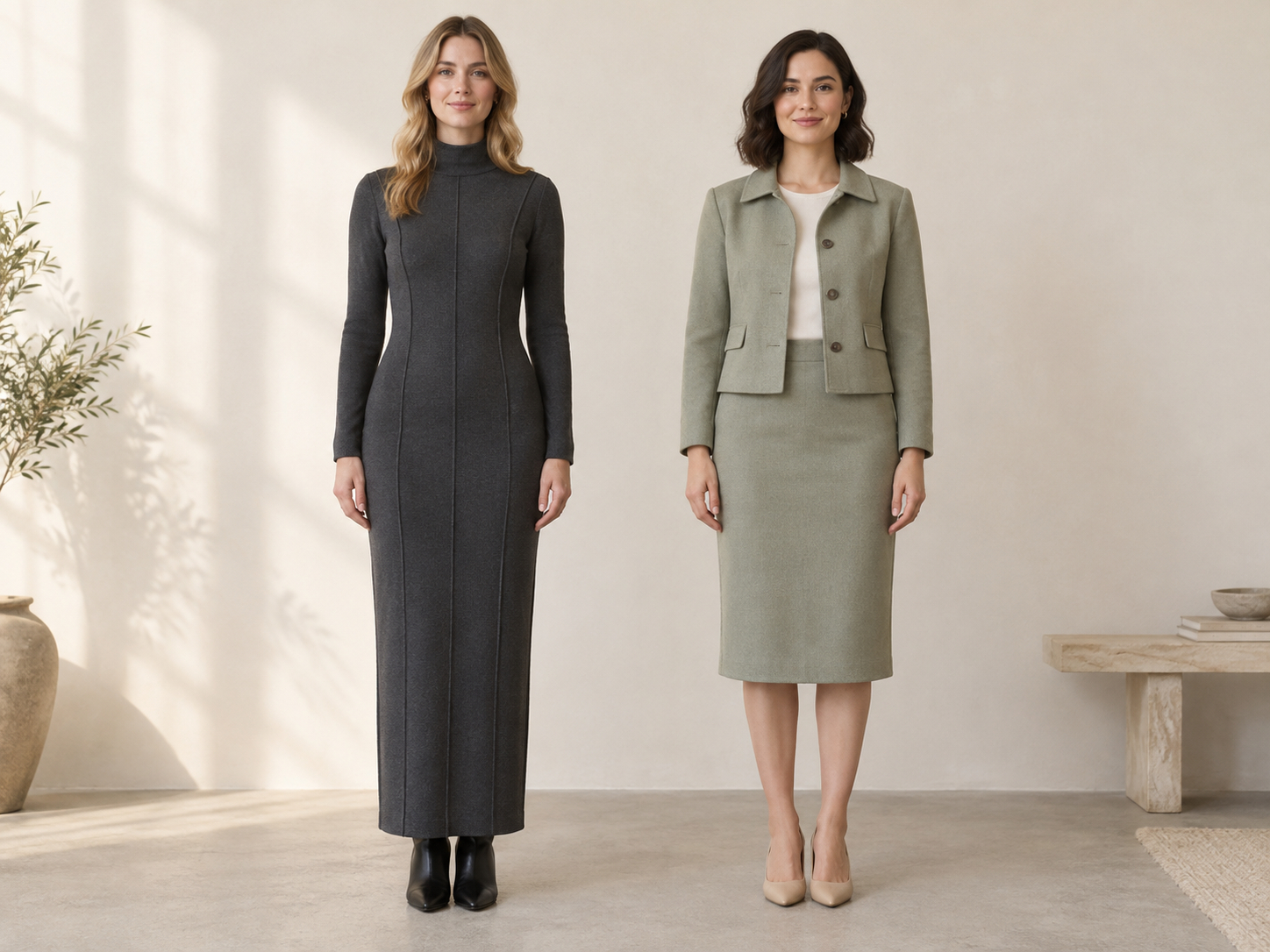
Physical height and visual vertical are related but not identical questions. Waist placement, torso-to-leg proportions, asymmetric features, shoes, and hemlines can change what the eye notices in a particular outfit. The body-proportions guide explores those garment breaks in more detail. Compare photographs taken at the same camera height and distance if you use them to study outfits; perspective can exaggerate an apparent line.
On a small screen, swipe the comparison table sideways.
| What you observe | Useful garment experiment | Do not infer |
|---|---|---|
| A long visual sweep | Compare a continuous color or long layer with several shorter pieces. | That height alone fixes an identity. |
| Fabric strains across the upper frame | Compare a roomier shoulder or sleeve cut at the same garment length. | That every broad shoulder belongs to one family. |
| A rounded outline changes the hang | Compare a rigid seam with a curved seam or softer cloth. | That bust or hip circumference determines an identity. |
| Even lines versus lively contrast | Compare a coordinated outfit with mixed lengths and scales. | That one successful outfit proves a category. |
Styling Principles: Balance, Drapery, and Fabric Choice
Kibbe’s approach is about the relationship of lines across a whole outfit. Try these cuts as experiments while you learn what feels comfortable and visually coherent. A useful result is a clearer understanding of your clothes, even if you never choose an Image Identity label.
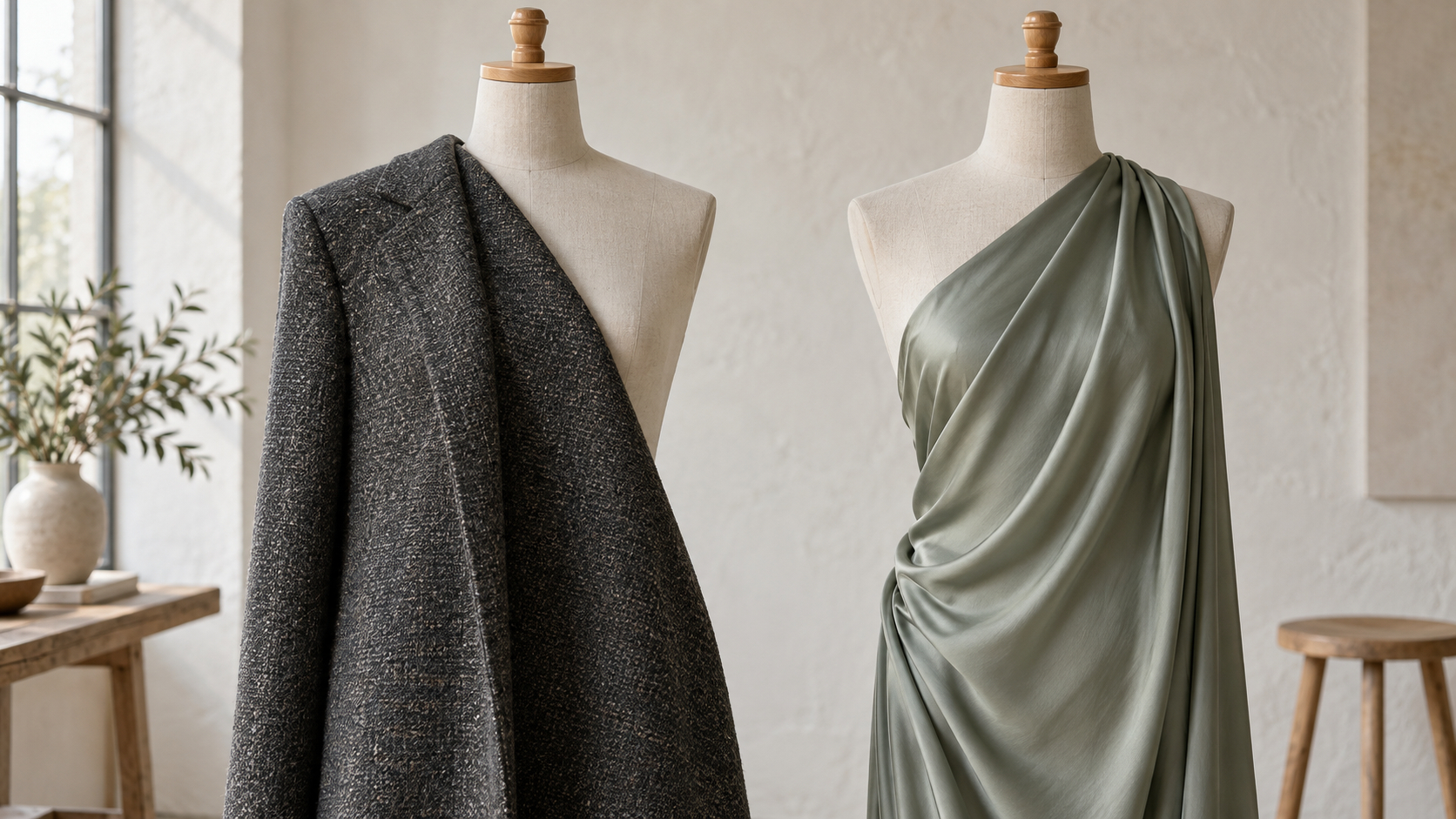
Strategic Necklines and Shoulder Cuts
A V-neck leads the eye inward and down. A boatneck draws a wider horizontal line; a raglan sleeve softens the shoulder transition. Try these with the same trousers or skirt so the upper-body change is easier to see. If a seam pulls or restricts movement, adjust its fit before drawing conclusions about its visual effect. A comfortable shoulder is more useful than a theoretical rule.
Waistlines and Midsection Drape
High-rise and mid-rise waistbands divide the torso and legs at different points; an empire seam moves that division upward. A fluid wrap follows and releases around the waist, while a firmer tailored seam holds a more defined shape. Compare the entire outfit in motion, including how the fabric moves when you sit. The proportions guide can help you isolate the effect of rise and torso length without turning them into an Image Identity test.
Hemlines and Trouser Silhouettes
An A-line skirt opens away from the hip, a straight leg continues downward, and a wide leg adds volume through the lower half. A cropped trouser creates a visible stopping point; a full-length trouser can extend a continuous line. Neither choice is universally better. Try two hemlines with the same top and shoes, then decide whether you prefer a long sweep, a deliberate break, or a softer curve.
Common Misconceptions and Dressing Nuances
An Image Identity is not a list of forbidden colors or a judgment about a body. Kibbe’s own description of his work stresses an individual head-to-toe result rather than isolated traits. Your size or weight can change, and garments can fit differently over time; revisit your current clothes instead of forcing an old label. A style direction can also develop as your tastes and daily needs change.
Kibbe’s Image Identities and John Kitchener’s style essences are separate systems. A geometric pear or rectangle outline does not translate into either result, and the terminology of one system should not be applied as a rule in the other. Our style essences guide introduces Kitchener’s framework on its own terms.
Frequently Asked Questions
How do I know if I have this body shape or a neighboring one?
Compare complete outfits and the line each creates rather than one body measurement. If two identities sound close, observe how vertical, width, curve, balance, and detail scale work together across several garments. The family table is an introduction, not a self-typing formula.
Can weight gain or loss change my primary silhouette?
Weight changes can change fit and visible softness, but they do not provide a reliable way to calculate an Image Identity. Reassess the clothes you wear now and the lines you like. No past label needs to control your wardrobe.
What is the single most flattering clothing formula for everyday wear?
There is no universal formula. Start with a comfortable outfit whose shoulder, waist, and hip fit is sound. Then compare a continuous line with a more segmented outfit, or a structured fabric with a fluid one. Keep the combination that expresses the effect you want.
How does vertical proportion (torso vs legs) affect this shape?
It changes where a waistband, jacket, or hem divides an outfit. A higher rise may make the legs appear longer; a longer top can change the balance again. That visual change is worth testing, but a torso-to-leg ratio alone cannot determine an Image Identity.
Explore Your Personal Proportions
Begin with the body-shapes overview for geometric proportions and this guide for Kibbe’s distinct styling vocabulary. If you would rather start with a photo and a short questionnaire, explore the planned body type test. Photo upload and personal results are not available yet, and the planned test is not an official Kibbe assessment.