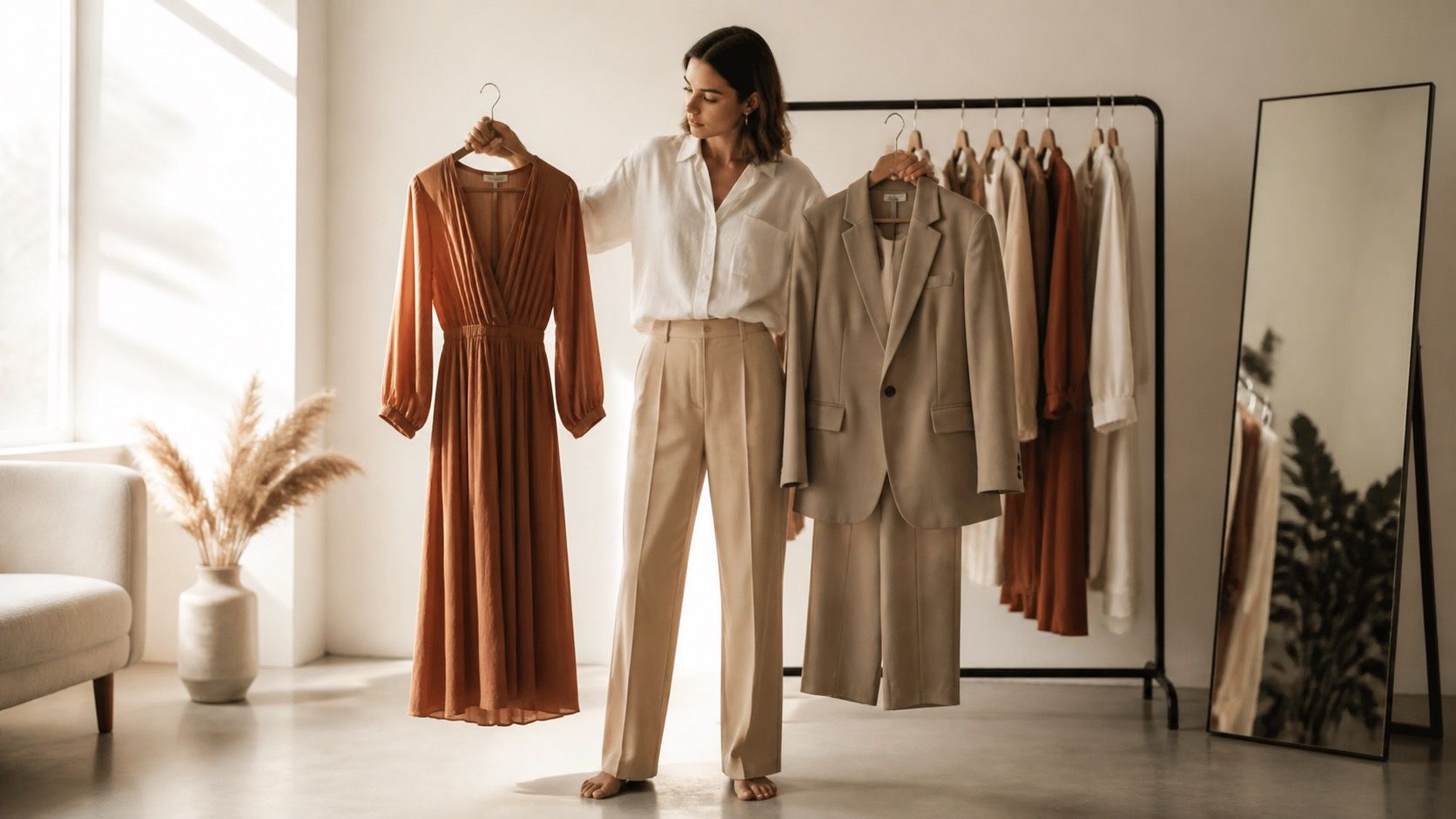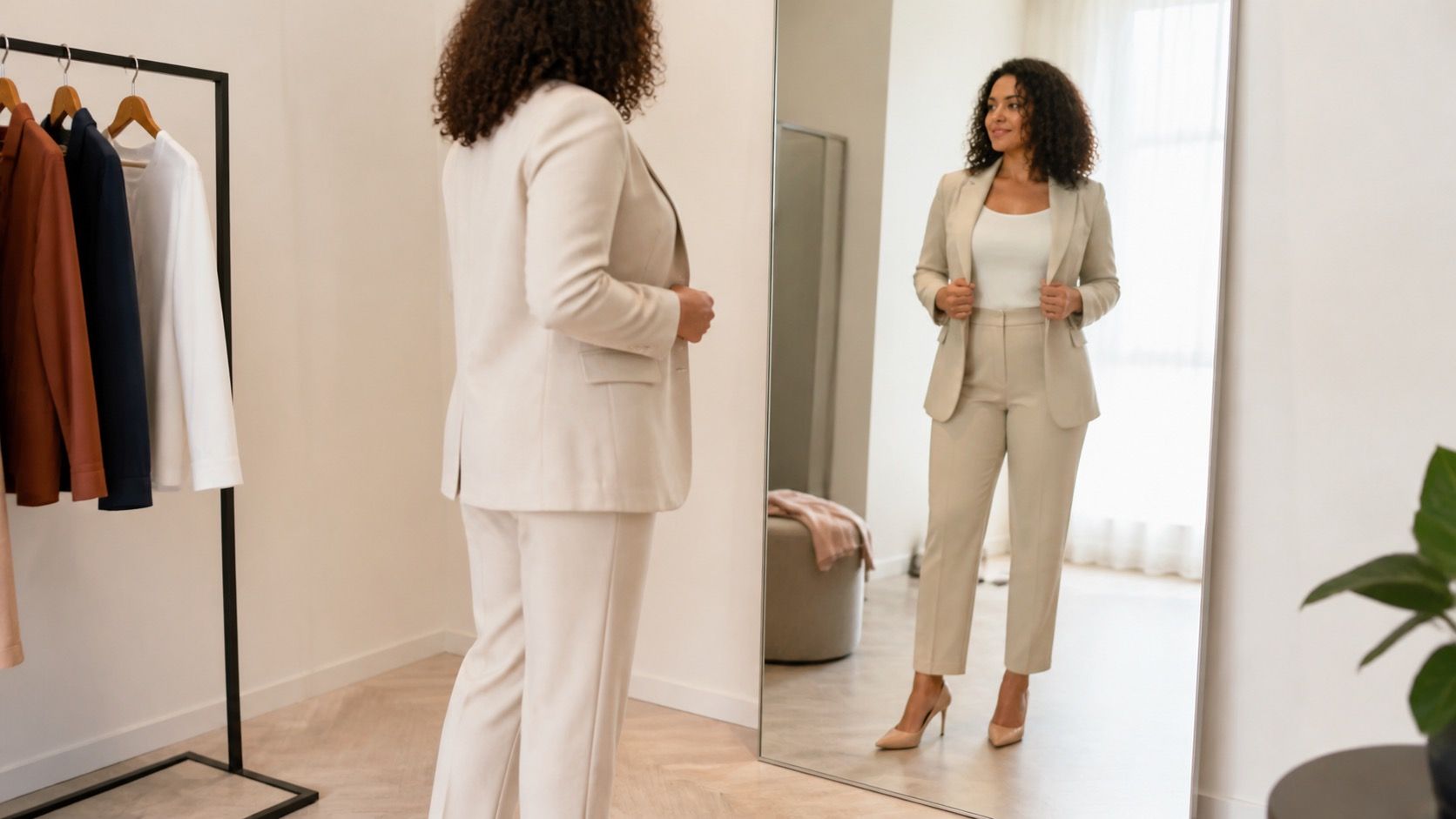
Hourglass body shape style is often reduced to one instruction: show the waist. That advice is incomplete, and it can make getting dressed feel oddly theatrical. A defined waist is only one part of an hourglass silhouette; shoulder fit, hip ease, fabric weight, and the length of a jacket all decide whether an outfit feels clean, comfortable, and like your own style rather than a costume.
Preserve the proportion instead of performing a shape
An hourglass outline usually means the bust and hips read as relatively balanced with a noticeable change at the waist. It does not mean every outfit needs a tight belt or a bodycon dress. Some people with this proportion prefer tailored shirts and straight trousers; others feel best in soft knitwear, loose layers, or wide-leg denim. The practical aim is to let clothes follow the body enough that the waist does not disappear by accident, while leaving enough ease to move.
Choose waist definition that still lets you breathe
There are several ways to create a waist line, and they do not produce the same effect. A wrap dress draws the eye diagonally and allows some adjustment, but it can gape at the bust or twist as you sit. A high-rise trouser with a tucked shirt gives a clearer horizontal break and often feels more modern for everyday wear. A belt over a dress is the quickest option, though a stiff or overly wide belt can divide the torso too sharply and make the outfit feel busy.
Try placement before tightening. Put a belt at the natural waist, then slightly above it, then wear the garment without one. Check the side view and sit down. The best placement may be lower than a style diagram suggests, especially if you have a short distance between bust and waist. A soft tie, a cardigan buttoned at one point, or tailoring through the back can create the same definition without pressure at the front.
| Method | Best practical use | Watch for |
|---|---|---|
| Wrap construction | Flexible definition in dresses and tops | Gaping, shifting ties, too much neckline |
| High-rise waistband | Clear separation with trousers or skirts | Waistband digging in when seated |
| Soft belt | Adjusting a simple dress or knit layer | Too much bulk at the center front |
| Tailored seams | Polished jackets, shirts, and sheath dresses | Pulling at bust or hip if ease is too small |
The right amount of definition should survive a normal day. If you cannot lift your arms, eat lunch, or sit at a desk without rearranging the garment, the line is too dependent on tension. A clean silhouette is rarely the result of squeezing the waist; it is usually the result of enough room everywhere else.
Make dresses and separates work together
Dresses are often the simplest starting point for how to dress an hourglass body because one garment can establish the shoulder, waist, and hip relationship. Look for wrap, fit-and-flare, shirt, knit, or softly tailored styles with a waist seam that lands where your torso naturally narrows. A dress does not have to be fitted all the way down. A skirt with gentle A-line movement can balance the top half while making walking and sitting much easier.
For separates, build from one anchor: either a defined waistband, a shaped top, or a layer with a clear opening. High-rise trousers with a fine-gauge knit tucked in can make a calm base for a long coat. A pencil or straight skirt works well with a shirt that has enough bust ease and a deliberate tuck. With wider trousers, a shorter cardigan or a top that ends near the waistband often keeps the waist visible without relying on a belt.
Pay attention to bulk. Thick front pockets, gathered elastic, and double layers of ribbed knit can add volume exactly where a smooth line would feel better. That does not make them forbidden; it means the rest of the outfit may need to be simpler. A bulky sweater with slim jeans can be a pleasing contrast. The same sweater under a tight blazer and a belted skirt may feel like too many competing ideas.
Solve common fit problems before changing your whole style
Hourglass outfits often fail because a garment fits one curve and ignores another. A blazer that fits the shoulders may pull at the bust or ride up at the hip. A dress may fit the hip but hang loose at the waist. A tailor can sometimes shape side seams, adjust a waist, or shorten a jacket, but cannot always create room at the shoulder or add substantial fabric through the hip. Buy for the hardest area to fit, then assess whether the remaining adjustment is realistic.
For button-front shirts, look for bust darts, stretch fabric, or brands that offer a curvier cut. If the buttons pull, sizing up and altering the waist may work better than forcing the smaller size. For trousers, test the seat and hip by sitting and taking a full step. If the waistband rides down or the pockets pull open, more hip ease or a different rise is usually the answer—not a tighter belt.
Jacket length is another quiet factor. A cropped jacket can emphasize the waist but may feel abrupt if it ends at the fullest hip. A longer blazer that passes that point can create a smooth vertical line, especially over a fitted top and straight trouser. Try both with the same shoes. What looks balanced barefoot can change once a boot, sneaker, or heel changes the visual length of the leg.
Adapt the idea for work, casual clothes, and personal taste
For work, hourglass body shape style often benefits from clean layers instead of obvious shaping. Try a softly tailored blazer left open over a tucked shell, a midi skirt with a smooth waistband, or high-rise trousers with a knit that is fine enough to tuck. The result can look professional without asking a belt to do all the work. If you prefer looser clothes, keep one point legible: an open neckline, a shorter top, a visible waistband, or a long vertical layer.
For casual outfits, denim is a useful laboratory. Test straight jeans, relaxed jeans, and wide-leg pairs with the same two tops. Note which rise stays in place, which pocket placement lies flat, and where the hem hits with your usual shoes. A half-tuck, a cropped sweatshirt, or a cardigan buttoned once can give enough structure for an hourglass silhouette while still feeling easy on a weekend.
Personal style is allowed to outrank a framework. You may want dramatic shoulders, oversized shirts, column dresses, or clothes with little waist emphasis. Use the framework to make those choices deliberate: add hip ease to a structured coat, choose a longer oversized shirt, or pair a straight dress with footwear that supports the vertical line. The best hourglass style does not prove that you have a waist. It gives you clothes you can forget about once you leave the mirror.