Inverted triangle body shape style is often presented as a campaign against broad shoulders. That misses the appeal of a strong shoulder line, which can make a plain shirt, blazer, or sleeveless dress look striking with very little effort. The practical question is whether an outfit has the amount of contrast you want between shoulders and hips. Some days a sharp V-neck and wide trousers feel balanced; other days a boxy jacket and narrow skirt feel exactly right. Rather than trying to shrink the upper body, use neckline, sleeve shape, lower-body volume, and hem weight to decide where the eye travels.
Understand the shoulder-to-hip relationship before trying to change it
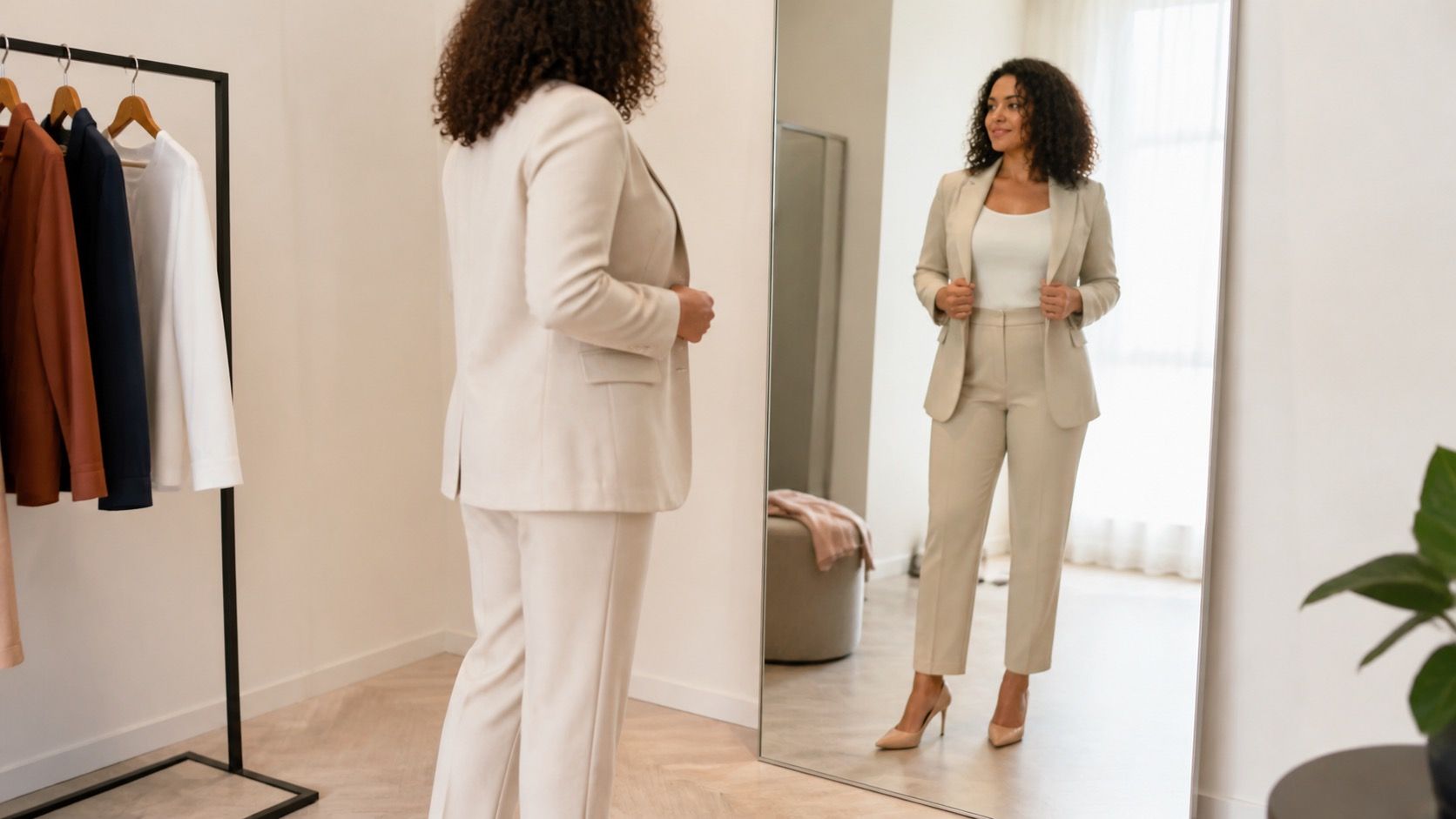
An inverted triangle usually reads as more visual width or structure across the shoulders and upper torso than across the hips. That can come from bone structure, athletic muscle, a fuller bust, posture, or simply a jacket with built-in padding. The label does not describe every angle. A person may look broad-shouldered in a crew-neck T-shirt but almost column-shaped in an open shirt and wide trousers. This is why a mirror test in more than one outfit is more useful than measuring once and treating the result as a wardrobe rule.
Use necklines and sleeves to control emphasis near the face
A V-neck, open collar, soft scoop, or wrap-style neckline creates a downward path from the face toward the centre of the torso. That can soften the horizontal emphasis of broad shoulders without covering them. It is not necessary to wear deep necklines; even a small opening at the collarbone changes the line. On a cool day, an unbuttoned shirt over a tank creates a similar effect through two vertical edges. The result is often calmer than adding more fabric around the neck.
Sleeve shape is worth testing in movement. A raglan sleeve, a softer dropped shoulder, or a sleeve with a narrow cuff may feel less structured than a sharply set-in cap sleeve. Very full puff sleeves, epaulettes, stiff ruffles, and wide boat necks can all add width, though they are still valid choices if that drama suits your taste. The distinction is intention. A deliberately sculptural shoulder paired with a simple lower half can look excellent; several competing shoulder details can make a basic outfit feel tiring.
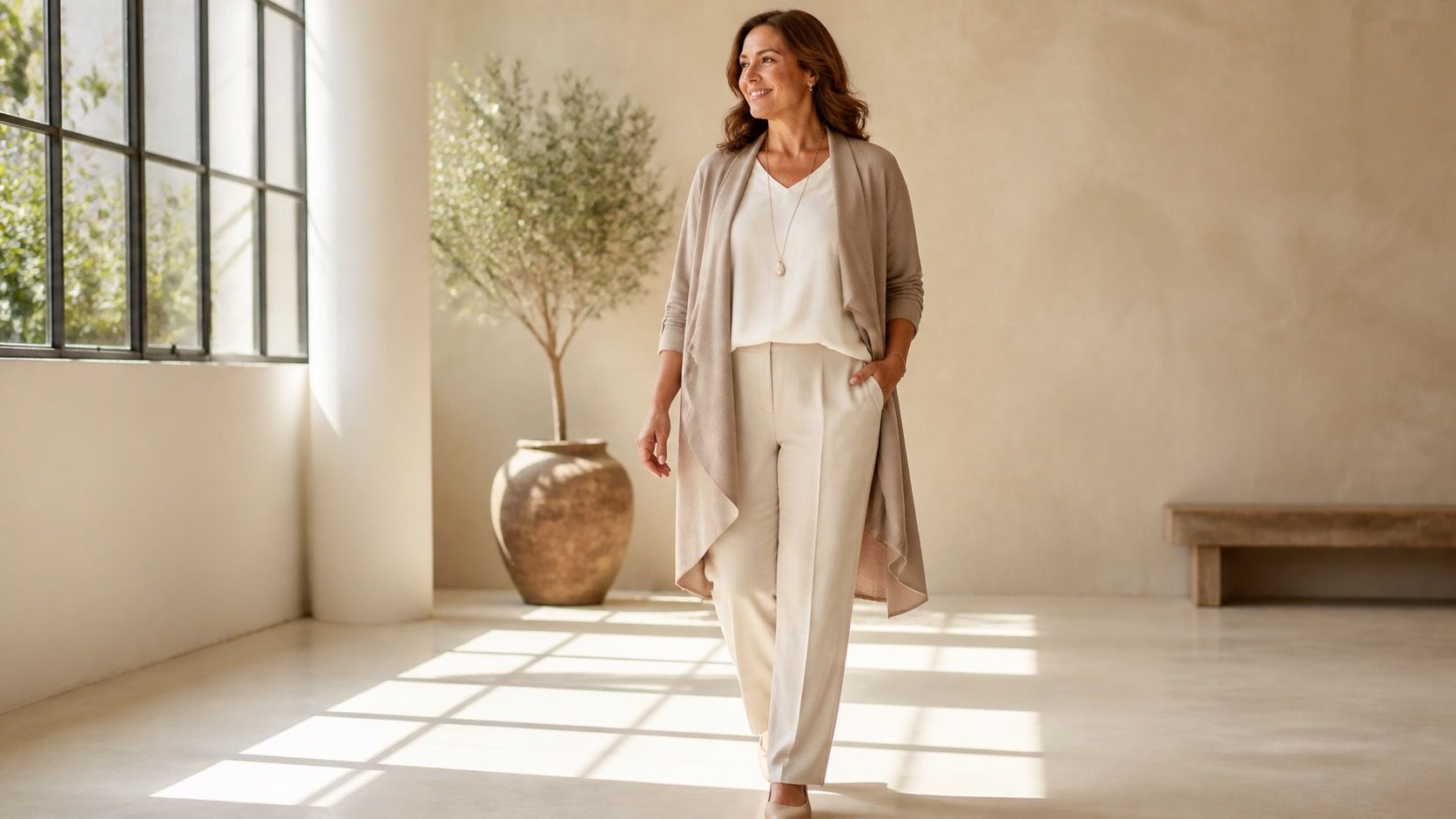
Accessories can redirect attention without becoming a workaround. A longer pendant, open scarf worn loosely, or earrings with vertical length can create a gentle central line. A short, wide necklace sits across the same horizontal zone as the shoulders and increases that emphasis. Neither is forbidden. Use the difference when deciding how much presence you want at the top on a particular day.
Add intentional weight below the waist instead of hiding the upper body
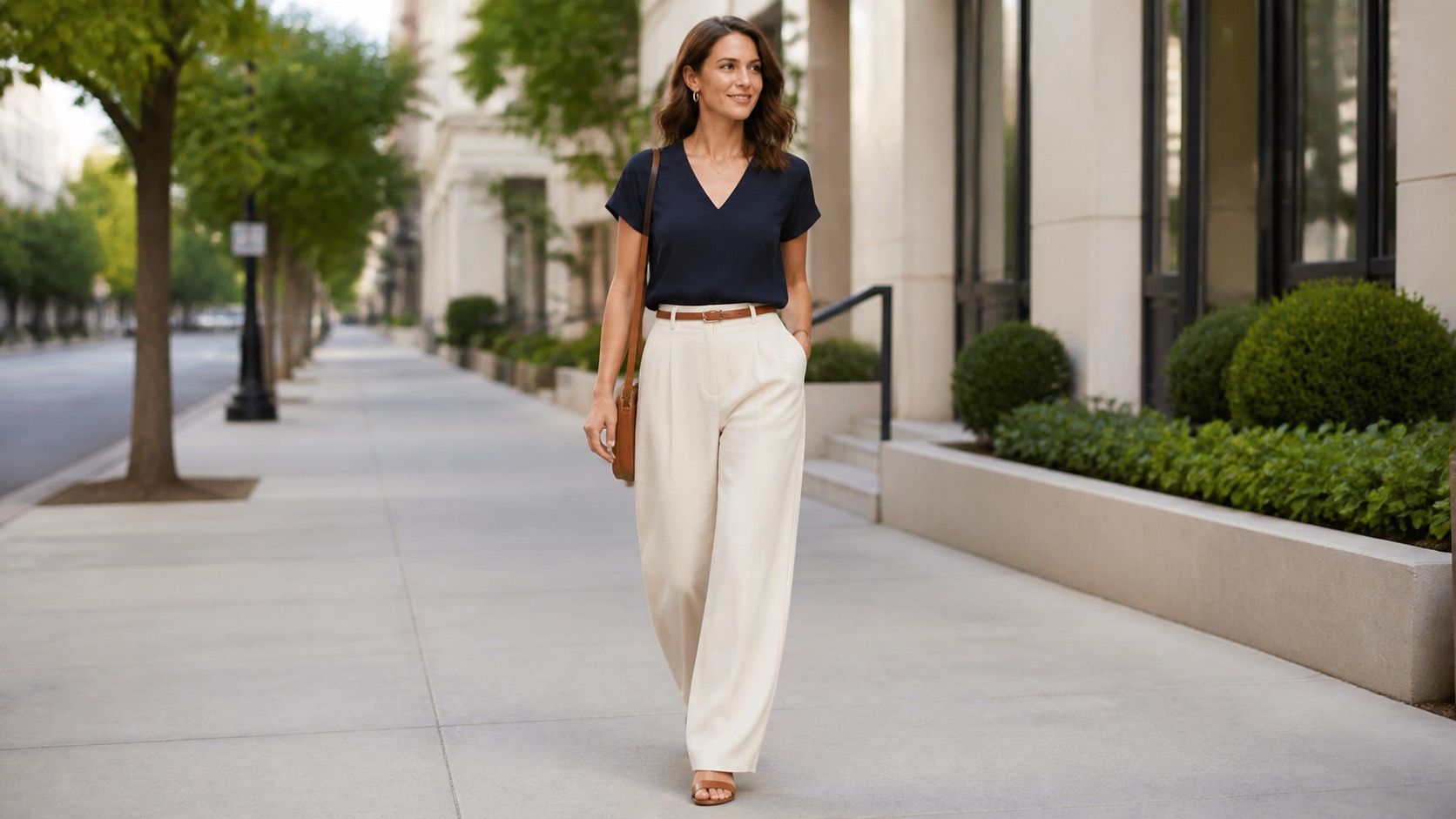
Wide-leg trousers, bootcut jeans, pleated trousers, and A-line skirts often work well for inverted triangle outfits because they give the lower half an equal role in the silhouette. The important word is “intentional.” A wide leg needs fabric that drops from the hip rather than sticks out at the waistband. A pleated trouser needs pleats that remain smooth when you sit. Try walking quickly and climbing a stair. If the garment swings freely but the waist stays in place, it is doing useful work.
A-line skirts offer another easy route. A skirt that begins close to the waist and opens gradually can make a fitted top feel balanced without requiring an elaborate blouse. Midi lengths are especially dependent on shoes: a delicate shoe may make the skirt feel heavy, while a boot, loafer, or sandal with a solid strap can connect the hem to the ground. This is not about making the feet look smaller or larger. It is about avoiding the floating, unfinished effect that appears when the hem has more visual weight than everything below it.
Print and colour can live below the waist too. Patterned trousers, a textured skirt, lighter denim, or a saturated shoe draw attention downward in a direct but relaxed way. If the top is also bright, choose one item to be the louder statement. A navy V-neck with checked trousers, for instance, has a clear hierarchy. A graphic top, patterned skirt, shiny belt, and bright shoe may still be fun, but it creates a different, more energetic look rather than a quiet balance.
| Lower-half choice | Why it can help | Practical fitting check |
|---|---|---|
| Wide-leg trouser | Extends visual width through the leg | Fabric falls straight from the hip and the waistband stays put |
| Bootcut jean | Adds a small counterweight at the hem | Hem works with your usual shoe height |
| A-line skirt | Creates gradual volume below the waist | You can take a full stride without pulling at the side seams |
| Pleated trouser | Adds movement and texture at the lower half | Pleats stay smooth when sitting |
Pick outerwear that respects the line of the outfit
Outerwear can make an inverted triangle body shape feel either streamlined or top-heavy depending on the shoulder and lapel. A single-breasted coat with an open V, a blazer with a soft lapel, or a trench with a relaxed sleeve gives the eye room to move downward. A double-breasted jacket with pronounced shoulder padding and a very short hem concentrates a lot of structure in one small area. That may be the exact effect you want for evening, but it is worth noticing before calling it an everyday basic.
Length changes the equation. A blazer ending around the high hip can work with a wider trouser because the trouser continues the shape. A cropped jacket can look sharp over a fit-and-flare dress if it allows the skirt to begin immediately below it. When a jacket ends at the widest point of the upper hip and the skirt beneath is narrow, the separate pieces can seem to stop each other. Try the coat or jacket open and closed; some pieces only make sense in one of those positions.
Watch the sleeve head as carefully as the lapel. A coat can fit across the chest but still look overly rigid because the sleeve head is high and padded. Softer wool, washed cotton, leather that has some give, or a knit jacket can preserve polish without adding more geometry. The best outerwear is not necessarily the least structured one. It is the piece whose shoulder, waist, and hem agree with the clothes underneath.
Let personal taste decide how much “balance” you want
How to dress broad shoulders should never become a set of restrictions. A halter top, strong blazer, crew-neck sweater, or sleeveless column dress can be a favourite precisely because it celebrates the upper body. Keep those clothes if they make you feel good. Body-shape ideas are most helpful when they give you alternatives for the days when you want a softer silhouette, not when they turn a preference into a rule.
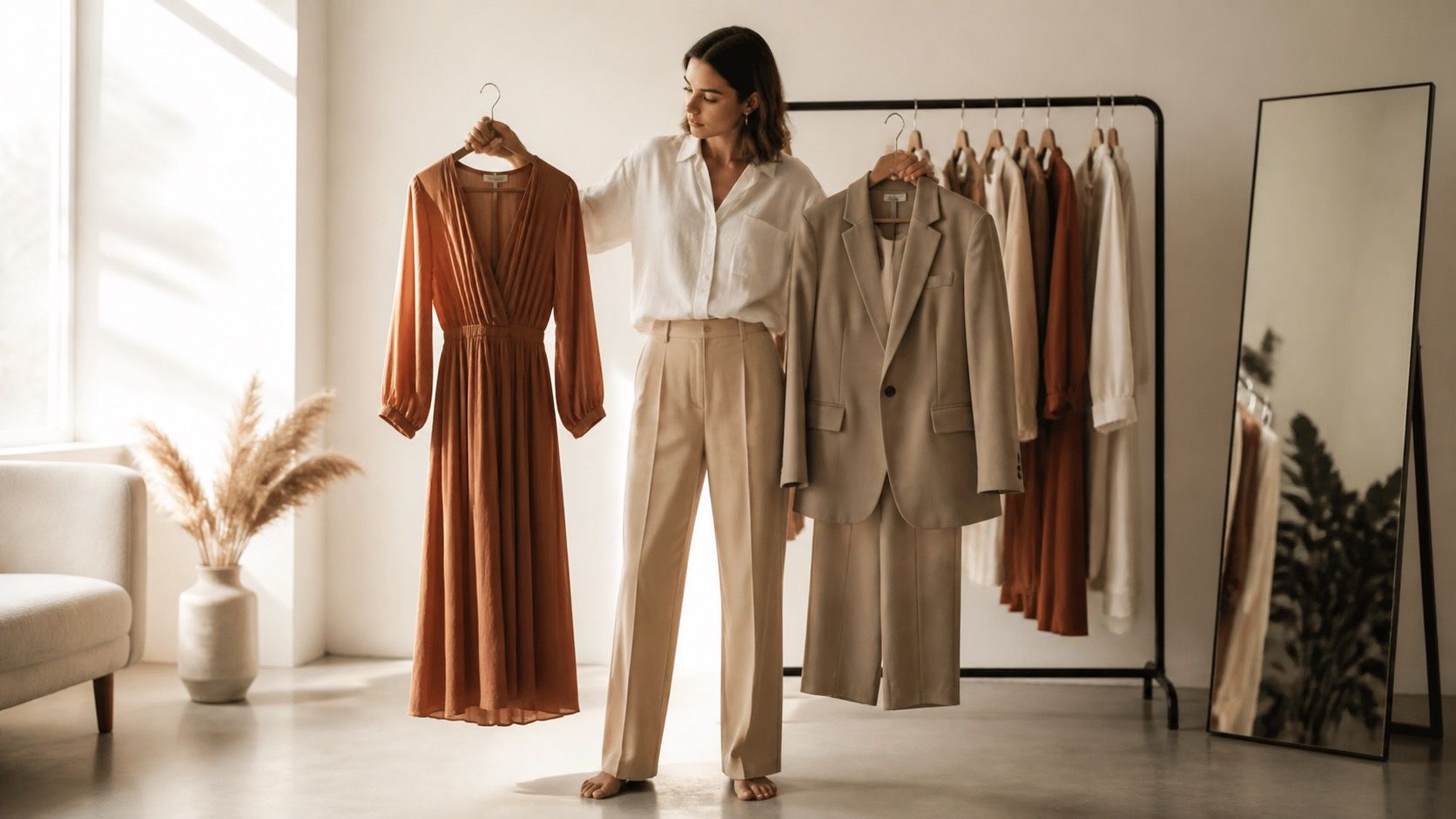
Build a few repeatable combinations so the decision is easy on busy mornings. A V-neck knit with straight or wide jeans and a substantial shoe is a reliable casual option. A fitted tank with an A-line skirt and relaxed cardigan gives the lower half more movement without losing simplicity. For work, try an open-collar shirt under a softly tailored blazer with pleated trousers. Each outfit distributes detail differently, which is why having more than one formula matters.
Finally, evaluate clothes after real use. A perfect fitting-room pose does not tell you whether a neckline shifts, a trouser creases badly, or a jacket makes you hold your arms stiffly all afternoon. Wear the outfit for a meal, commute, or ordinary walk and make a note of what you forgot about. Those are the pieces that deserve a place in your wardrobe. A style system should make choices clearer and kinder, not make you spend more time trying to correct a body that was never a problem.