Classic style can sound disappointingly neutral until you see what balance actually does in a fitting room. It is not about being bland, conventional, or dressed for someone else’s office. It is about clothes that hold a calm relationship between shoulder, waist, hem, and detail. When that relationship is off, even expensive pieces can look oddly busy: a very sharp lapel fights a very romantic blouse, or a huge tote overwhelms a neat column of tailoring. Kibbe Classic style gives a useful editing lens for people whose outfits improve when neither softness nor sharpness gets the last word.
Balance is not the same as being average
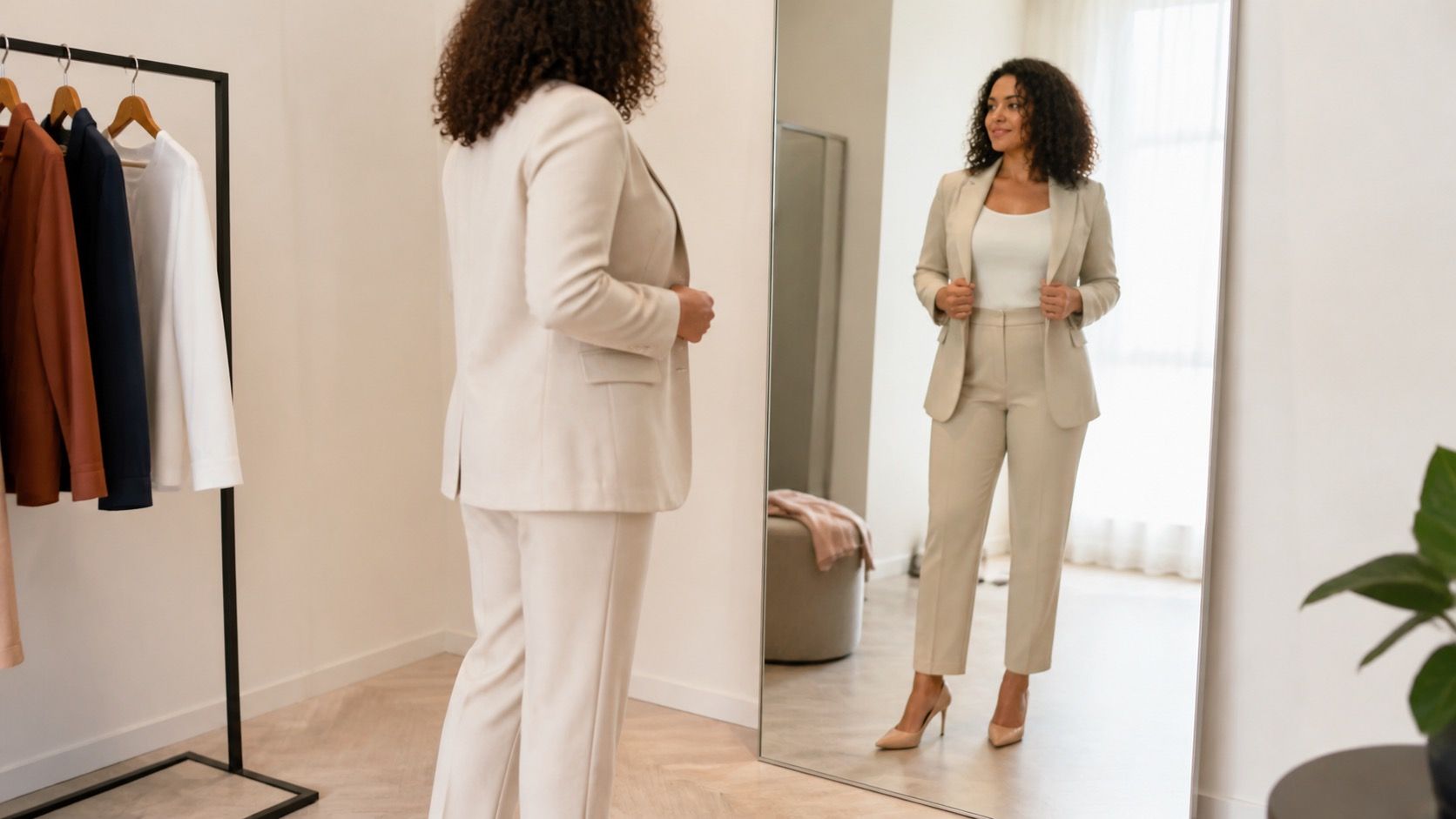
In Classic dressing, moderation is an active choice. A moderate shoulder, a measured neckline, an even trouser width, and a clear waist can create more presence than a single dramatic feature. The practical test is to stand a few steps away from the mirror. Does one garment announce itself before you see the person? A gigantic sleeve, a micro bag, a razor-sharp pointed shoe, or an extremely oversized blazer can pull the eye away from the overall line. None is automatically wrong, but each needs the rest of the outfit to answer it.
Classic: even proportion and clean fit
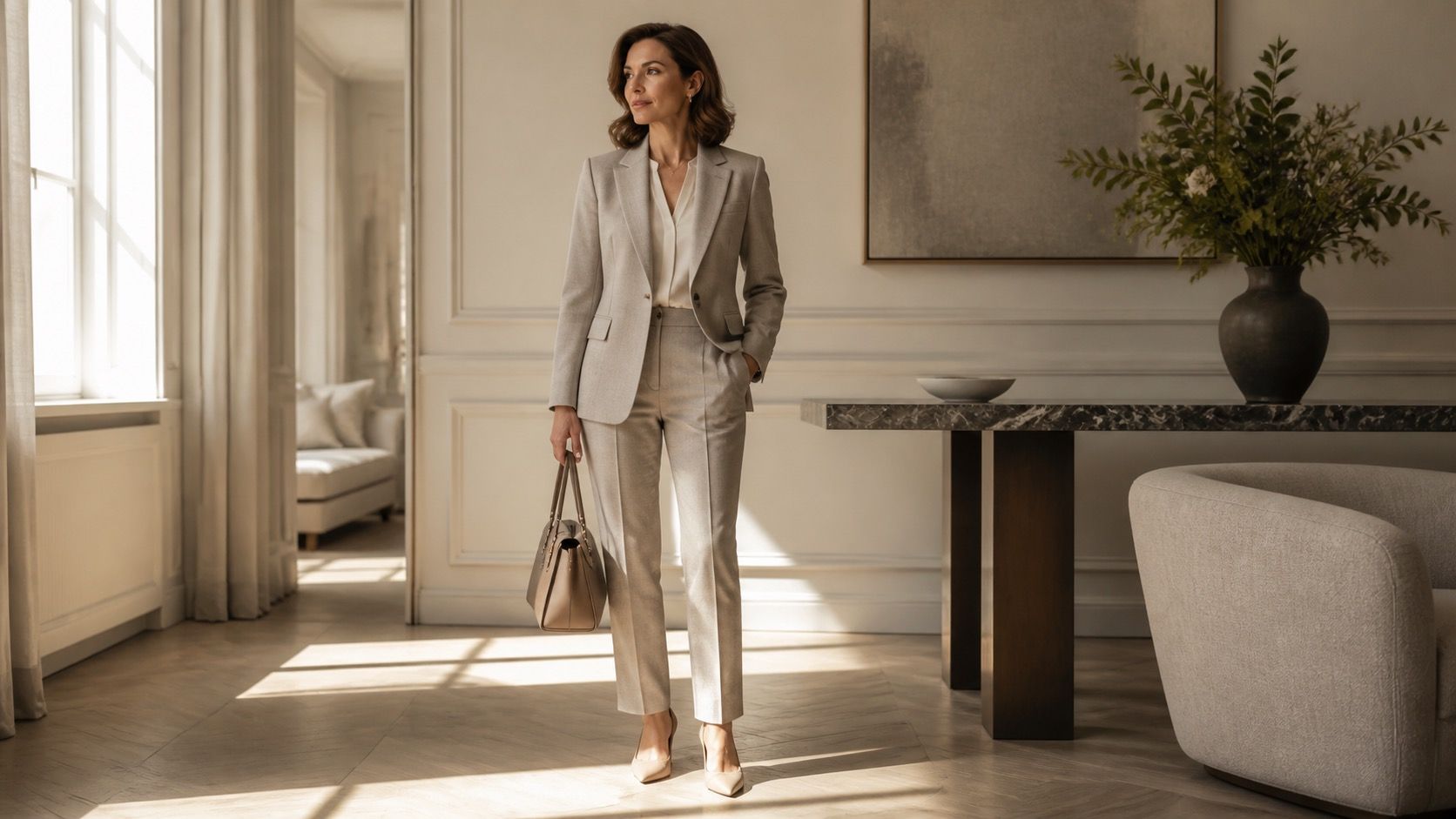
Pure Classic style is often easiest to build with pieces that look complete without needing special effects. A softly tailored blazer, a neat blouse, a straight trouser, a sheath dress, or a cardigan with a defined shoulder line can all work when the scale remains moderate. The important word is clean, not severe. A garment should skim rather than cling, and it should not have so much volume that the waist and limbs disappear. Smooth wool, fine cotton, compact knitwear, and matte crepe usually cooperate because they hold a line without looking stiff.
Try a simple three-piece test with any outfit: shoulder, waist, hem. If the jacket has pronounced shoulder padding, the waist may need gentle shaping rather than a loose box. If the skirt is very full, the top should be relatively quiet. If trousers are wide, their length needs to be intentional; a cropped hem that hovers at an arbitrary point can make the whole look feel unsettled. Classic proportion is less about a formula than about avoiding a sudden jump from narrow to huge, short to long, or soft to hard.
Accessories should support the same measured effect. A medium structured bag, a leather pump or loafer with a clean toe, and jewelry with a smooth finish tend to integrate easily. Tiny novelty details and very rugged hardware can interrupt the line. This is useful news, not a limitation: one well-shaped watch or a simple earring often looks more expensive and more personal than an armful of competing pieces. The outfit should look considered before accessories are added; they are a period, not the entire sentence.
Soft Classic: gentle curve without ornament overload
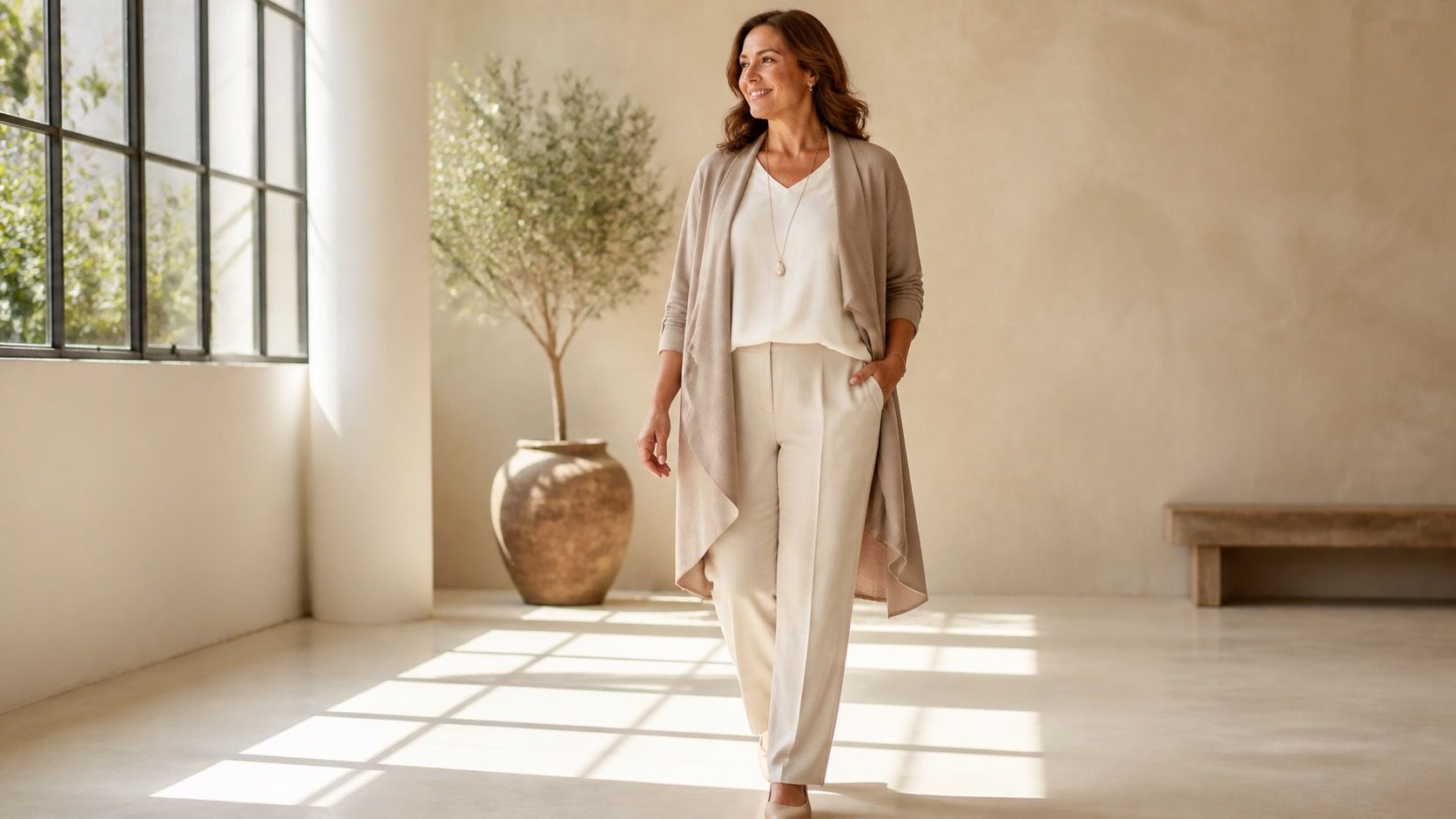
Soft Classic outfits add a little roundness and fluidity to the balanced base. The mistake is to interpret that as a demand for sweetness. What works is controlled softness: a gently draped blouse, a rounded neckline, a skirt that moves without ballooning, or a jacket with a softened lapel. The silhouette still benefits from a visible waist and an even length relationship between top and bottom. If the fabric is very floaty and the accessories are very delicate, the outfit can lose its center. A smooth belt, a stable shoe, or a more substantial bag restores the balance.
Soft Classic outfits often improve when the fabric has a quiet surface. Satin that is too shiny can make every fold look important; heavy texture can look more rustic than refined. Consider silk crepe, fine-gauge knit, soft suiting, a subtle floral, or a print whose colors are close in value. In a changing room, look at the garment in ordinary light rather than only under a spotlight. If the print is the first thing you see from several feet away, it may be working harder than the silhouette. The best patterns here tend to read as one soft impression.
Waist shaping is useful, but it should be gentle. A wrap dress with controlled drape, a blouse tucked smoothly into a skirt, or a cardigan that ends around the hip can define the middle without making it look squeezed. Avoid adding a tight belt to every soft garment. It can create puckering and turn a graceful line into separate upper and lower halves. When in doubt, choose the garment that holds its own shape first, then decide whether a belt actually improves it.
Dramatic Classic: polish with a sharper finish
Dramatic Classic style keeps the family’s symmetry but tolerates a crisper edge. The contrast is usually vertical or tailored rather than chaotic: a long clean trouser, a more angular collar, a narrow belt, a defined shoulder, or a high-quality sharp crease. The garment still needs to fit with precision. An aggressively oversized menswear blazer can overwhelm the balance, while a jacket with a firm line through the shoulder and a clear waist gives the desired polish without looking theatrical.
Color can supply the sharper finish. A navy column with ivory at the neckline, charcoal with a controlled silver accessory, or black-and-cream in large simple areas can look striking because the underlying silhouette remains quiet. Very small color blocking, busy contrast trim, and several competing geometric prints usually create a fussier effect. Keep the contrast legible at a distance. One dark shoe and a matching belt can be enough; there is no need to repeat the color in every accessory.
For evening, the temptation is to add drama through sparkle, exposed cut-outs, and extra detail at once. A more Classic approach is often stronger: a dress with clean seam placement, a defined neckline, and one refined surface such as crepe, polished wool, or restrained satin. If the shape is good, the eye does not need constant entertainment. A structured clutch or a sleek earring can complete the look. If both shoe and jewelry are sharply angular, let the dress stay smooth so the outfit does not become all punctuation.
Edit the outfit until it feels calm
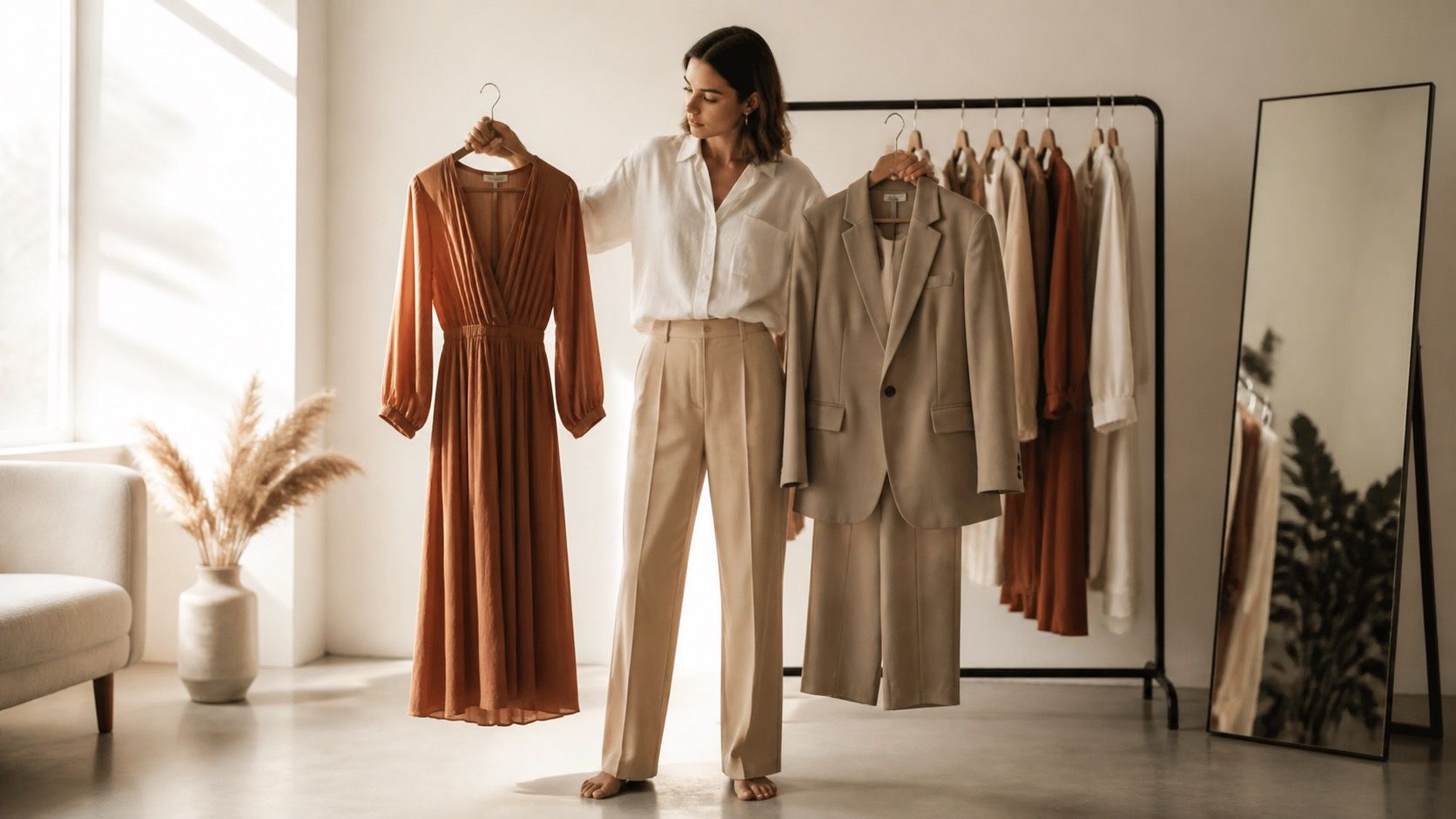
Classic family style is easiest to use as a final edit. Put on the clothes you genuinely like, then identify the loudest contrast: scale, texture, fit, color, or ornament. Reduce one, not everything. A voluminous sleeve may be fine if the trouser is straight and the shoe is simple. A polished pointed pump may be fine if the bag is smooth and medium sized. The goal is not to erase personality; it is to give personality a frame. A good outfit has a clear outline before anyone notices the details.
This small diagnostic table can help when the mirror says an outfit is almost right but not settled. It is deliberately practical: the same jacket can feel balanced with one pair of trousers and wrong with another, so use the whole look as the unit of judgment.
| If the outfit feels | Try | Be careful of |
|---|---|---|
| Too plain | Add one polished texture or a measured contrast | Layering several tiny decorative accents |
| Too severe | Soften one neckline, fabric, or edge | Adding volume everywhere |
| Too busy | Match accessory scale and simplify the color story | Mixing sharp, romantic, and rustic details |
| Too boxy | Choose gentle waist shaping or a cleaner hem | Pulling the waist in with a harsh tight belt |
The enduring value of Kibbe Classic style is that it teaches a useful kind of confidence: the clothes do not need to prove how unusual they are. Start with precise fit, moderate scale, and a coherent finish. Let Soft Classic bring softness through controlled drape, let Dramatic Classic bring crispness through clean tailoring, and let pure Classic keep the proportions even. When the outfit feels calm from shoulder to hem, it will usually look more intentional than a collection of individually impressive pieces.