Kibbe dramatic style is often reduced to blazers, black clothing, and severe angles. That shorthand misses the point. The Dramatic family is about responding to a strong impression of length and a sharper or more controlled line. Within that family, Dramatic, Soft Dramatic, and Dramatic Classic need different things from fabric and shape. The useful question is not whether an outfit looks intimidating enough; it is whether its scale and structure make the person look settled inside it.
What connects the Dramatic family
Vertical is the thread that usually connects this group. It can show up as actual height, a long-looking limb line, an elongated silhouette, or simply the way a person carries a straight coat or full-length trouser. Clothes that interrupt this line repeatedly with tiny contrast blocks, fussy trim, or short boxy layers can look disconnected even when every individual piece is attractive.
Dramatic: clean geometry and uninterrupted length
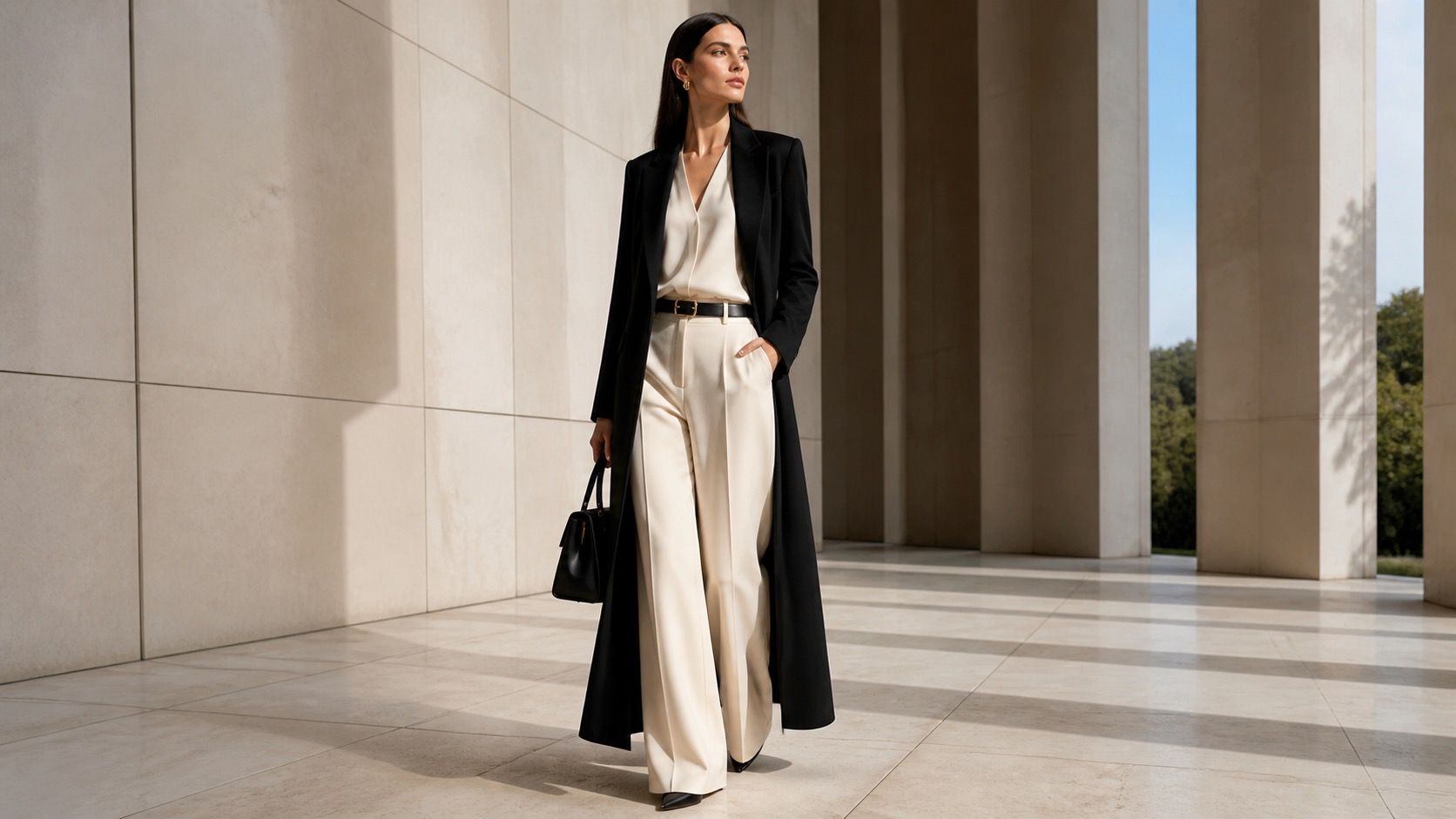
For a more pure Dramatic direction, crisp geometry and a long line are often persuasive. Think of a long column dress, a sharp trouser suit, a straight coat with a defined shoulder, or a lean knit paired with a full-length skirt. The pieces do not need to be tight. In fact, clothing that is too tight can turn clean line into visible strain. The silhouette should have space to hang with intent.
Tailoring works best when it is precise rather than busy. A jacket with an elongated lapel and a clean front may be enough; a jacket covered in decorative buttons, rounded patch pockets, and gathered sleeves can dilute the effect. Fabrics with some body, such as firm wool, compact ponte, polished cotton, or structured silk, tend to keep the outline readable.
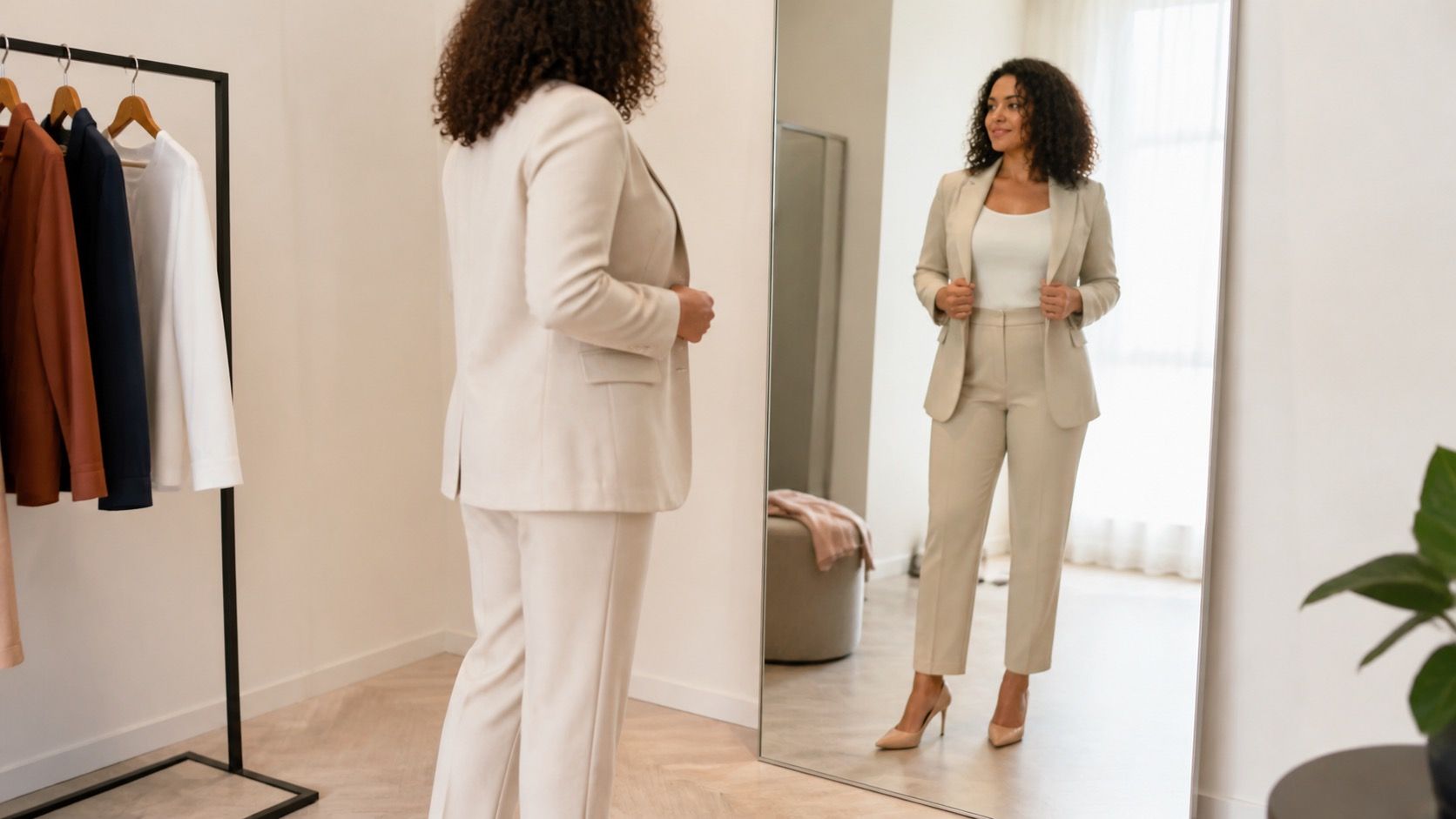
Try a practical comparison in front of a mirror: wear the same long trousers with a short rounded cardigan, then with a straight hip-length jacket. Notice whether the second version allows the eye to travel more easily. If it does, that is a useful clue. It does not mean every cardigan is forbidden; a longer, cleaner knit may work beautifully.
Soft Dramatic: preserve length while making room for bold drape
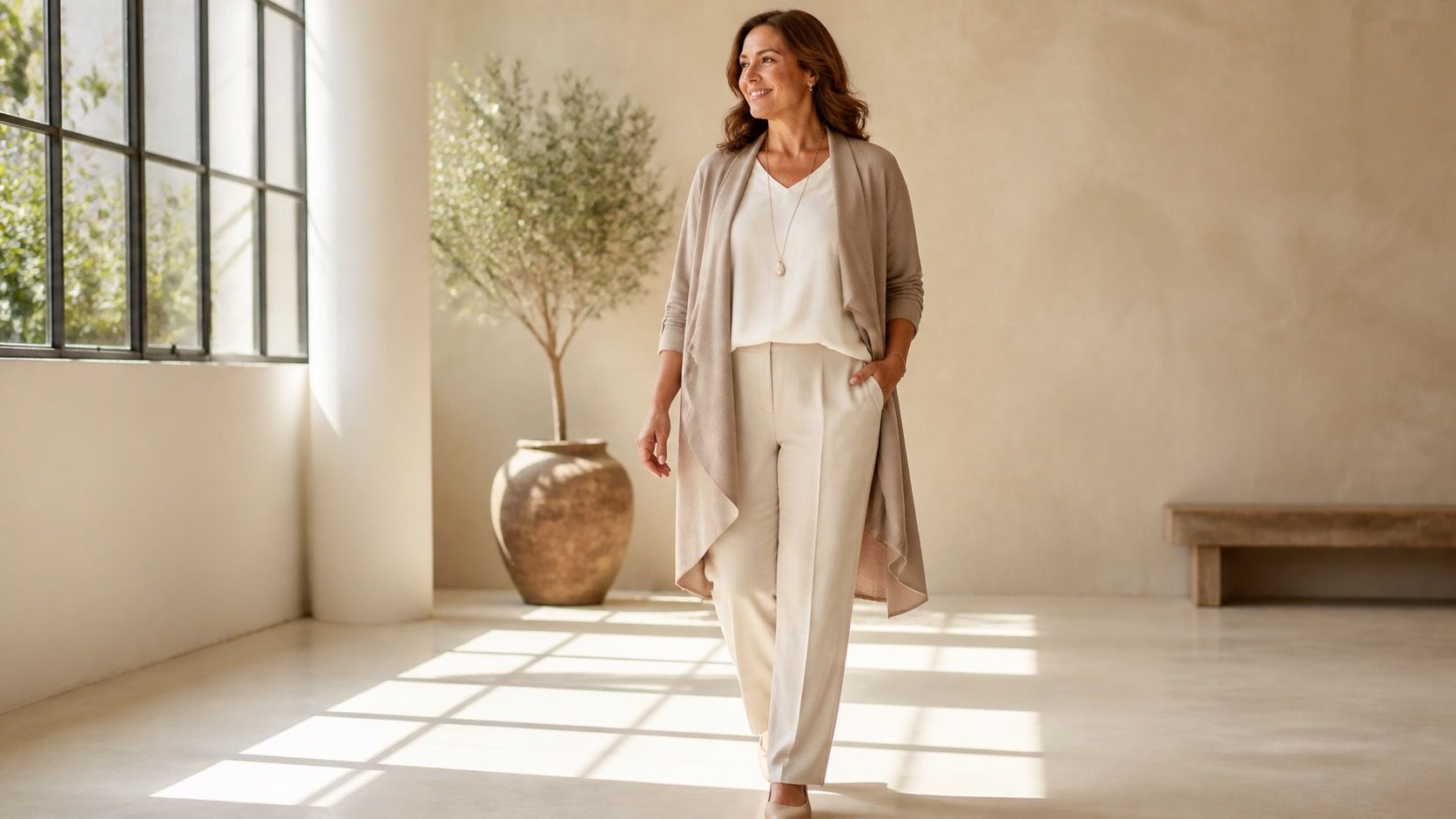
Soft dramatic outfits still need vertical, but they usually tolerate and benefit from more curve, sweep, and richness. A long dress with controlled drape, a deep neckline, broad lapels, a substantial cuff, or a sweeping trouser can feel more natural than strict minimalism. The word soft refers to the added yin influence, not to a requirement for tiny florals or delicate accessories.
The challenge is keeping drape deliberate. Thin fabric gathered at every point can look limp, while a fabric with weight creates a visible line as it falls. A wrap dress, bias-cut skirt, or wide-leg trouser can work when there is enough length and a clear shoulder. An oversized shapeless top may hide the very vertical that makes the outfit coherent.
Prints and accessories can be bolder here, but their scale should feel intentional. A large botanical motif, a substantial earring, or a dramatic neckline may support the presence of the outfit. When several elements compete at once, edit one. The goal is a strong composition, not a collection of attention-grabbing parts.
Dramatic Classic: balance with a crisp edge
Dramatic Classic Kibbe styling is often discussed as though it were a halfway house between two extremes. In practice, it is about balance first, with a controlled edge. Symmetry, moderate scale, clean tailoring, and smooth fabrics tend to make sense. A suit can be shaped without being oversized; a dress can be sleek without becoming a straight severe column.
| Direction | Line to test | Details that often help |
|---|---|---|
| Dramatic | Long, narrow, geometric | Sharp shoulders, crisp seams, elongated shapes |
| Soft Dramatic | Long with controlled curve | Bold drape, substantial scale, defined neckline |
| Dramatic Classic | Balanced with a crisp edge | Symmetry, moderate tailoring, smooth finish |
Very oversized pieces can swallow the balanced frame, while overly ornate trimming can make the outfit look crowded. A medium-width belt, polished loafer, simple watch, or structured bag often gives enough finish. The difference is subtle: the clothes should read as composed, not theatrical.
Use the same restraint with color contrast. A two-color outfit with clear lines can be strong; multiple abrupt blocks, novelty prints, and heavily distressed textures may scatter attention. If you enjoy those elements, introduce one at a time and check whether the overall outline remains calm.
Test the family through your own wardrobe
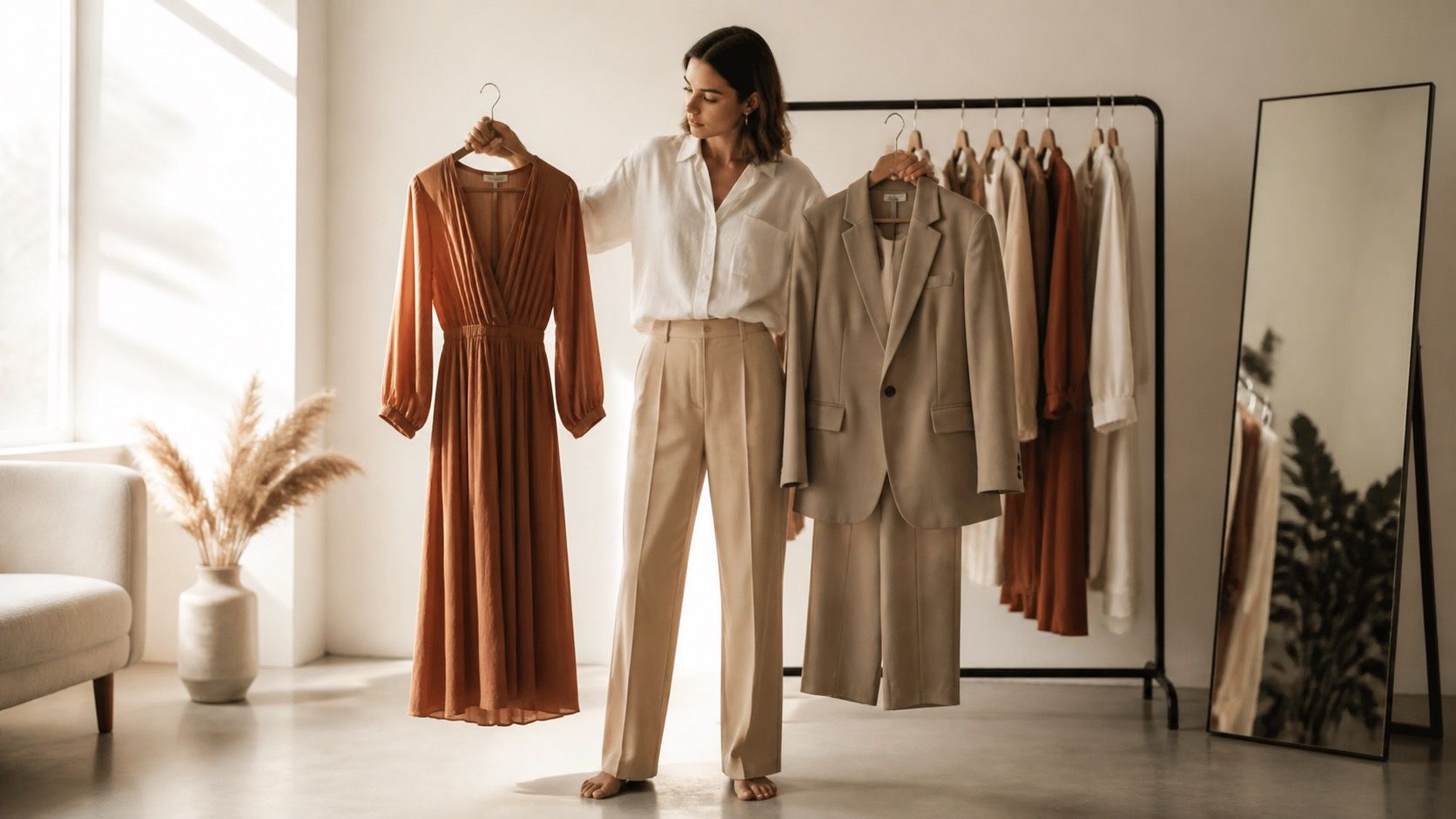
Start with items you already own rather than searching for a perfect Dramatic family uniform. Pull out one long outer layer, one tailored jacket, one softly draped garment, one balanced structured outfit, and a few accessories in different scales. Photograph them in daylight from a few steps away. Close-up mirror inspection is less useful because it hides how the outfit reads as a whole.
Look for repeated evidence. Do you appear more at ease when the hemline is longer? Does a crisp shoulder immediately make casual clothes feel more intentional? Do broad draped shapes look right only when they preserve a long line? Your answers may point toward one direction, or they may show that a single family label is less helpful than a few dependable principles.
Kibbe dramatic style should give you more options, not fewer. Keep the vertical, sharpness, and tailoring ideas that explain your best outfits, then make room for your real life: weather, work, comfort, favorite colors, and the occasional garment that succeeds for reasons no system can predict.
When you are comparing these directions, keep the test conditions simple. Use the same shoes, light, and base garment so a new lipstick, a dramatic pose, or an unusually flattering camera angle does not get credit for the clothing. Pay attention to the less glamorous evidence too: whether a shoulder seam stays in place, whether a long skirt catches at the knee, and whether a large earring feels intentional after an hour. The most convincing outfit will usually remain convincing when you are tired, carrying a coat, or seeing yourself in a shop window. That kind of durability is worth more than a highly styled mirror photo. It lets you borrow useful ideas from Dramatic, Soft Dramatic, or Dramatic Classic without forcing a permanent label before your wardrobe has supplied enough evidence.
Keep the notes concrete. A hem that stays straight, a collar that lies flat, and a sleeve that does not fight your movement are better evidence than a label attached to a single photo.