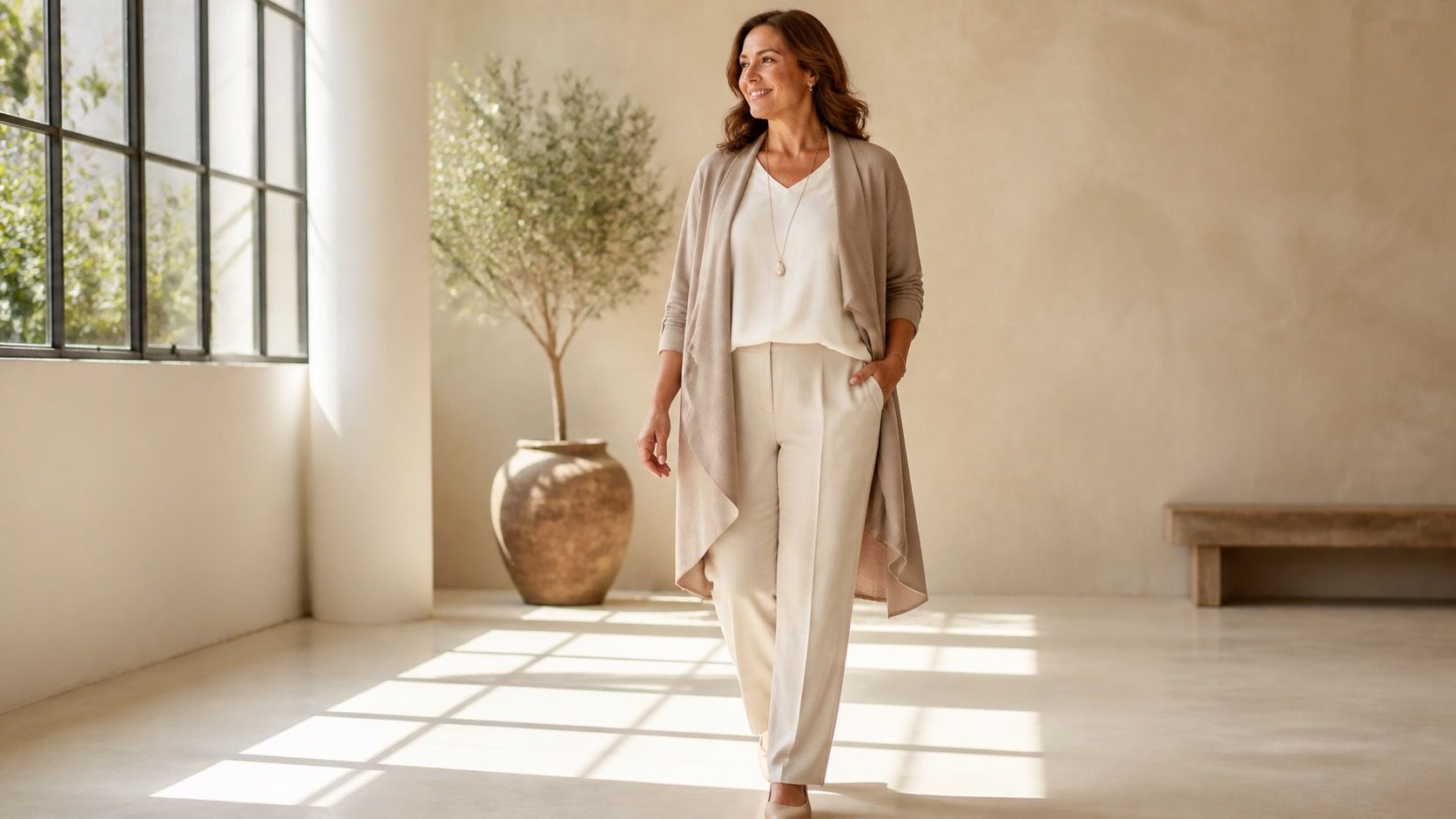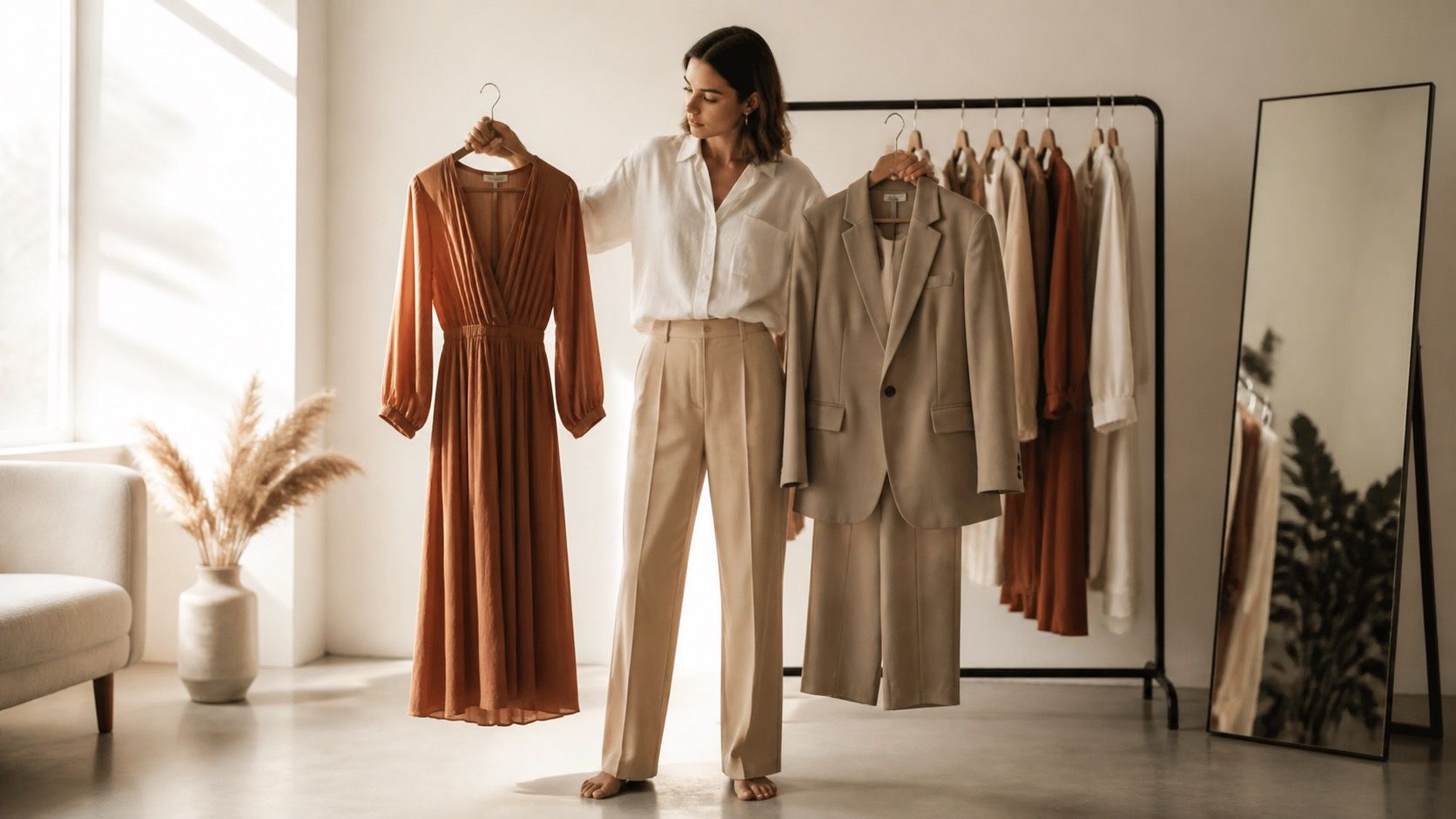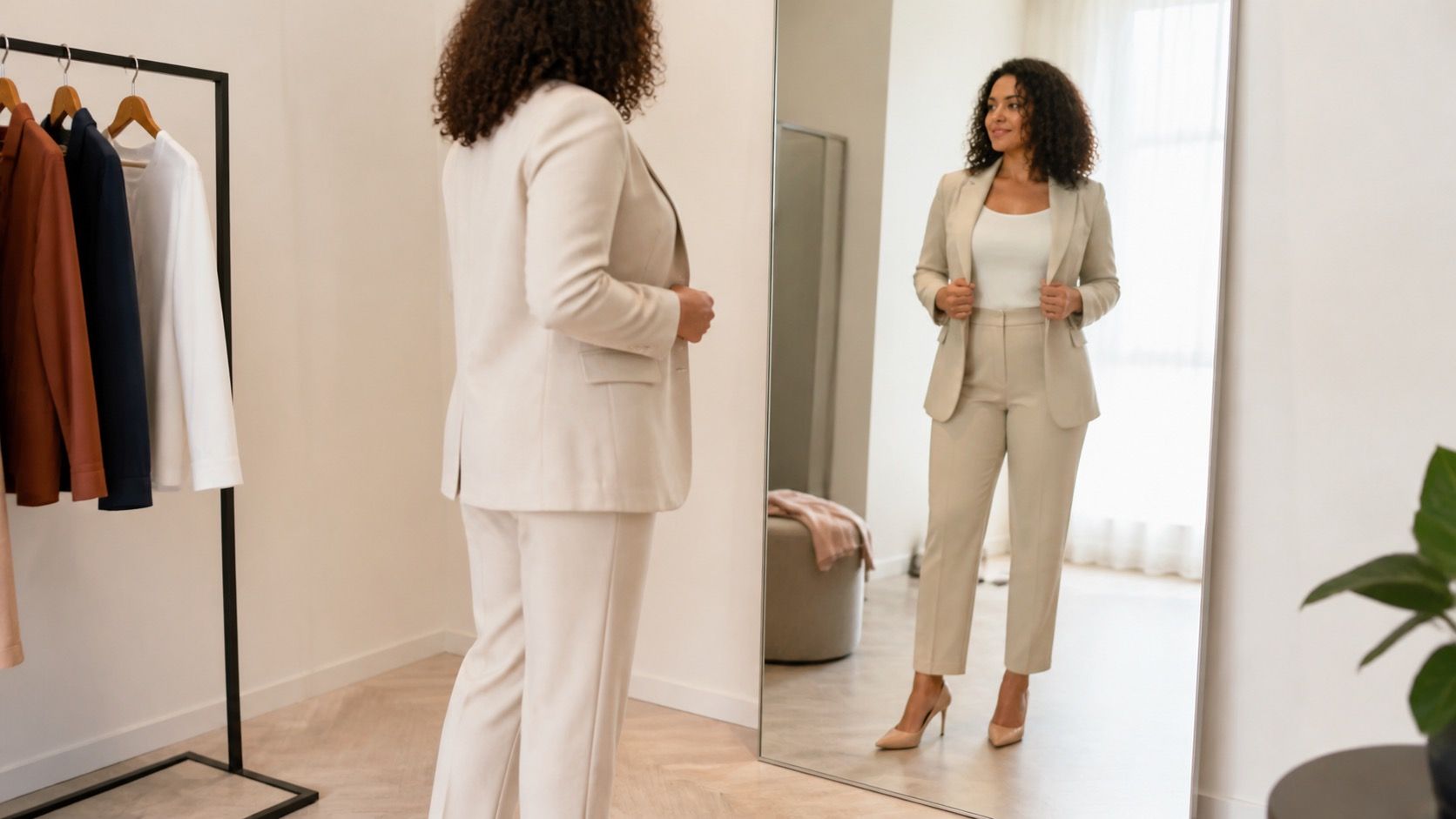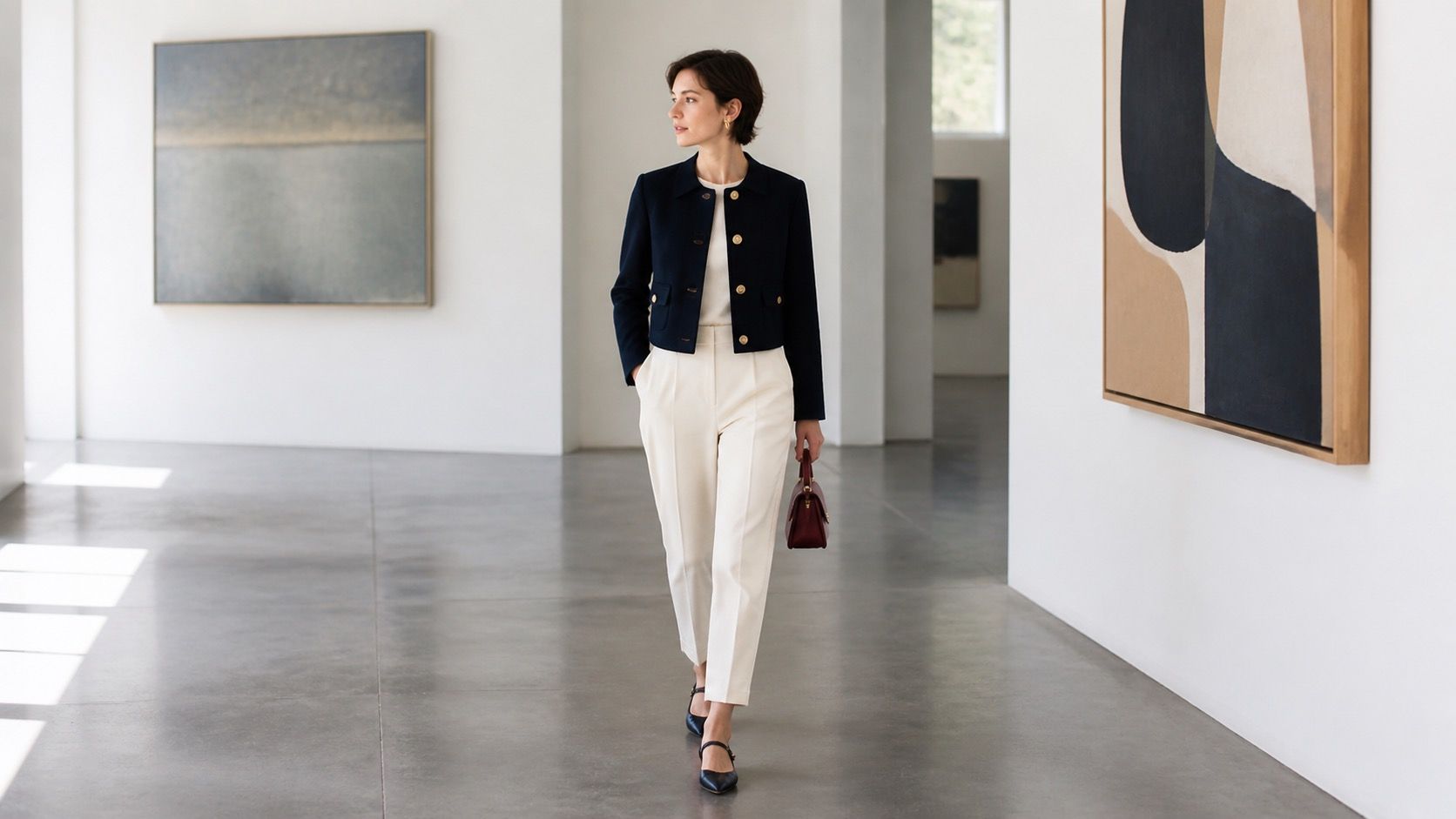
The Gamine family is frequently described as playful, which is true but not very helpful when you are deciding between two jackets at 8 a.m. The working idea is sharper: a Gamine outfit often comes alive through distinct changes of line, scale, color, or texture. It does not need to be childish, and it does not need to be covered in novelty details. What it needs is a visible rhythm. A short jacket over a neat trouser, a crisp collar against a soft knit, or a deliberate color block can make an outfit look alert and coherent. When every piece is long, blended, and flowing, the same person may look as though the clothes are wearing them.
Use contrast as rhythm, not clutter
Contrast in Kibbe Gamine style is the feeling that the eye encounters clear beats as it moves through the outfit. Those beats can come from a cropped hem, a contrasting collar, a belt, an ankle-revealing trouser length, or a shoe with a defined shape. This is why a simple outfit of dark cigarette trousers, a light fitted top, and a short cardigan can look more convincing than a head-to-toe monochrome column. The contrast is not loud; it is simply readable. Start with two points of difference rather than five. A third contrast may add energy, but a fourth often turns the clothing into a list.
Gamine: crisp broken lines
Pure Gamine style usually has the cleanest, most compact expression of the family. Think fitted or neatly shaped pieces, clear edges, and a mixture of vertical and horizontal breaks. A short blazer over a tucked shirt, slim ankle trousers, and loafers is a useful starting point. The silhouette does not need to be tight, but it benefits from definition at the shoulder, waist, and hem. A very long cardigan over very wide trousers can obscure the brisk rhythm that makes this approach work; a shorter cardigan or a more tapered trouser restores it.
Fabric can be smooth or lightly textured, as long as it holds an edge. Cotton poplin, compact knit, denim with structure, fine wool, and crisp twill are easier to manage than limp jersey that drapes into one continuous line. Check the sleeves in particular. A sleeve that ends at the wrist bone or can be neatly rolled creates a visible stop; one that pools over the hand tends to soften the entire look. The same is true at the ankle. A deliberate cropped length, a cuff, or a boot with a clear top line can keep the outfit active.
Accessories are an opportunity for personality, but they work best as precise accents. A graphic earring, a watch with a clean face, a compact crossbody, or contrasting socks can be enough. If you choose a strong lip color or bold glasses, let at least one other element stay restrained. The most successful Kibbe Gamine style looks quick-witted, not over-decorated. It is built from clear choices, so every additional flourish should earn its place.
Soft Gamine: rounded detail and fitted shape
Soft Gamine outfits keep the family’s broken line while allowing a more rounded, buoyant quality. The useful balance is fitted but not rigid, detailed but not fussy. A rounded collar, a softly gathered sleeve, a cropped cardigan, or a skirt with controlled fullness can all work when the waist remains visible and the overall length stays compact. The wrong turn is treating softness as permission for a long, floaty silhouette. Once the outfit becomes too continuous, the Gamine rhythm disappears and the rounded details begin to look decorative rather than integrated.
Try combining one curved element with one crisp one. A blouse with a soft neckline can sit under a short structured jacket; a rounded skirt can be paired with a clean ankle boot; a small print can be framed by a solid cardigan. This creates the “yin plus contrast” feeling without forcing a costume. Soft fabrics such as fine knit or matte satin can work beautifully, but they need an anchor. If the blouse, skirt, and shoe are all delicate, add a defined belt or a jacket with a clear shoulder line.
For soft gamine outfits, details should stay near the body rather than trail away from it. Shorter necklaces, compact bags, tidy sleeve treatments, and shoes that show the ankle or have a distinct vamp often help. A very long pendant or oversized scarf is not impossible, but it needs a cropped layer elsewhere so the eye still gets a break. The best check is movement: walk across the room. If the clothes bounce and respond without swinging into a single long mass, the proportions are probably working.
Flamboyant Gamine: bold angular contrast
Flamboyant Gamine style has more angularity and a slightly bolder appetite for graphic contrast. The shapes can be straighter, the color separation clearer, and the details more assertive, but the outfit still benefits from a compact, segmented construction. A short boxy jacket with straight trousers, a high-contrast knit with cropped jeans, or a simple shift dress with bold tights and boots can all create that effect. The important distinction from a long dramatic silhouette is the interruption. The eye should meet purposeful stops rather than travel in one uninterrupted vertical line.
Geometry is useful here when it remains wearable. Stripes, checks, color blocks, a pointed collar, square pockets, and an angular shoe can add energy. Choose a dominant geometry and let the rest support it. For example, a checked blazer may pair better with solid trousers and a simple sneaker than with another competing print. If you use black-and-white contrast, soften the result through texture or a warm accessory so it looks deliberate rather than like office stationery. Bold does not have to mean harsh.
Outerwear makes this subtype easier to understand. A cropped bomber, a short trench, a denim jacket with a clear hem, or a concise peacoat gives the torso a distinct endpoint. A very long, fluid coat can still work if the outfit beneath supplies several visible breaks, such as an ankle trouser and contrasting top. Before buying a dramatic piece, test it open and closed. If closing it turns you into one undifferentiated rectangle, it may need a more defined collar, pocket, belt, or hem to belong in the wardrobe.
Make cropped proportions comfortable and intentional
Cropped lines are not an instruction to show skin or sacrifice comfort. They are a way to create a clear change of proportion. A jacket can stop at the waist over high-rise trousers. A trouser can end at the ankle above a boot. A sweater can be partially tucked to reveal the waistband. Each option gives the eye a pause. The practical concern is whether the pauses land at useful places. A hem that cuts across the widest point of the hip, or trousers that stop at an unflattering arbitrary point on the calf, can look accidental. Try a small cuff or a different rise before discarding the item.
When an outfit feels restricted, the answer is rarely to make every piece longer and looser. First identify which line is doing the constricting. A too-tight waistband needs a better waistband, not a floor-length cardigan. A stiff short jacket may need a softer fabric or a little more room through the back. A narrow ankle trouser may feel better with stretch or a slightly straighter leg. Keep the visual breaks, but choose fabrics and cuts you can sit and move in. Good Gamine style has energy because it is responsive, not because it is uncomfortable.
| What you notice | A useful adjustment | What to avoid |
|---|---|---|
| The look feels long and sleepy | Add a cropped layer or a clear ankle line | Randomly shortening every hem |
| The look feels costume-like | Keep one graphic accent and simplify the rest | Mixing several novelty details |
| The look feels too severe | Add rounded texture or a softer color | Removing all contrast |
| The look feels cramped | Improve fit while keeping the segmented outline | Using restrictive pieces for the sake of shape |
The Gamine family becomes practical once you stop treating it as a collection of prescribed cute items. Build an outfit from a few clear breaks, choose accessories at a scale that can be seen without taking over, and let comfort decide which versions you keep. Pure Gamine can lean crisp, Soft Gamine can bring in rounded detail, and Flamboyant Gamine can sharpen the contrast. In each case, the final question is simple: does the outfit have an alert, intentional rhythm, or has every line blended into one long idea? The answer is usually visible before you leave the mirror.