The Natural family is often reduced to a vague instruction to wear loose clothes. That is how many otherwise good outfits become tired-looking: ease is mistaken for neglect, and texture is piled on until the person disappears. A more useful reading of Kibbe Natural style is practical. The clothes need room for width, movement, and an unforced line, but they still need a clear job. A jacket should frame the shoulders, a trouser should establish a direction, and an open neckline should create breathing space rather than expose more skin. The aim is not to look casual at all costs. It is to look at home in clothes that have shape without stiffness.
Start with width and ease, not a larger size
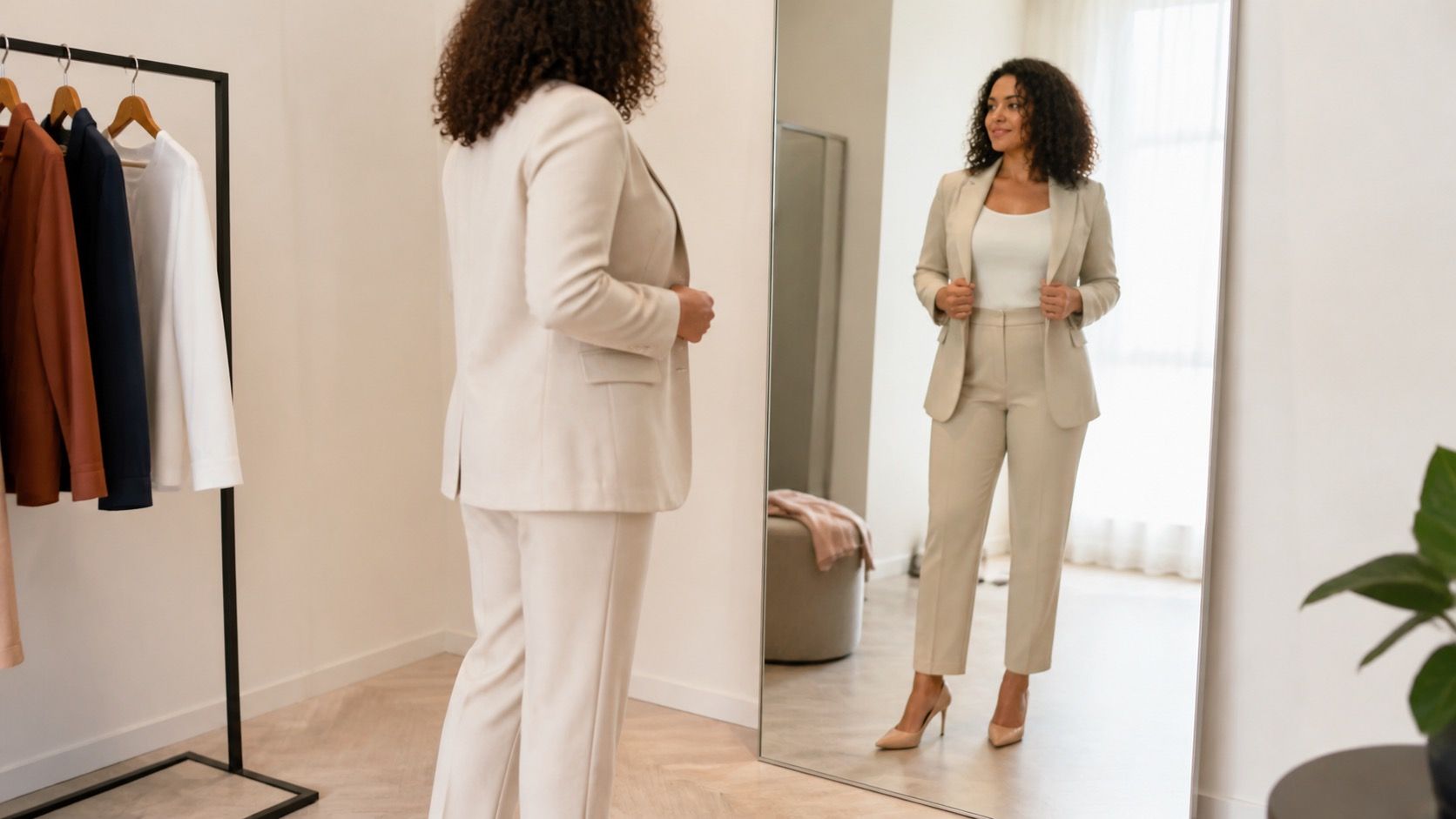
In this system, width is a visual requirement, not a judgment about body size. It usually shows up in a broad or blunt shoulder line, an ease through the upper torso, or a silhouette that looks better when the fabric travels outward before it drops. The quickest fitting check is a woven shirt or blazer. If the shoulder seam pulls inward, the lapels sit too close together, or the upper buttons feel like they are making the whole garment narrow, the outfit can look constricted even when the waist fits. Choosing a roomier cut is more effective than sizing up a sharply tailored one.
Natural: simple relaxed structure
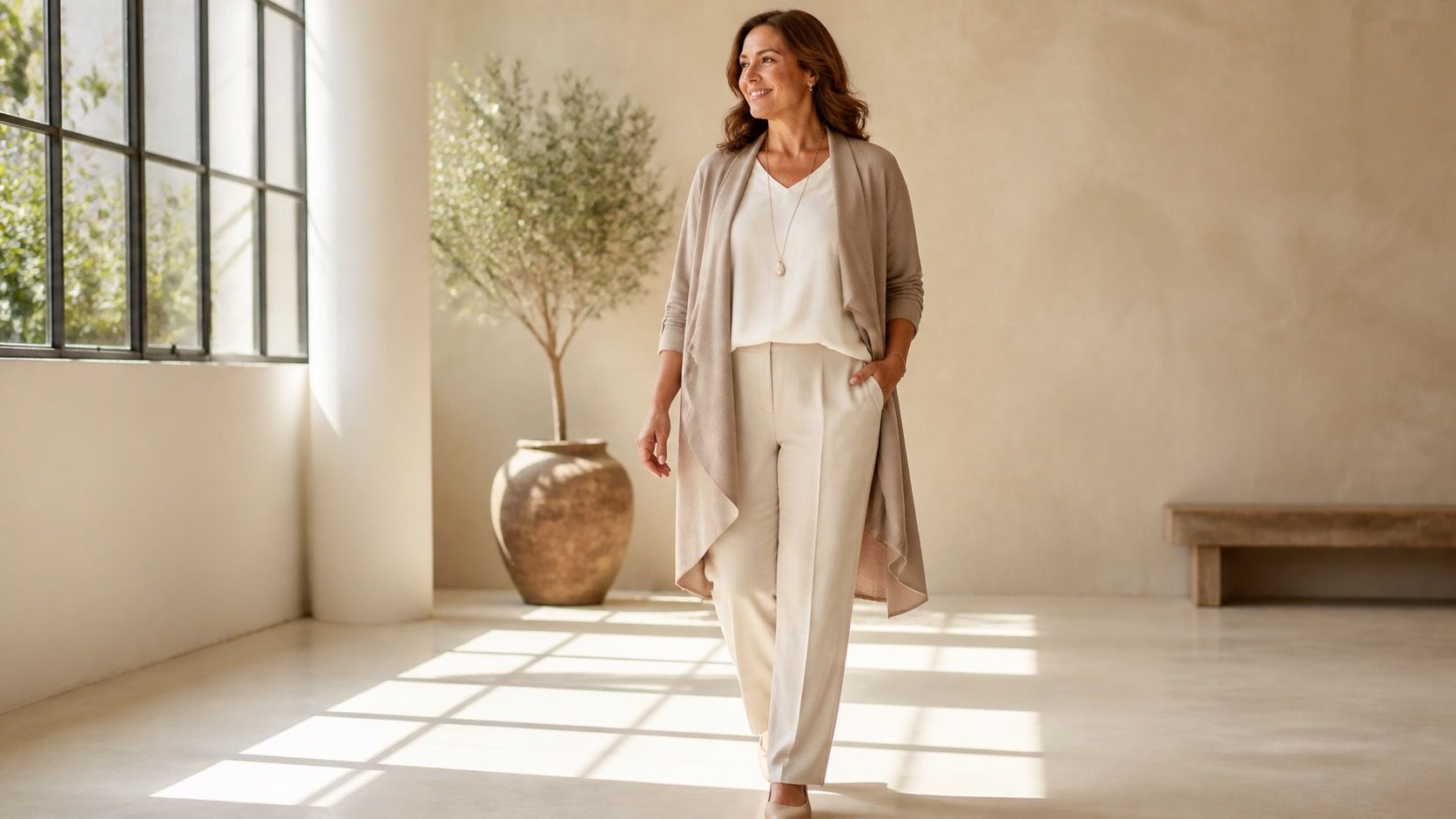
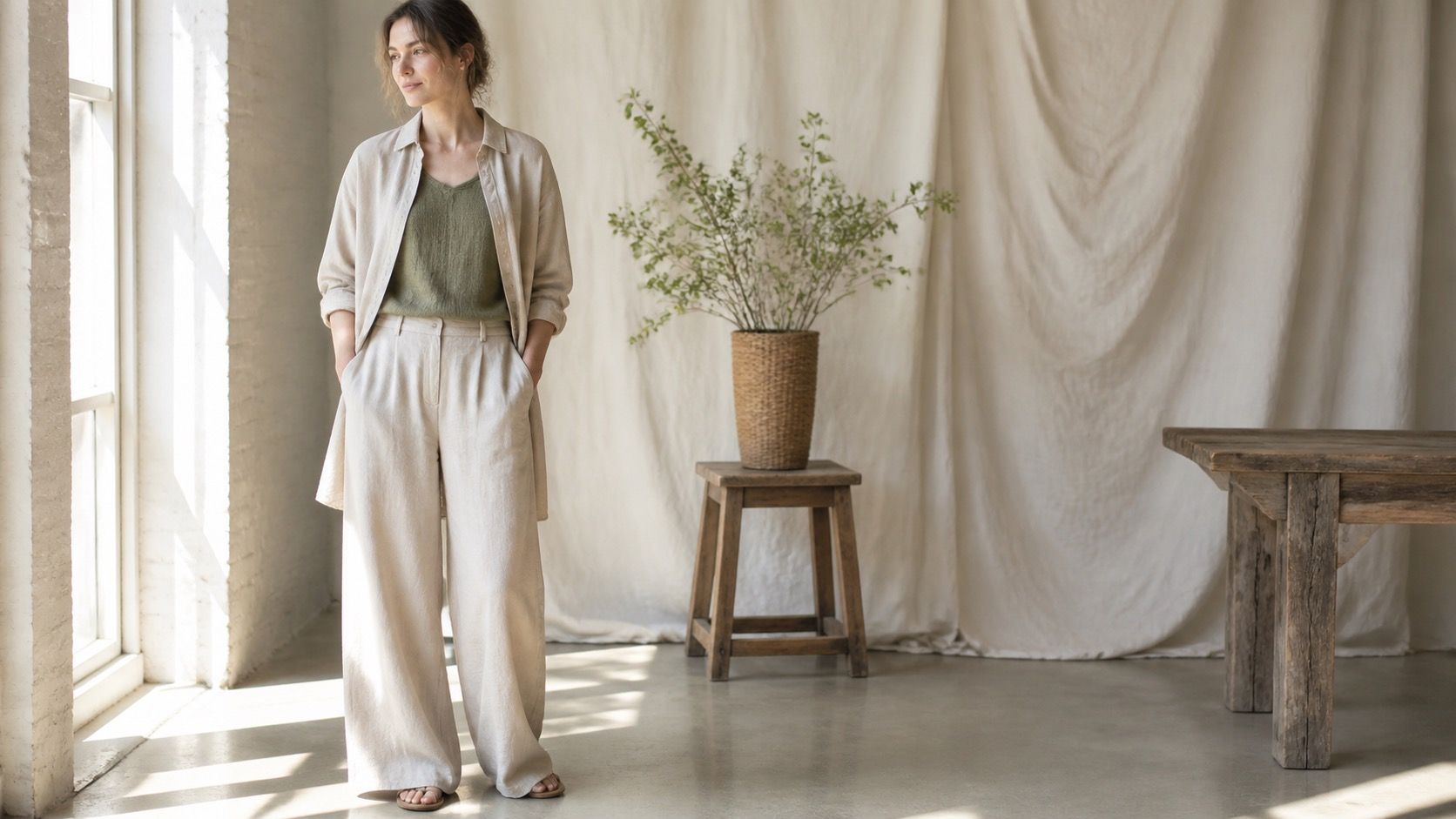
Pure Natural style is at its best when the outline is uncomplicated and the fit is neither clingy nor oversized. The appealing version of this look has a bit of masculine ease without becoming boxy: a shirt jacket with a softened shoulder, a straight trouser with a broken-in finish, a knit that follows the body without tracing it. Clean clothes are still important, but their polish comes from proportion and fabric quality rather than perfect sharpness. A blazer with light shoulder shaping and a slightly longer body is usually more convincing than a cropped, nipped-in jacket with hard lapels.
Look at where a garment ends. Hemlines and sleeve lengths can either preserve the relaxed vertical flow or chop it up. A shirt that ends at the high hip, trousers that stop awkwardly above the ankle, and a short cardigan can create three separate blocks. Let at least one layer travel past that point: an untucked shirt with a partial front tuck, a hip-length jacket, or a trouser that reaches the shoe. This is not a rule against cropped pieces; it is a reminder that a short item needs a partner with enough length and width to make the interruption look deliberate.
For a work outfit, try a matte blouse with an open collar, straight trousers, and a belt that has some texture rather than a tiny polished buckle. At the weekend, a relaxed denim shirt over a ribbed tank and sturdy trousers uses the same logic. The common mistake is adding too much refinement in miniature: delicate chains, a very small bag, narrow straps, and dainty pumps can look disconnected from the broader clothing lines. One medium-scale metal cuff, a leather tote, or a softly shaped sneaker is usually enough to give the outfit finish without changing its character.
Soft Natural: curve with texture
Soft Natural outfits retain the family’s ease but make room for a more rounded, gently shaped impression. The useful distinction is not “feminine versus masculine.” It is whether the clothes can acknowledge softness without pinning it into a precise hourglass costume. A wrap-like top, a blouse with a slightly gathered shoulder, or a knit with an open neckline can do this well. The fabric should bend and move. A severe white shirt buttoned to the throat can make the wearer look tidied up rather than at ease, while an overly clingy stretch dress can make the whole look feel over-explained.
Texture is especially helpful here because it softens transitions. A pebbled knit, suede, washed silk, soft corduroy, or a print with irregular edges creates interest without demanding tiny decoration. In soft natural outfits, the waist often looks best when it is suggested rather than cinched into a hard break. A belt worn slightly lower, a blouse that skims into high-rise trousers, or a dress with gentle gathering can produce that effect. Check the mirror from the side as well as the front: if the waist treatment pulls fabric tight at one point and leaves everything else hanging away, it is probably too forceful.
Necklines make a noticeable difference. Soft V-necks, scoops, relaxed square necks, and open shirt collars tend to give the upper body room while echoing rounded detail. Very tiny ruffles, pin-thin straps, and precise little bows are not automatically forbidden, but they are easy to overdo because they ask the eye to focus on small, separate points. A larger folded collar, softly rolled sleeve, or pendant with an organic shape gives a similar softness at a scale that belongs to the whole outfit.
Flamboyant Natural: scale and a long outline
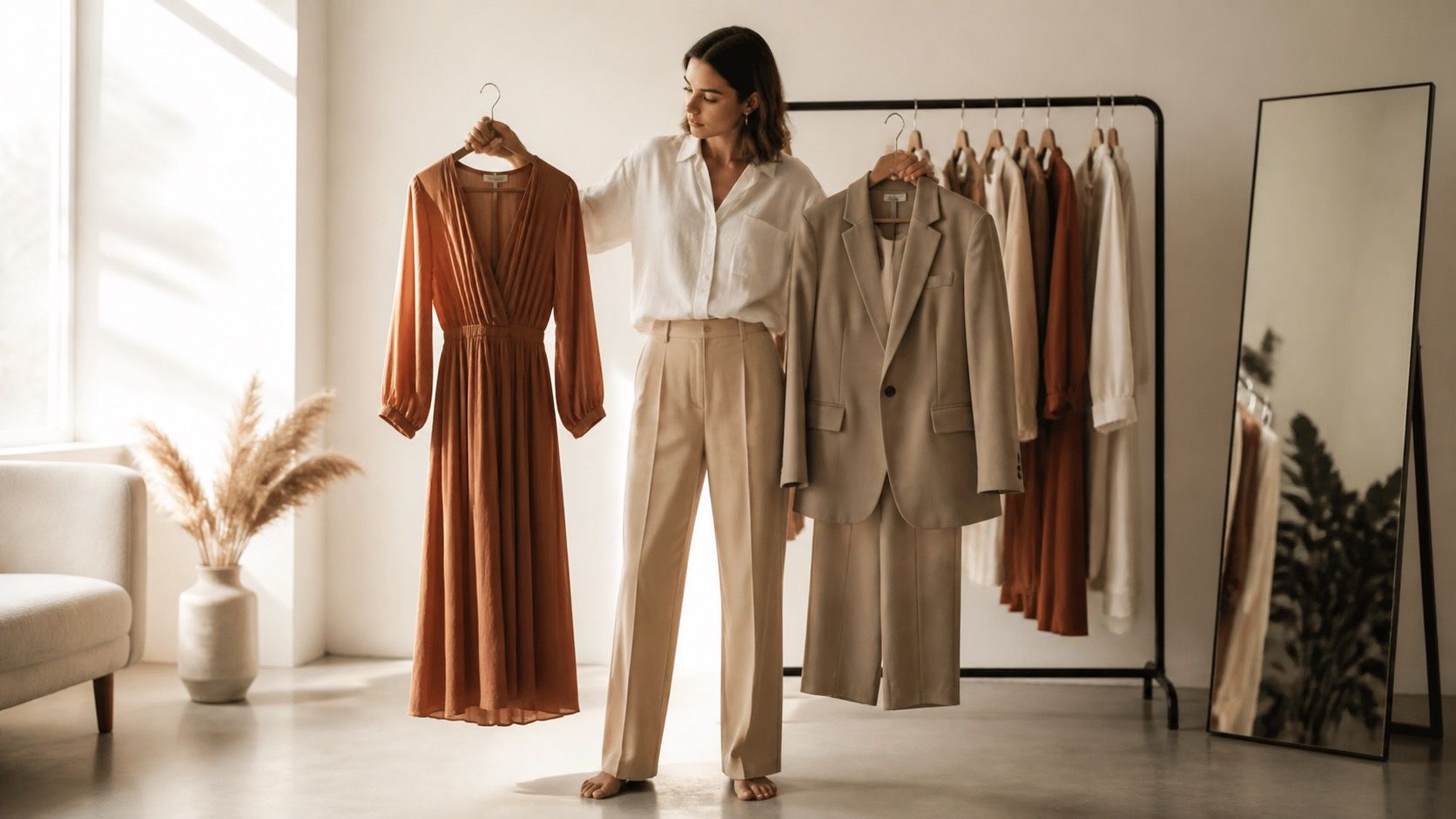
Flamboyant Natural style adds a stronger sense of length and scale to the family’s width and freedom. The result is often most successful when the eye can travel in a long, uncomplicated path: a long coat over a column of similar tones, wide-leg trousers with a substantial knit, or a midi dress with an easy shoulder and a generous print. This does not mean every outfit has to be oversized. It means small, fussy adjustments often weaken a look that wants a more expansive gesture. A narrow cropped jacket can be useful if it is paired with a long, open layer or a bold shoe, but it rarely carries the outfit alone.
Scale is a practical shopping test. Hold the bag, scarf, sunglasses, or earring next to the clothing before deciding it is “too much.” On a large, open outline, medium-to-large accessories often look simply proportionate. A broad cuff, an unstructured tote, a substantial sneaker, or a long pendant may do more for balance than several delicate pieces. Prints follow the same principle. A botanical, abstract, or geometric pattern with room between elements is easier to wear than a dense field of tiny motifs that makes the surface buzz.
Outerwear is a particularly useful place to get this right. A long trench with a relaxed belt, a suede overshirt, or a coat with a broad lapel gives the outfit an immediate frame. Avoid buttoning every layer tightly and then adding a tiny bag; it makes the silhouette look compressed. Instead, leave a collar open, show a longer knit under the jacket, or choose trousers with enough volume to meet the coat. The best flamboyant natural style feels capable rather than dramatic for its own sake.
Keep relaxed dressing from becoming shapeless
The question is not whether every garment is loose. It is whether the outfit has a readable center of gravity. Start by deciding where the eye should land: the shoulder line, the open neckline, the waist area, or the long leg line. Then remove one thing that competes with it. If a wide shirt, wide trouser, bulky scarf, and oversized bag all occupy the same visual volume, the result can feel heavy even when every item is comfortable. Tuck part of the shirt, choose a less bulky scarf, or swap the bag for one with a clearer shape. Small editing changes are more useful than abandoning the relaxed idea.
A simple comparison helps when getting dressed. If an outfit looks unfinished, add structure through a jacket, belt, shoe, or a deliberate sleeve roll. If it looks stiff, release one closure, change a polished fabric for a textured one, or replace a small neat accessory with something more substantial. The table is not a set of rules; it is a way to identify which direction the clothes have drifted.
| When the outfit feels | Try adjusting | Watch for |
|---|---|---|
| Too narrow | Open the neckline or choose a broader shoulder | Simply sizing up a rigid garment |
| Too shapeless | Add one defined hem, belt, or grounded shoe | Cinching every layer at the waist |
| Too delicate | Increase accessory scale or texture | Adding many small details at once |
| Too heavy | Keep one long line and lighten one bulky layer | Volume at shoulders, hips, and feet together |
Natural family style becomes much easier when it is treated as an edit of proportion rather than a costume category. Keep the shoulder line easy, let fabrics show some life, and give the eye one clear path through the outfit. Whether the emphasis is simple Natural balance, Soft Natural curve, or Flamboyant Natural scale, the finished look should feel lived in but not accidental. If you can move freely, see the shape from across the room, and remove one unnecessary fussy detail, you are usually close.