The Romantic family is often reduced to a list of fitted dresses, curls, and decorative details. That shortcut can make getting dressed feel theatrical before breakfast. A more useful starting point is to notice how a garment meets the body: whether it follows rounded fullness, acknowledges the waist, and lets softness remain visible instead of pulling it flat.
Read curve as a clothing relationship, not a measurement
In the Kibbe vocabulary, curve is not a request to identify a particular bust, hip, or clothing size. It describes the overall impression created when fabric falls over a softly rounded frame. A straight-cut blazer can be beautifully made and still look as if it is hovering in front of the person wearing it. A jacket with a shaped waist, a gentle lapel, and enough room through the bust tends to look settled rather than imposed.
Build a Romantic outfit around continuous softness
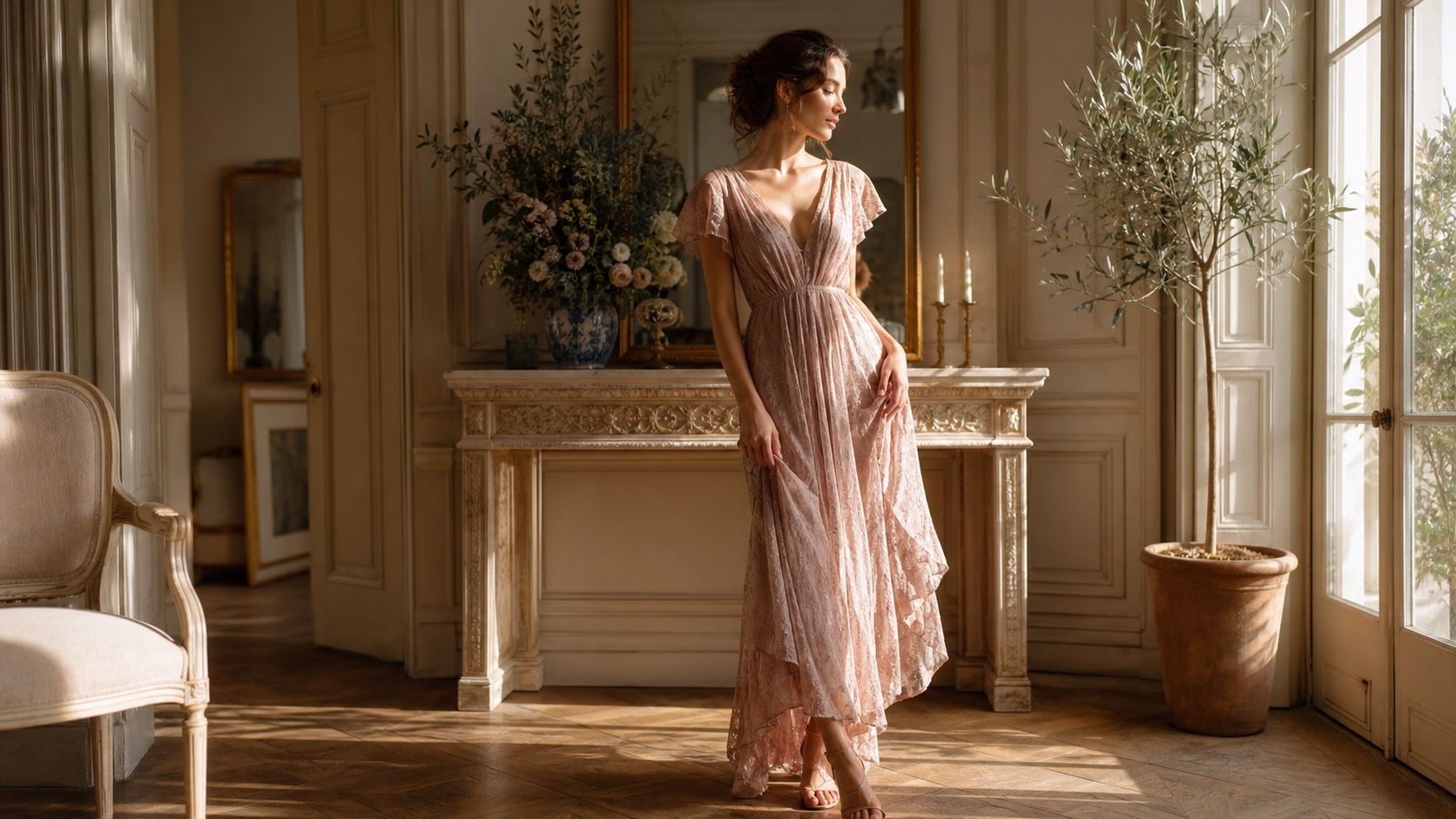
For a Romantic, the most harmonious outfits usually keep a continuous line from neckline to waist to hem. Think of a knit top that skims rather than compresses, a wrap blouse with a real waist tie, or a dress whose gathering begins where the body naturally narrows. The goal is not to create an exaggerated hourglass every day. It is to avoid interrupting the shape with a stiff, square, or oversized layer that hides every curve at once.
Fabric makes the difference quickly. Jersey, fine rib knits, crepe with movement, lightweight wool, soft velvet, and fluid satin can all work when the cut has enough ease. Thick, rigid denim, crisp poplin, or heavily bonded suiting may still be wearable, but they need a counterbalance: a curved neckline, a closer fit at the waist, a softer shoe, or an open front that shows the inner line. One flexible element is often enough to keep the outfit from feeling armored.
Necklines are a useful low-risk experiment. A scoop, sweetheart, soft V, draped cowl, or rounded open collar usually gives the face and upper body breathing room. Compare that with a very tight crew neck in a dense fabric: it may make the whole look feel compact and blocked. The issue is not that high necklines are forbidden; a fine high neck with a supple fit can be elegant. The question is whether the neckline continues the line or cuts it off.
Separate Theatrical Romantic from “more feminine”
Theatrical Romantic outfits are not simply Romantic outfits with extra sparkle. The shared foundation is still curve, softness, and a defined waist. The difference is a sharper, more intricate finish: a pointed slingback rather than a rounded ballet flat, a small crystal earring rather than a plain hoop, a narrow lapel edge, a bias seam, or a more precise print. The effect is polished and concentrated, not loud by default.
Detail scale matters here. A delicate chain, a small ornate buckle, a fitted cuff, or a fine metallic trim can look intentional because it has enough definition without overwhelming the person. Large utilitarian pockets, huge hardware, broad contrast stitching, and chunky platform soles can pull attention away from the line of the outfit. That does not mean a Theatrical Romantic must dress formally. It means that casual clothes tend to work better when they retain some precision: dark slim jeans, a softly shaped top, and a compact bag often read more naturally than a loose sweatshirt with oversized trainers.
When comparing a Romantic and a Theatrical Romantic, photograph the same base outfit with two finishing choices. First use a softly rounded shoe, simple earrings, and a gentle cardigan. Then try a narrower shoe, a more sculpted earring, and a fitted jacket with a little gleam or contrast. If the second version looks sharpened without looking costumed, the added detail may be serving you. If it becomes busy, return to the simpler base and keep the precision in one place only.
Choose ornament by scale and placement
Ornament works best when it supports the garment’s shape. Gathering at a waist seam can create a soft transition; a small brooch near an open neckline can direct attention upward; a curved bag can echo the rest of the look. Ornament becomes distracting when it competes with every other element. A ruched top, ornate belt, statement earrings, elaborate shoe, and loud print may each be appealing separately, but together they can make the wearer disappear inside the styling decisions.
A practical rule is to choose one area for visible detail. If the blouse has a draped neckline, keep the earrings small and the skirt relatively clean. If the shoe is decorative, use a simpler dress with a clear waist. This is especially useful for theatrical romantic outfits at work, where a single polished element can be more convincing than an outfit that looks designed for an event. The aim is a focused finish, not a costume interpretation of “feminine.”
| When an outfit feels off | Try first | Why it can help |
|---|---|---|
| Boxy through the middle | Add a soft waist definition or open the jacket | Restores a continuous line without shrinking the clothes |
| Too sweet or busy | Remove one decorative element | Lets curve and fit do more of the work |
| Too plain for a Theatrical Romantic | Add one refined, smaller-scale detail | Brings precision without adding bulk |
| Fabric looks stiff | Pair it with a draped or close-fitting layer | Balances structure with movement |
Use fit checks before buying more “Romantic” clothes
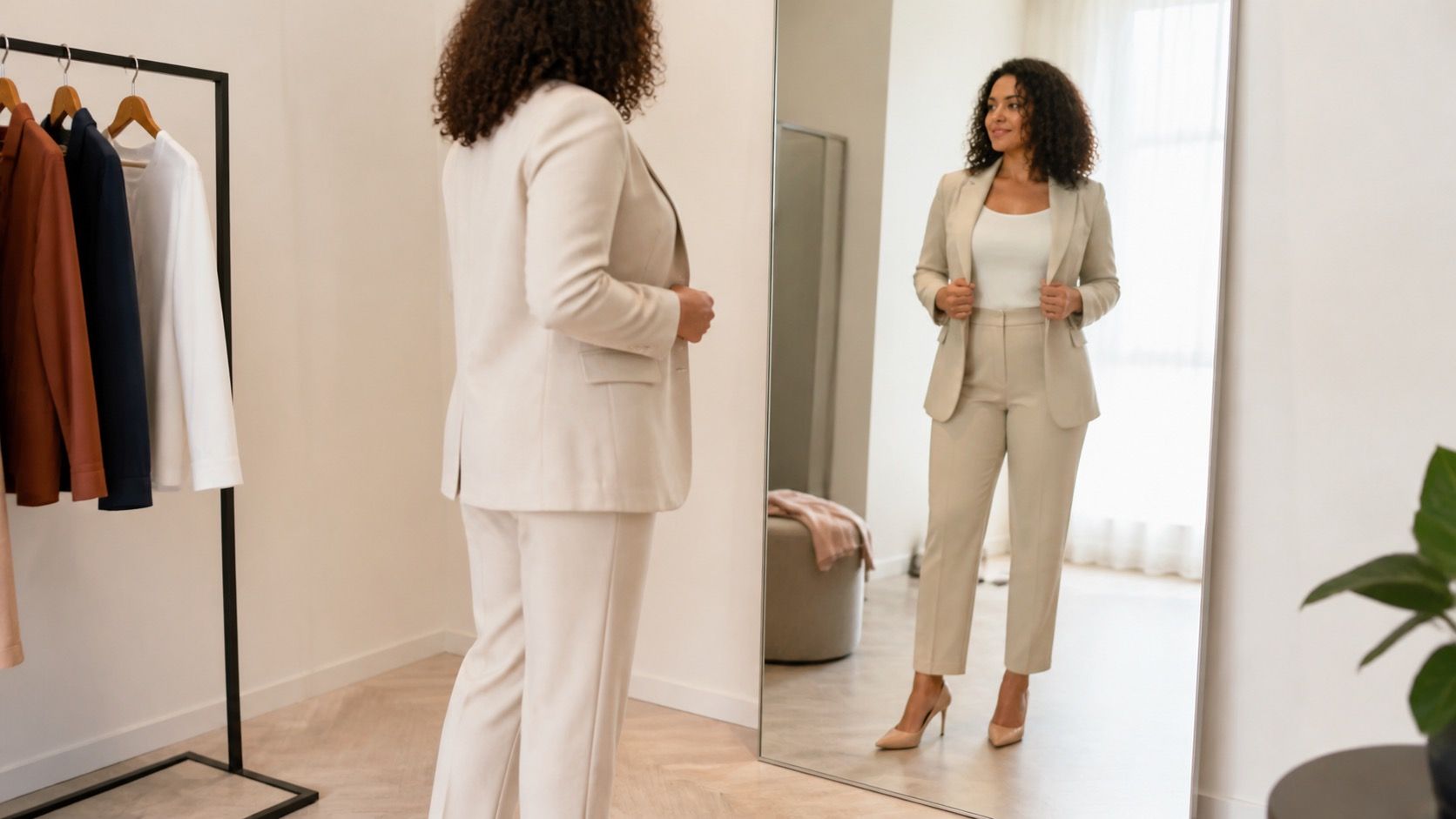
The fastest way to improve a Romantic kibbe body type wardrobe is often tailoring rather than shopping. A dress that is almost right may only need its waist lifted slightly, its straps shortened, or its side seams adjusted so the fabric follows the body without straining. A cardigan can become more useful when it is worn buttoned at the middle rather than hanging in a long straight panel. These are modest changes, but they alter the line more than a new decorative accessory will.
Pay attention to where clothes create tension. If buttons pull across the bust, size up and tailor the waist instead of treating the pulling as proof that the item is “fitted.” If a skirt twists around the hips, the cut may not have enough room for the curve it is meant to follow. If a belt only works when tightened aggressively, it may be sitting in the wrong place. A good fit feels supported, not cinched into submission.
Make the family workable on ordinary days
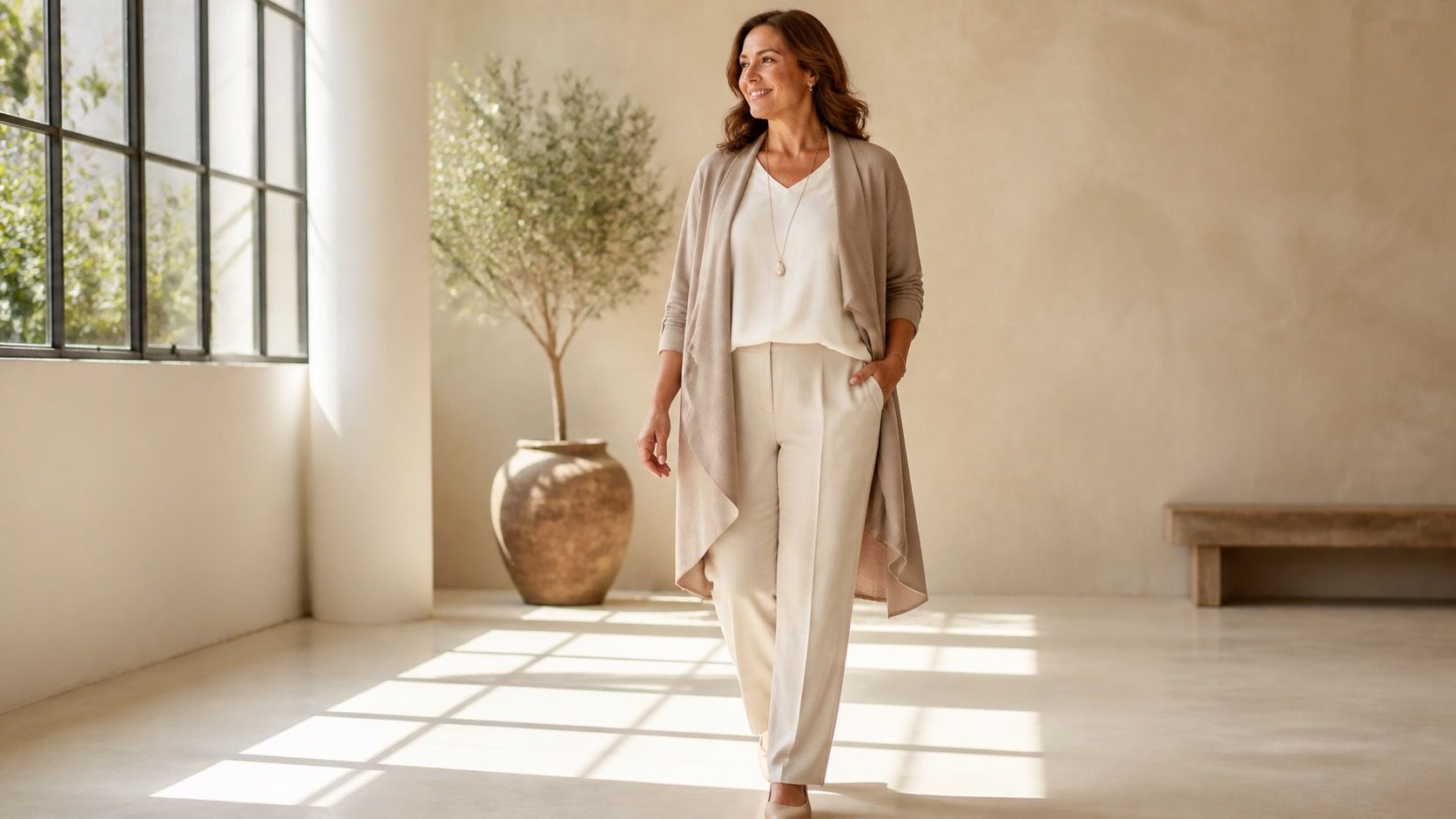
Everyday Romantic style can be built from repeatable formulas. A softly fitted knit, straight-to-tapered trousers with a comfortable waistband, and a low-vamp shoe is one. A wrap-style top, dark skirt, and compact cardigan is another. For cooler weather, try a coat that has a belt, curved collar, or some shaping through the torso instead of assuming that the warmest option must be a square puffer. The details can remain quiet; the line is what makes the outfit coherent.
For Theatrical Romantic casual dressing, start with the same body-aware base and add one crisp accent: a slim boot, a fine belt buckle, a structured small bag, or earrings with a little shine. Keep an eye on comfort. A style system is useful only when it helps you edit a rack of clothes and get out the door with less friction. If an outfit feels delicate but prevents you from sitting, walking, or working normally, the styling has missed the practical point.
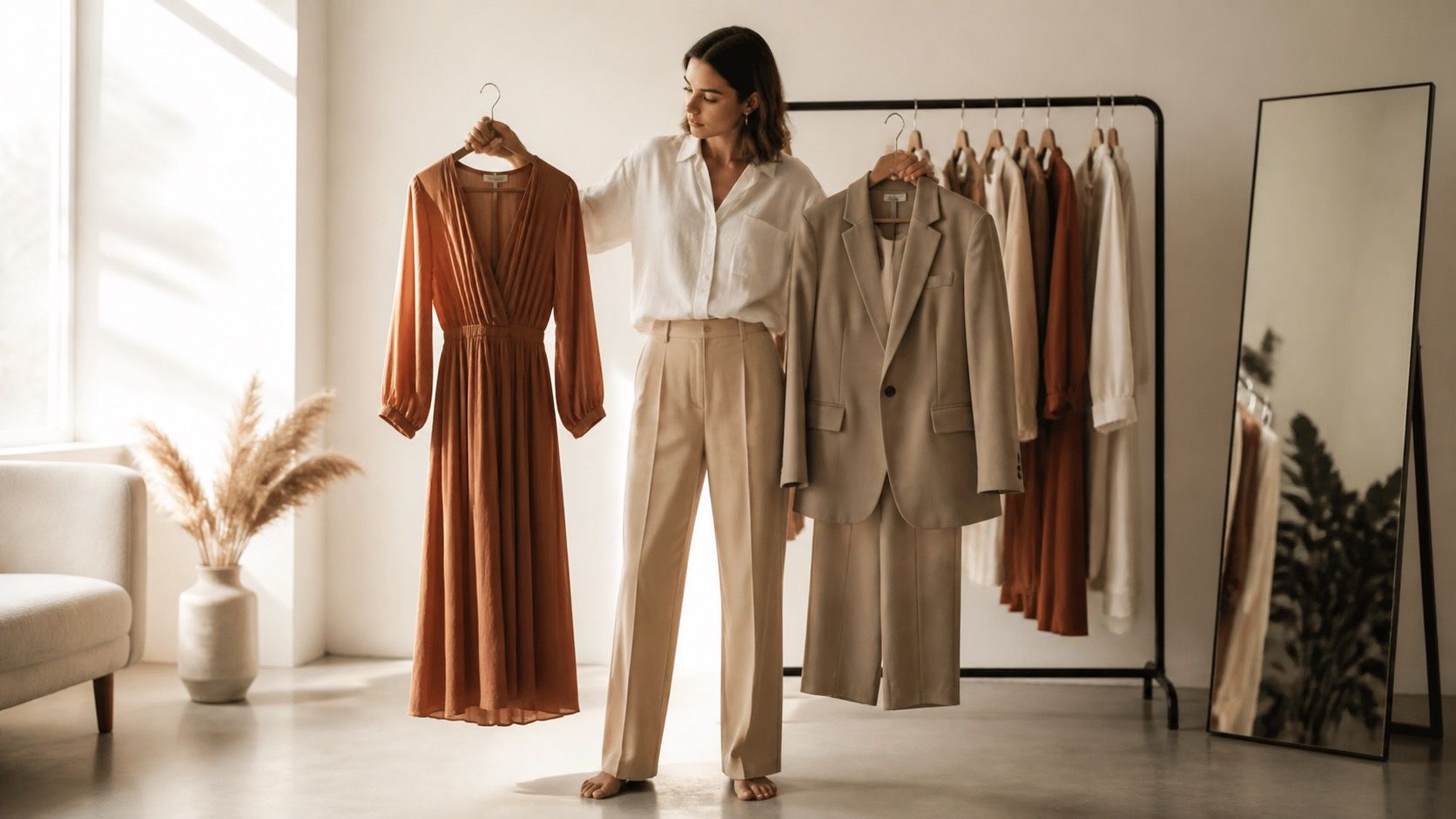
Both identities benefit from treating recommendations as tests. Keep a short note after wearing an outfit: which fabric moved well, which waistband stayed in place, which neckline made you feel open rather than exposed, and which detail felt like too much by midday. Over several wears, those observations build a personal version of Romantic or Theatrical Romantic style that is far more useful than copying a mood board.