Pear body shape style is often reduced to a list of things to disguise. That is a poor starting point. A more useful question is whether an outfit feels settled from shoulder to hem: does the upper half have enough presence for you, does the waistband sit where it can move, and do the trousers or skirt follow the body rather than argue with it? A pear shape usually has a visibly narrower shoulder area than hip area, but proportions change with posture, fabric, and the cut of a garment. The goal is not to manufacture an hourglass outline. It is to choose contrast, volume, and detail with enough intention that getting dressed stops feeling like a correction exercise.
Start with the outline you see in a mirror, not a clothing chart
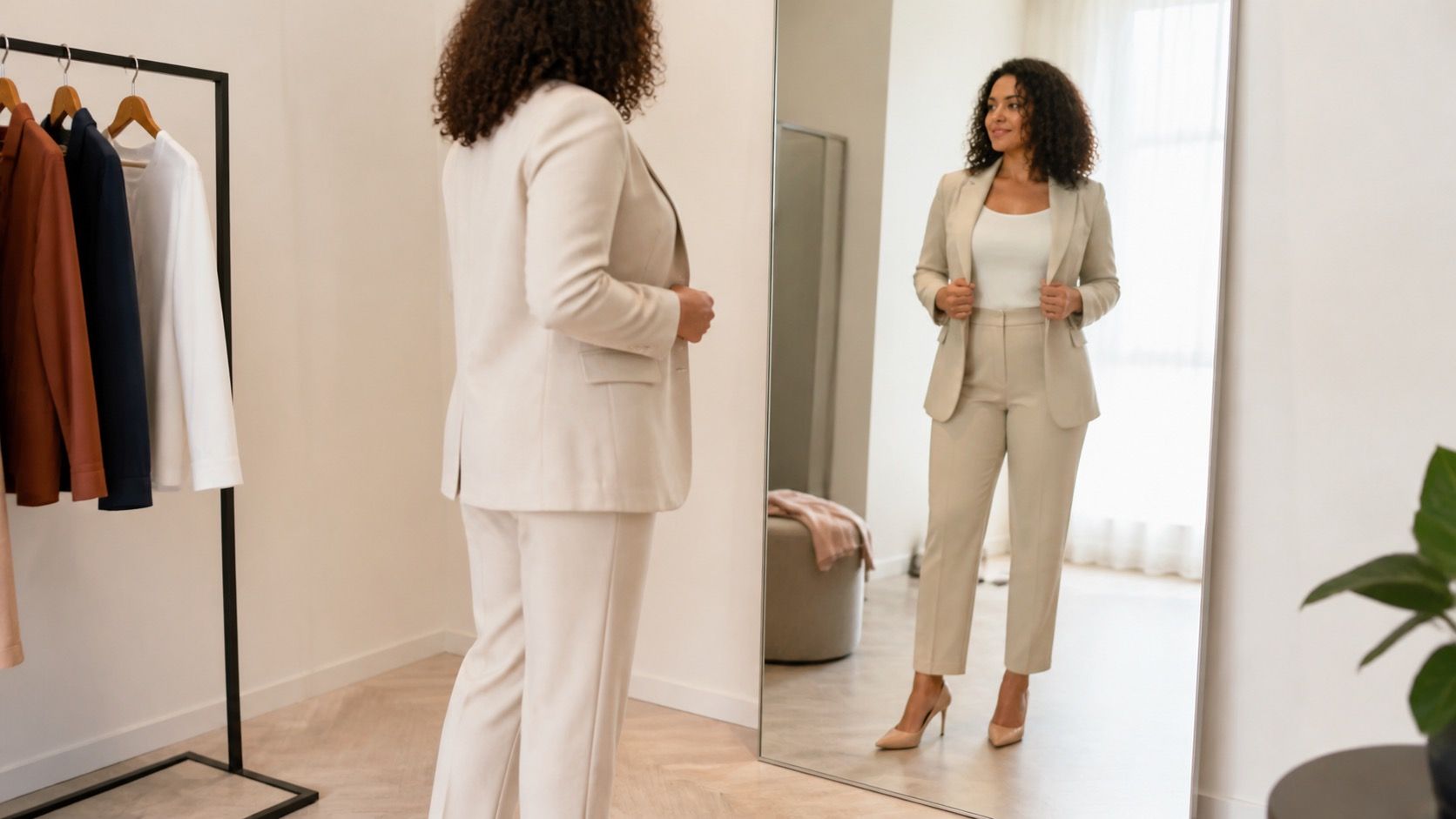
A pear shape is usually most noticeable when a simple fitted top and straight trousers are worn together. The shoulder line looks quieter, the waist may appear defined, and the hips carry more visual width. That is information, not a diagnosis. A swimmer with strong shoulders, someone with a full bust, or someone who prefers roomy shirts may experience the same body very differently. Look at an outfit from a few steps back in daylight, then sit down in it. The second test matters because a waistband that appears neat while standing can become the loudest line in the room once you are at a desk or dinner table.
Give the shoulder line a job without turning it into a costume
For many pear-shaped outfits, the easiest balancing move happens near the face. A boat neck, square neck, open collar, soft cowl, or a crew neck with a slightly structured shoulder can broaden the visual field without adding bulk. The effect comes from horizontal spread and light near the face, not from the word “flattering” printed on a product page. A pale shirt under a darker jacket, for example, can make the upper body feel more present even when the jacket itself is simple.
Sleeves deserve a try-on test rather than a rule. A gentle puff at the sleeve head, a gathered shoulder, or a sleeve with a crisp cuff can work well because it creates a small pause before the torso begins. Very stiff cap sleeves sometimes do the opposite: they stop abruptly at the narrowest point and make the armhole look skimpy. Raise both arms, turn sideways, and check whether the sleeve still looks intentional. If it collapses into a wrinkle at the shoulder, it is probably not providing the structure you wanted.
Jewellery, scarves, and hair can do some of this work too. A medium earring, a short necklace, or hair with width at the temples changes the frame of the face without requiring a special blouse. This is particularly helpful on days when you want a plain T-shirt and denim. The point is not to decorate every outfit. It is to recognise that the upper body is a useful place to place interest when the rest of the look is clean.
Choose trousers and skirts for movement, not camouflage
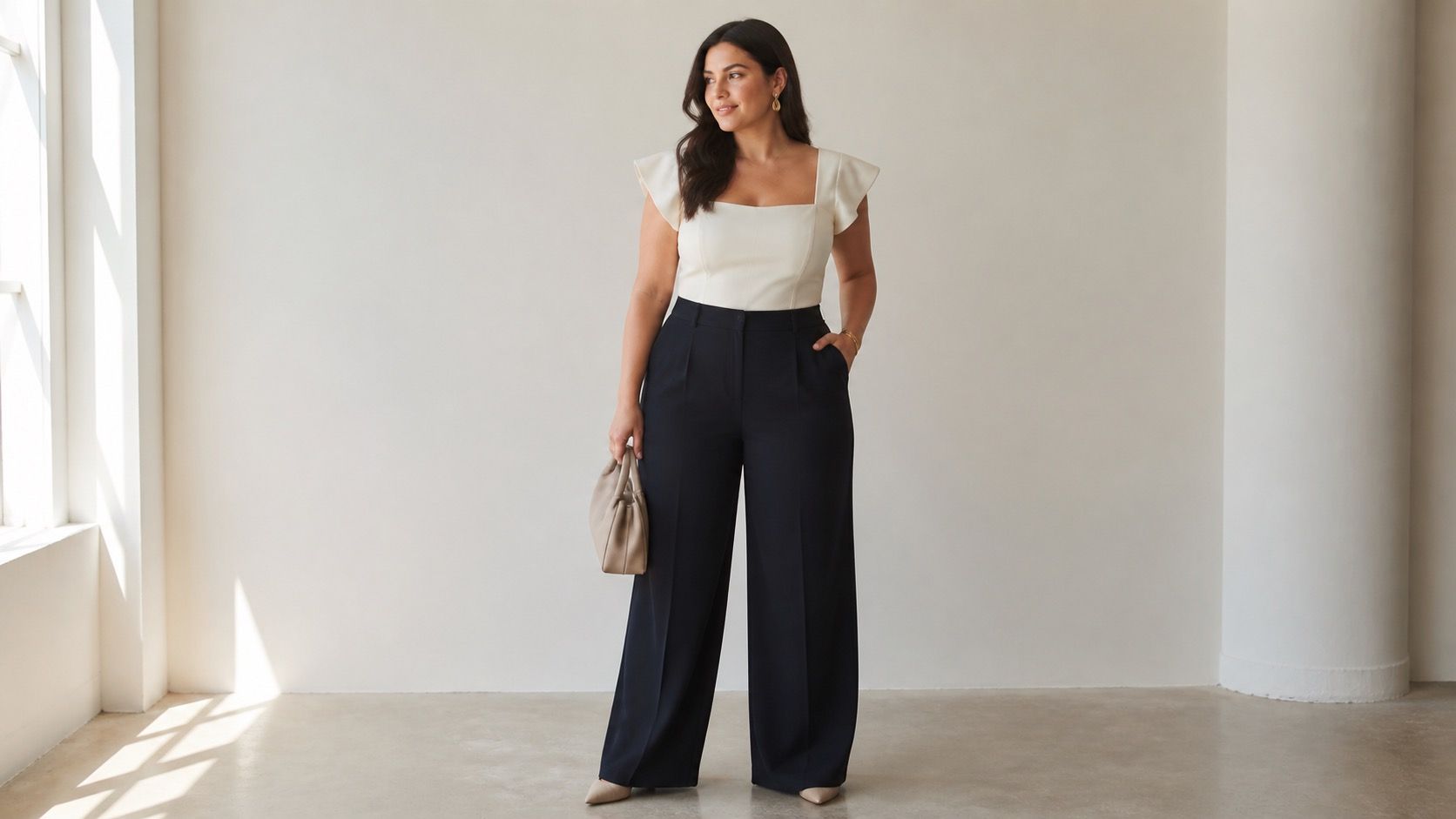
How to dress a pear shape becomes much easier when the lower half is allowed to have ease. Straight-leg, bootcut, wide-leg, and softly draped trousers often follow the hip and then continue in a calm line. The useful detail is the fabric weight. A thin, clingy jersey trouser can trace every shift in movement; a denim, twill, wool blend, or fluid viscose with enough body gives the leg its own line. Neither is morally better. They simply create different amounts of definition.
With jeans, inspect the pocket placement and the rise before judging the wash. Tiny pockets set very high can pull attention upward and outward; pockets closer to the centre and a yoke that lies flat tend to look quieter. A high rise can make a waist feel clear, but only if it ends below the ribcage when seated. If you find yourself constantly tugging the band down, a mid-rise often gives a more relaxed result. A belt is useful when it marks a comfortable waist, not when it is being asked to hold an uncomfortable pair of trousers in place.
Skirts benefit from the same practical approach. An A-line skirt that releases gradually from the waist is easy to walk in and leaves room for a tucked knit. A bias skirt can be lovely when the fabric does not cling after a few steps. Pencil skirts are not off limits, but they need a side slit, stretch, or enough room at the hem to keep the stride natural. The fitting-room test is simple: walk quickly, sit, climb a step, and see whether the garment keeps its line without asking for constant adjustment.
| Lower-half option | What to check | Useful pairing |
|---|---|---|
| Straight or bootcut jeans | Flat waistband, calm pocket placement, enough room at the thigh | Textured knit or collared shirt |
| Wide-leg trousers | Fabric falls from the hip instead of spreading outward at the waist | Fitted tee with an open-neck layer |
| A-line skirt | Release begins smoothly and the hem allows a full stride | Short jacket ending at the waist |
| Bias midi skirt | It skims after walking rather than clinging at the hip | Simple shoulder-detail sweater |
Use jackets to finish an outfit at a deliberate point
Jacket length changes a pear-shaped silhouette more than many people expect. A cropped denim jacket ending at the natural waist can make a dress or wide-leg trouser outfit feel crisp because it keeps the waist visible. A blazer that ends around the fullest part of the hip may work too, but it needs enough length and structure to continue past that point rather than stopping exactly on it. The awkward zone is not universal, yet it is easy to spot: the hem looks as if it has been parked on the widest area with no reason to be there.
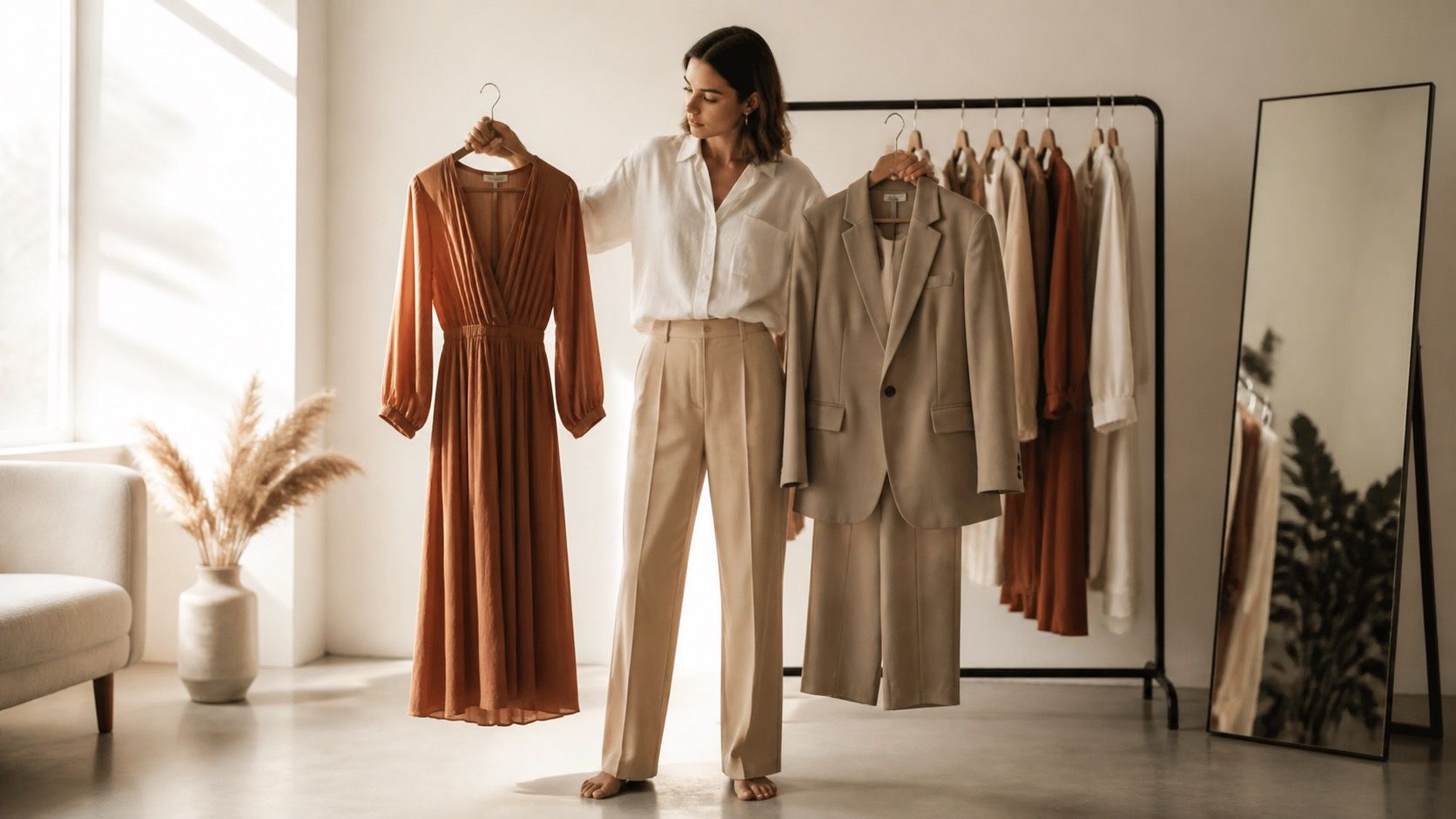
Before buying a blazer, wear it with the bottoms you actually use. A blazer that looks polished over store trousers can feel short over high-rise jeans or too sharp over a soft midi skirt. Check the lapel width, shoulder seam, and where the button sits. A slightly stronger shoulder and an open front can create balance, while a very narrow lapel and a tight closed button may make the torso feel compressed. There is no need for padded power shoulders unless you genuinely enjoy that look.
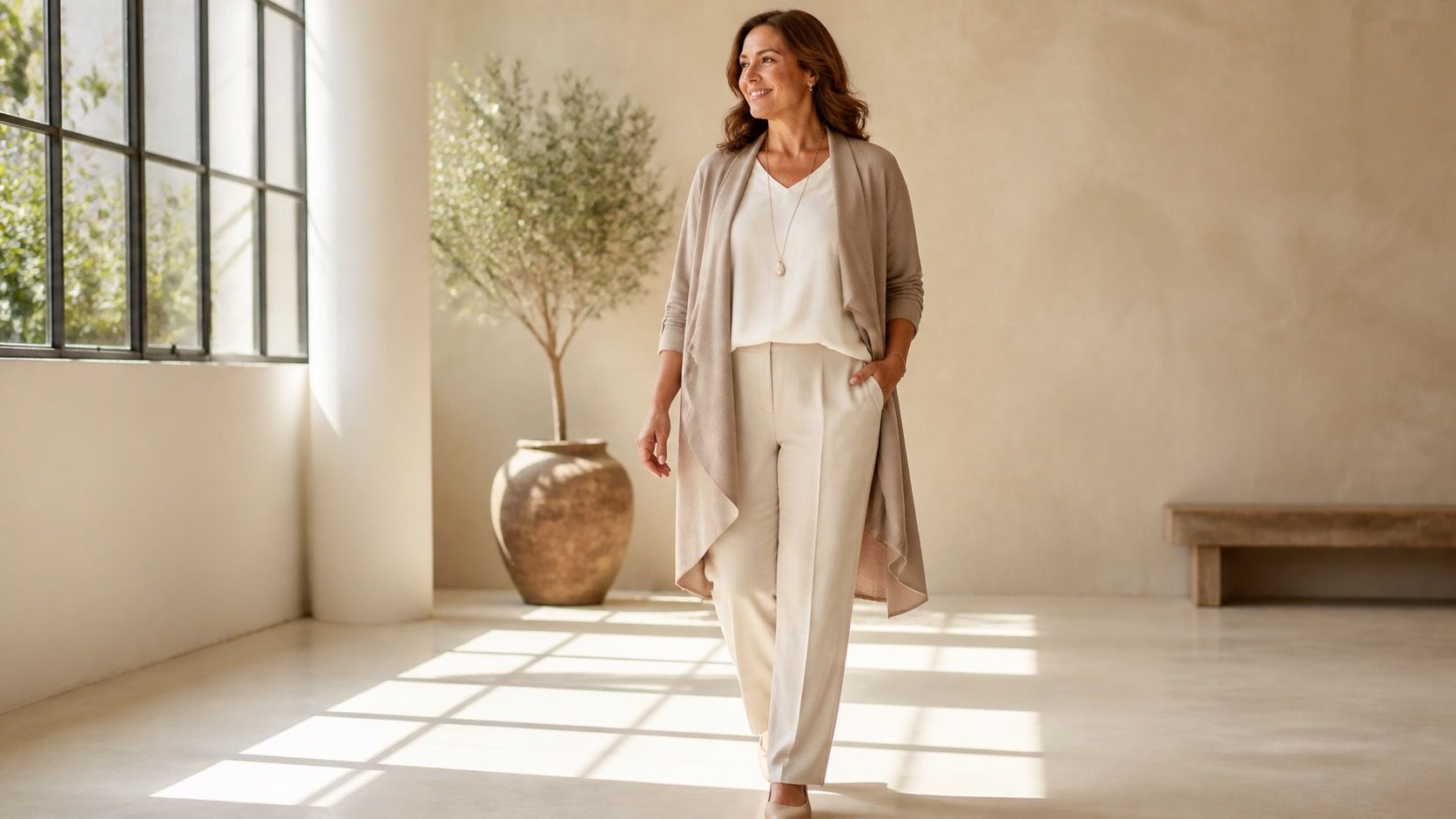
Cardigans are less structured but still have a hemline. A fine cardigan worn open can draw a vertical line down the torso; a shorter, buttoned cardigan can define the waist. Long, thin cardigans sometimes create an unplanned column that makes the lower half feel detached. Add a belt, choose a heavier knit, or let the layer end higher if that happens. These are small adjustments, which is why they are more durable than a blanket ban on certain clothes.
Build outfit formulas that leave room for your own taste
A reliable pear body shape style formula is a top with some presence, a lower half that moves well, and one connecting detail. Think of a square-neck knit, relaxed straight jeans, and loafers with a substantial sole. Or use a crisp striped shirt, an A-line midi, and a short trench that finishes near the waist. The stripe, collar, or neckline gives the upper half a point of interest; the skirt or jeans does not need to become invisible for the outfit to work.
For a more minimal wardrobe, colour placement is often enough. Wear a lighter or more textured top with darker trousers if you want a stronger shoulder-to-hip balance. Reverse that combination when you prefer the emphasis below the waist. Monochrome outfits can be excellent too, especially when texture changes between a ribbed top, smooth trouser, and leather shoe. The eye still reads variation, just more quietly.
Keep one outfit that breaks the usual advice. Maybe it is a body-skimming skirt with a tiny tee, or a sleeveless black dress that shows the shoulder line exactly as it is. Wearing it occasionally is a useful reminder that style systems are tools, not permissions. The best triangle body shape outfits are not the ones that erase the triangle. They are the ones in which you can move, recognise yourself, and stop checking the mirror every five minutes.