Rectangle body shape style is not a project to make a straight body look less straight. It is a way to decide where an outfit should have definition, softness, or a clean vertical line. When shoulders, waist, and hips read at a similar width, clothes can look beautifully direct; they can also look accidentally flat when every layer ends in the same place. The practical work is in placement. A seam, belt, pocket, cropped jacket, or contrast panel can suggest a waist without squeezing one into existence. Start with the proportions you enjoy seeing, then use structure as an editing tool rather than a correction plan.
See the rectangle proportion in the clothes you already wear
A rectangle shape often appears most clearly in a simple column: a T-shirt, straight jeans, and flat shoes. The shoulder line and hips may feel evenly balanced, while the waist is less pronounced from the front. This can make tailored pieces look sharp with very little effort. It can also mean that a long, thin top over straight trousers feels unfinished because nothing changes between shoulder and hem. Neither response is a body problem. It is a question of whether the garments have chosen a line on purpose.
Place seams, layers, and contrast where you want the eye to pause
Seams are quiet but powerful. Princess seams, a shaped side seam, a dart beginning under the bust, or a waistband on a dress can create movement across a rectangle body without relying on a tight cinch. Look for seams that follow the garment smoothly. If a fitted dress makes diagonal pulls from bust to hip, it is not “creating shape”; it is probably too narrow in one area. A well-cut piece should allow you to sit and reach for a bag without the waistline migrating upward.
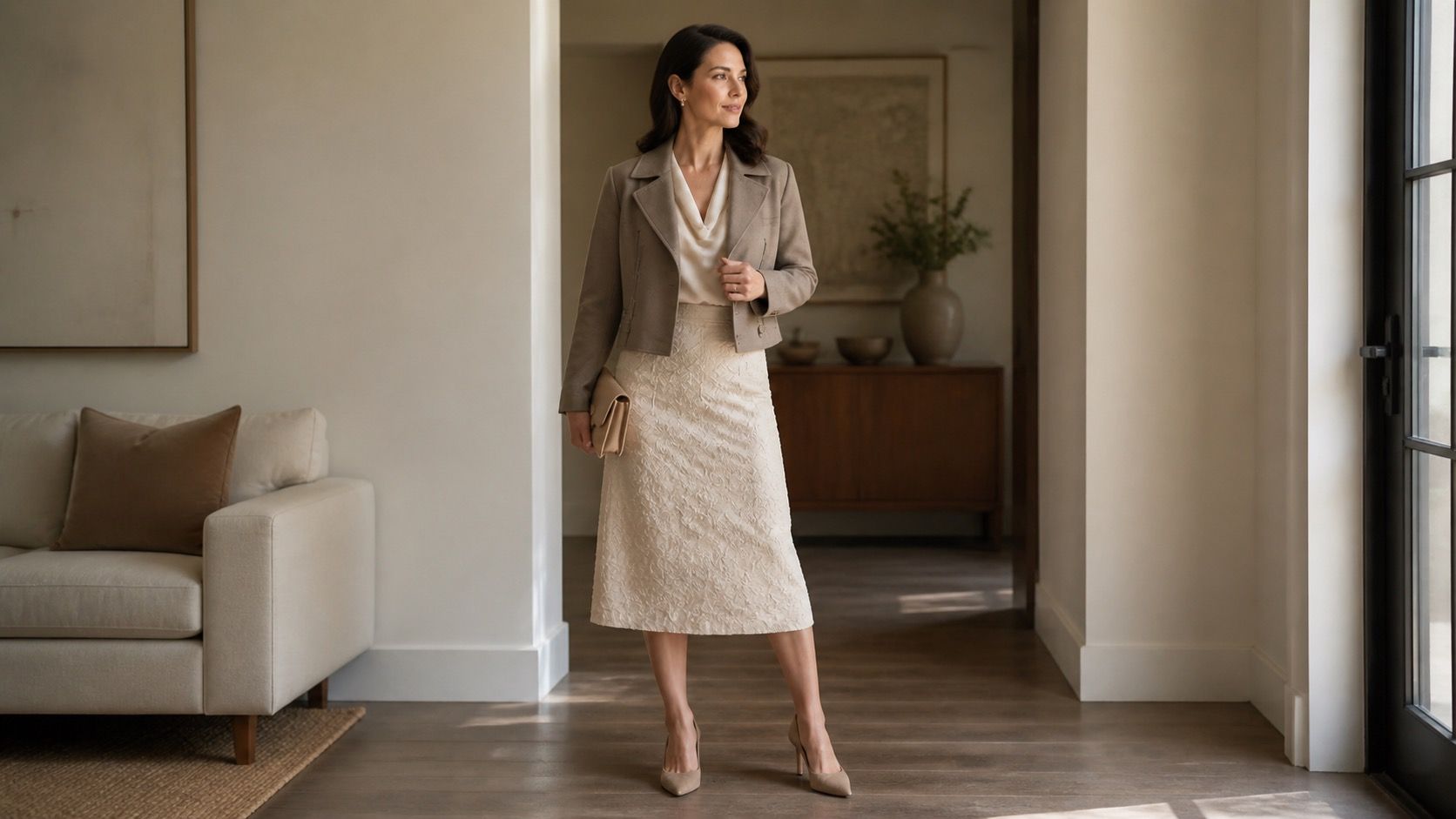
Layering offers a more flexible version of the same idea. A cropped jacket over a longer tee creates a horizontal break close to the waist. An open shirt over a fitted tank makes two vertical lines, then the tank provides a centre point. A long coat over a monochrome outfit keeps the vertical line strong while the belt or pockets underneath add a little shape. The useful rule is to give each layer a different job. Three long, loose layers tend to blur together; one short layer and one longer base layer usually read more clearly.
Colour contrast works best when it follows the same logic. A light top with darker trousers makes the upper and lower halves distinct. A darker cardigan buttoned at the waist over a lighter dress puts focus near the middle. High contrast at every edge, however, can make an outfit feel cut into pieces. If you use a bold belt, keep the shoes or jacket quieter. If the trousers have a strong print, let the upper half carry shape through texture rather than another loud colour.
Choose dresses that move instead of looking like a costume
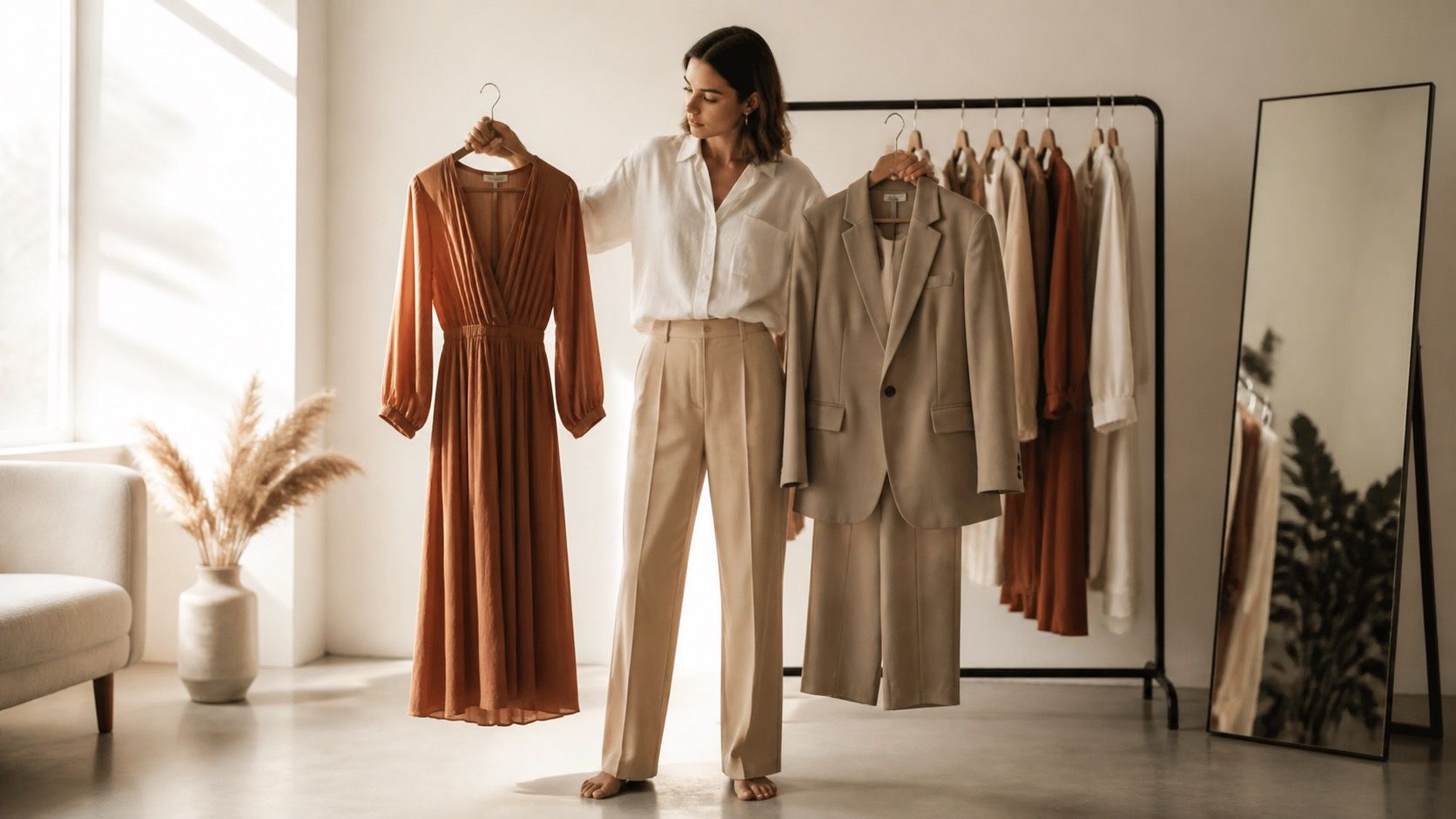
Dresses are often marketed to a straight body type as if every useful option must have a dramatic fit-and-flare skirt. That can be fun, but it is not the only way to create shape. A shirt dress with a tie belt, a wrap-inspired dress with a stable inner layer, or a column dress with side gathers can create a waist cue while keeping the overall outline calm. The key is that the detail should begin where your torso actually bends, not several inches higher because the label assumes one standard proportion.
Try sitting before deciding on a dress. A waist seam that feels elegant while standing can dig in after ten minutes; a wrap front can shift open; a gathered skirt can become bulky under a coat. A fabric with modest weight, such as cotton poplin, crepe, ponte, or a medium jersey, usually gives a cleaner result than very thin clingy knit. If you love a light fabric, add a slip or choose a looser cut so the garment has room to move independently of the body.
Details at the skirt matter too. A small pleat, curved hem, or subtle A-line can create motion without turning the dress into a costume. Conversely, a stiff circle skirt paired with ruffles, a wide belt, and exaggerated sleeves can make every styling device announce itself at once. Pick one main source of shape. A plain bodice with an easy skirt, or a shaped bodice with a straight skirt, is often more convincing than both competing for attention.
| Styling device | Best use | Check before keeping it |
|---|---|---|
| Cropped jacket | Marks the waist over dresses or high-rise trousers | Hem lands at a point you like when seated |
| Princess seams | Adds contour to a dress or blazer | Seams lie flat through bust and hip |
| Soft belt | Suggests a waist without rigid compression | You can breathe, bend, and eat comfortably |
| Textured knit | Adds dimension to a simple vertical outfit | Texture does not add unwanted bulk at every layer |
Use separates to create a deliberate waist, or skip one on purpose
How to dress a rectangle body shape often comes down to the relationship between top and trouser. High-rise trousers with a tucked knit make a clear waist when the knit is thin enough to sit smoothly. A fuller blouse can work if just the front is tucked and the back has room to fall. For an easier option, wear a fitted tee with a cropped cardigan and straight trousers. The cardigan establishes the break; the tee stops the outfit from becoming a stack of rectangles.
Peplum tops can be useful, but their success depends on placement. A gentle flare beginning at the natural waist can give a shirt or jacket a lively outline. A very stiff peplum starting too high may look like it belongs to a different body than yours. Bend sideways and lift your arms: if the flare rides up and stays there, the garment will require monitoring all day. A small back vent, a soft knit peplum, or a jacket with curved front edges often gives the same effect with less fuss.
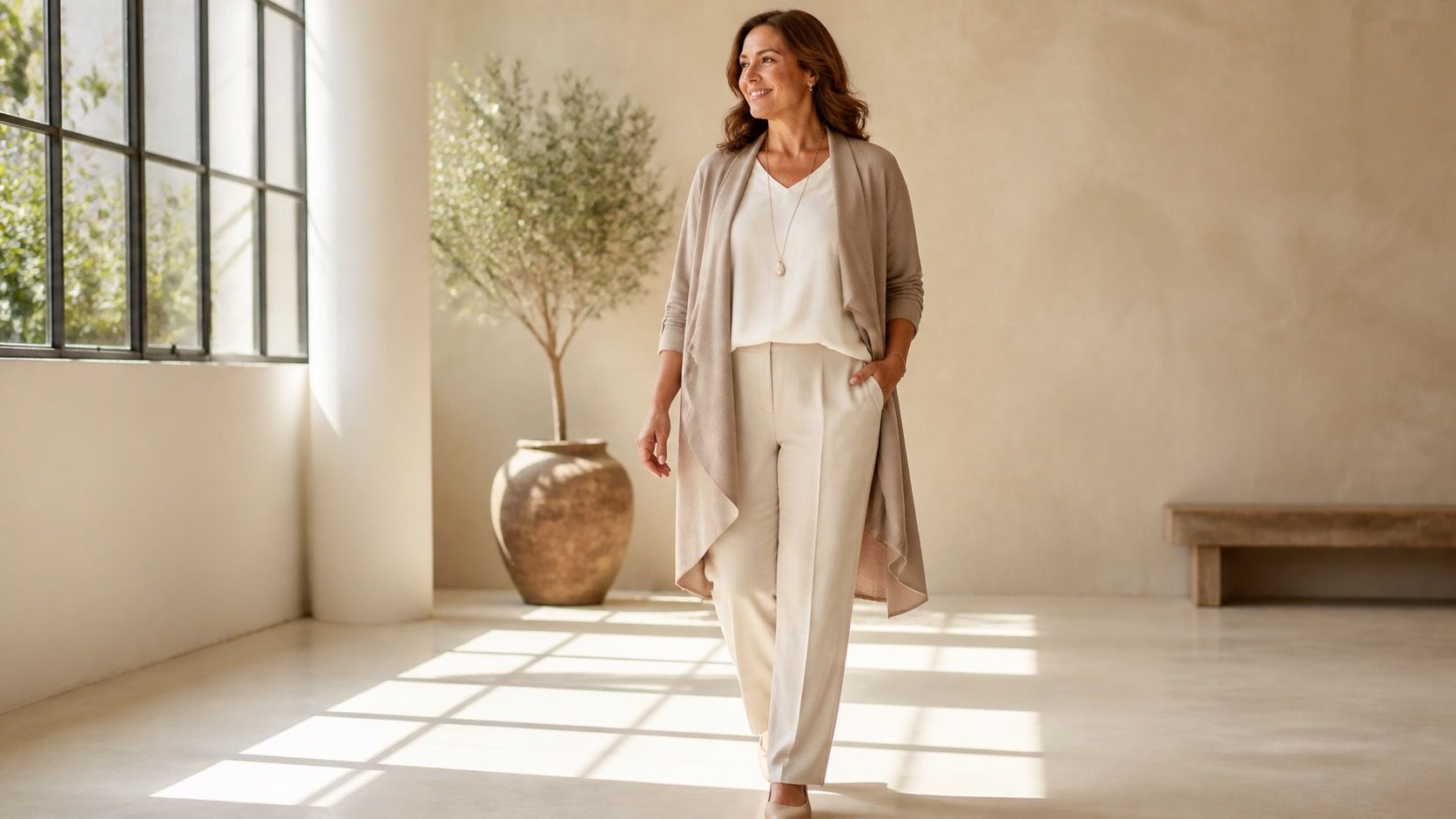
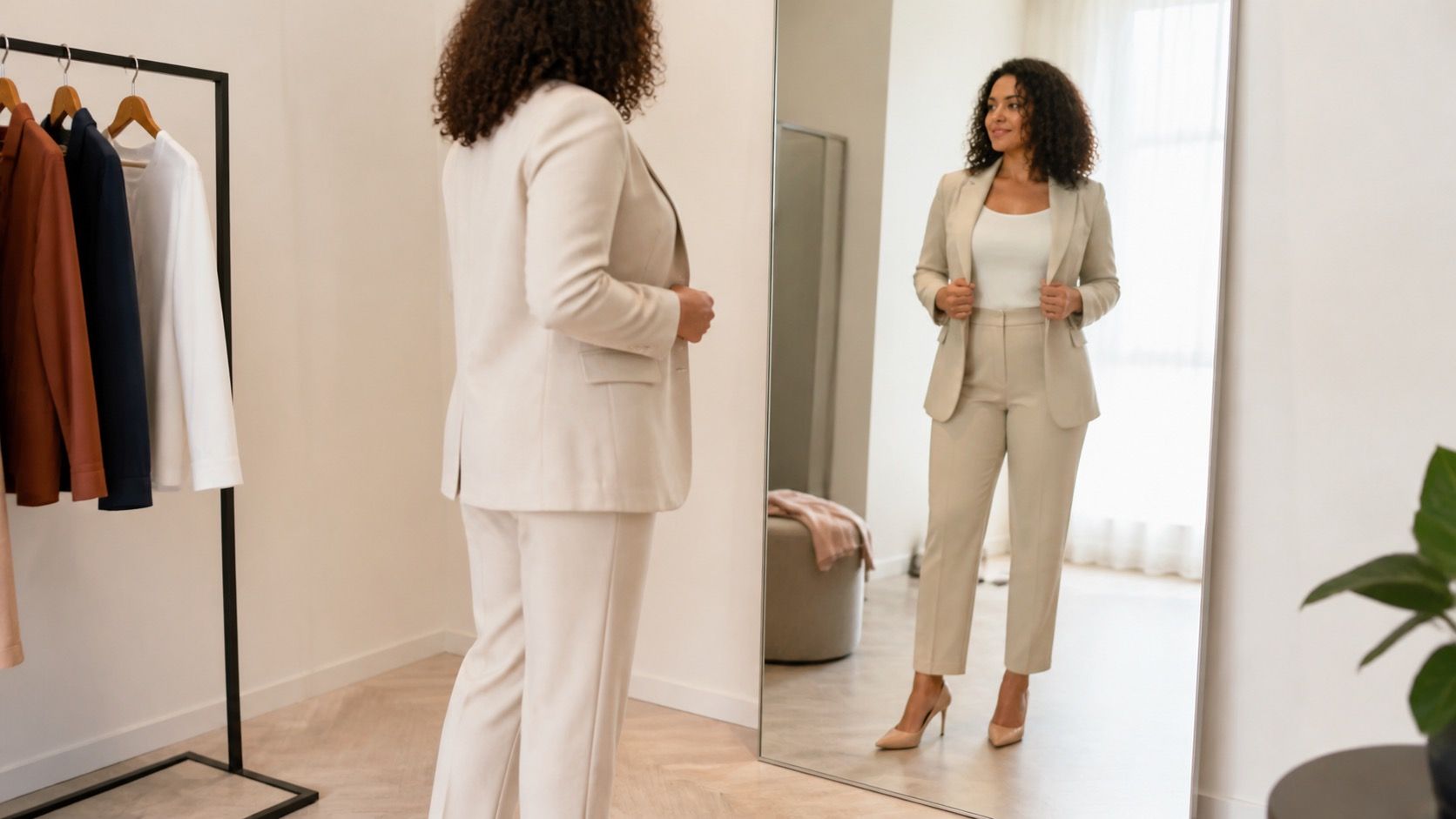
There are also days when a straight body type outfit should remain straight. A longline blazer, wide trousers, and a fine knit can make a clean, modern column. The trick is to control the scale: if the blazer is oversized, keep the trouser line neat; if the trousers are very wide, choose a shoulder with some definition. A monochrome base with shoes in a related shade makes the vertical line feel intentional rather than blank.
Keep texture and detail from making the outfit too busy
When you start experimenting with shape, it is easy to add a belt, cropped layer, pleats, contrast, jewellery, and a textured bag in the same outfit. The result can look more constructed than you feel. Before leaving home, remove one element and see whether the outline still holds. Usually it does. The remaining detail has more room to be noticed, and the clothes read as a choice rather than a collection of tricks.
Texture is especially useful when colour is neutral. A ribbed tank under a smooth blazer, denim with a crisp cotton shirt, or suede shoes under fluid trousers creates enough difference for the eye to follow. Keep textures at different scales. Tiny ribbing, fine leather, and a heavy cable knit all together can feel crowded; one pronounced texture beside smoother surfaces feels calmer. This is a styling decision you can make with garments already in the wardrobe.
Personal taste should decide the final level of structure. Some rectangle-shaped people love fitted waists and full skirts; others feel most themselves in a loose shirt and straight jeans. Both are coherent. The point of a style system is to explain why a particular outfit feels balanced to you, not to make every outfit perform the same silhouette. If you can move naturally and the eye has somewhere deliberate to pause, the clothes are doing their job.