Body shape guide
PROPORTION / FIT / YOUHourglass Body Shape: Proportions, Identification, and Styling Solutions
An hourglass body shape describes an outline with similar upper-body and hip proportions and a clearly indented waist. One widely used styling guide defines “similar” as bust or shoulder and hip circumferences within 5% of each other, with the waist at least 25% smaller than both. Those numbers are reference points from that guide, not a universal test. To dress this silhouette, compare pieces that follow your waist and curves with straighter cuts, then choose the shape, comfort, and emphasis you prefer.
| Quick comparison | What to look for |
|---|---|
| Upper body and hips | Bust or shoulder circumference close to hip circumference. |
| Waist | A noticeable inward curve relative to both the upper body and hips. |
| Outfit line | A wrap, seam, or belt can show the waist; a straight outer layer can soften it. |
Understanding the Proportions and Anatomy of the Silhouette
The upper outline comes from the shoulders and bust, while the lower outline comes from the hips. Between them, the waist creates the indent that makes an hourglass shape visible. Shoulder and bust measurements describe different things, so compare either one with the hips using the same method throughout. The body-shape overview explains how this horizontal comparison relates to other common silhouettes.
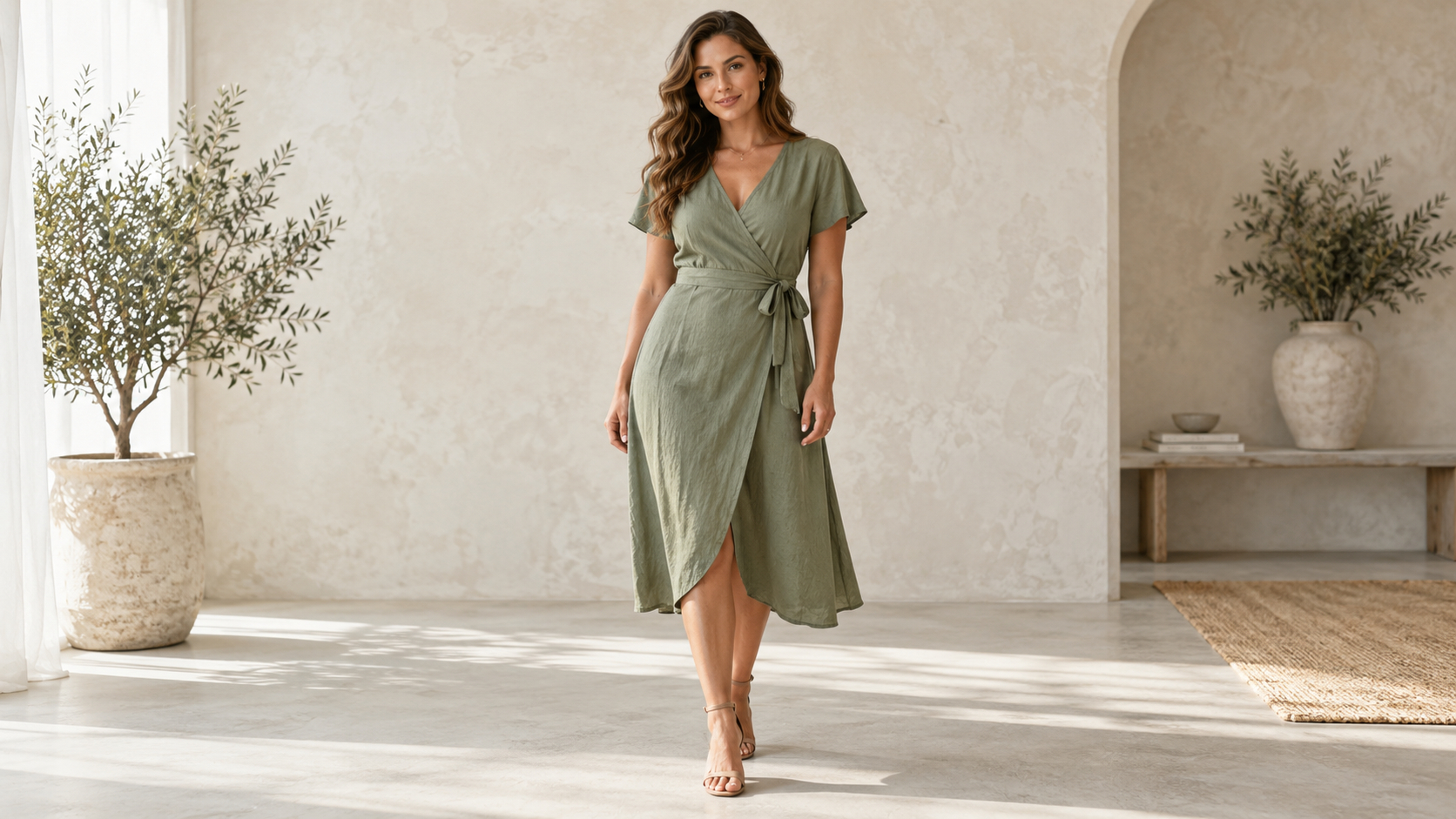
Clothing size and body weight do not show how these areas relate to one another. Nor does a dress label tell you where its waist seam will land on your torso. For a consistent comparison, measure your shoulders, waist, and hips along with your bust, then look at how a garment hangs when you stand and move. The aim is to describe proportions, not to score a body.
Identifying the Silhouette: Key Visual Signs and Formulas
In The Concept Wardrobe’s five-shape method, the bust and hips are within 5% of each other, while the waist is at least 25% smaller than both the chosen upper-body measure and the hips. To check the first comparison, divide the difference between bust and hips by the larger number, then multiply by 100. A 38-inch bust and 40-inch hips differ by 2 ÷ 40 × 100 = 5%. To check the waist, compare it separately with the bust or shoulders and with the hips; for example, a 30-inch waist is 25% smaller than a 40-inch hip circumference. These are that guide’s cutoffs, and a close result can reasonably sit between descriptions.
Look for a visible waist curve along with comparable upper and lower widths. A high or low natural waist, a longer or shorter torso, and ordinary left-to-right asymmetry can change how that curve appears in clothing. A tailored garment may reveal it; a stiff straight garment may mask it. The vertical-proportions guide treats torso and leg balance separately from the hourglass comparison.
On a small screen, swipe the table sideways to compare the neighboring descriptions.
| Description | Upper body compared with hips | Waist and visual distinction |
|---|---|---|
| Hourglass | Bust or shoulders and hips are close. | Clear inward waist curve. |
| Pear | Hips lead the chosen upper-body measure. | The lower outline has more apparent width. |
| Rectangle | Upper body and hips can also be close. | Less pronounced waist indent. |
| Inverted triangle | Shoulders or bust lead the hips. | More apparent width above the waist. |
| Apple | Midsection and upper body can be prominent relative to hips. | The central outline may be fuller. |
These distinctions are visual and method-dependent. If the shoulder-based result differs from the bust-based result, keep both observations instead of forcing a single label. The source guide explicitly allows overlap between shapes.
Styling Principles: Balance, Drapery, and Fabric Choice
An hourglass outline already places similar visual weight above and below the waist. A garment can follow that balance, draw attention to one area, or make the outline straighter. The choice is yours. In The Concept Wardrobe’s hourglass styling guide, wraps, shaped jackets, and belts are examples of cuts that show the waist; straight or boxy outer lines conceal more of it. Fabric drape matters as much as the pattern name: a fluid fabric can trace the curve, while a rigid fabric can hold its own shape away from the body.
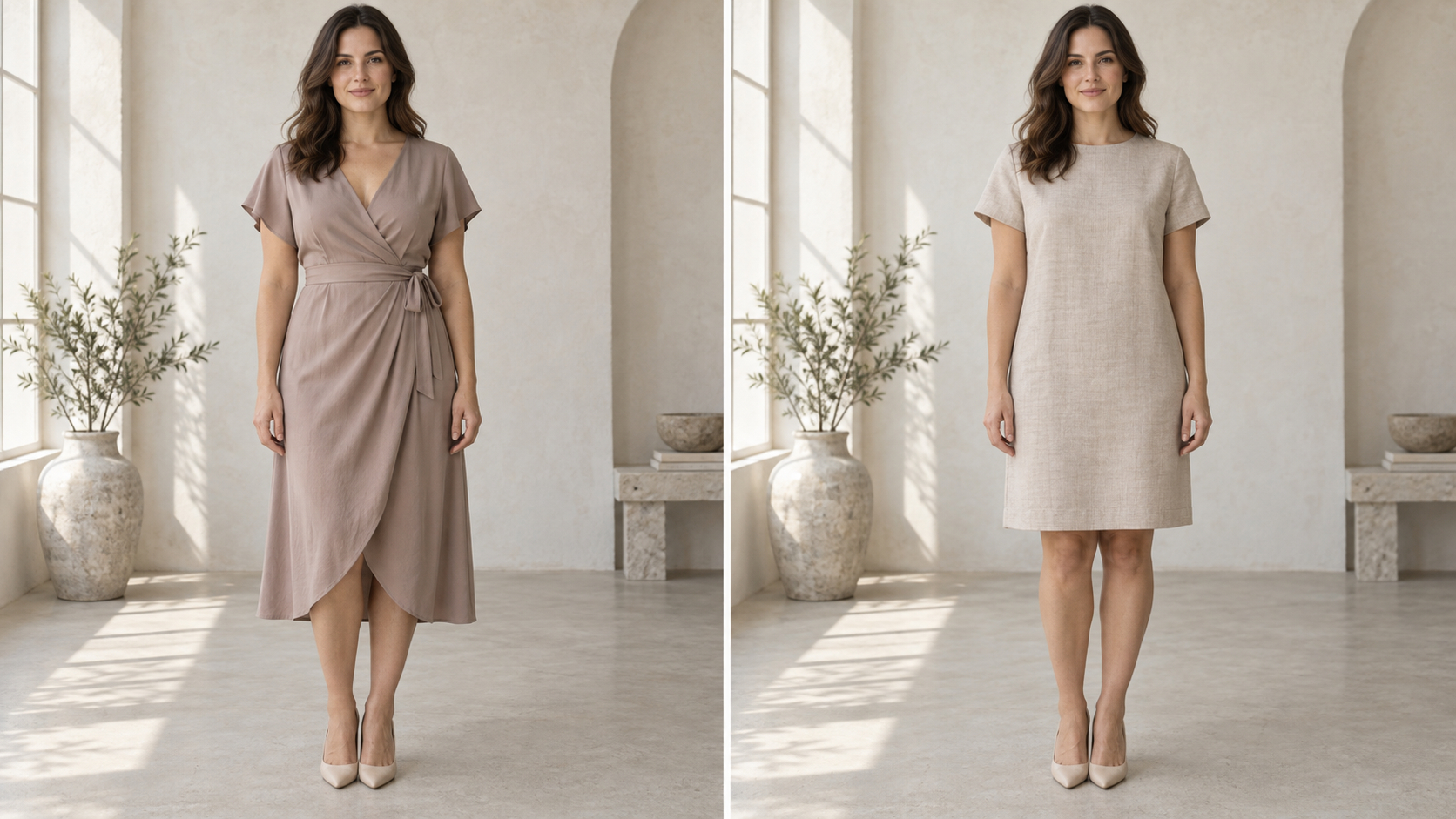
Strategic Necklines and Shoulder Cuts
A V-neck draws the eye toward the center of the upper body. A boatneck extends the visible line across the shoulders; a raglan seam can make the shoulder edge look softer. If you want to retain a similar impression of width above and below, compare these necklines with the same skirt or trousers. Check the actual shoulder fit and movement rather than treating a neckline as a rule for your shape.
Waistlines and Midsection Drape
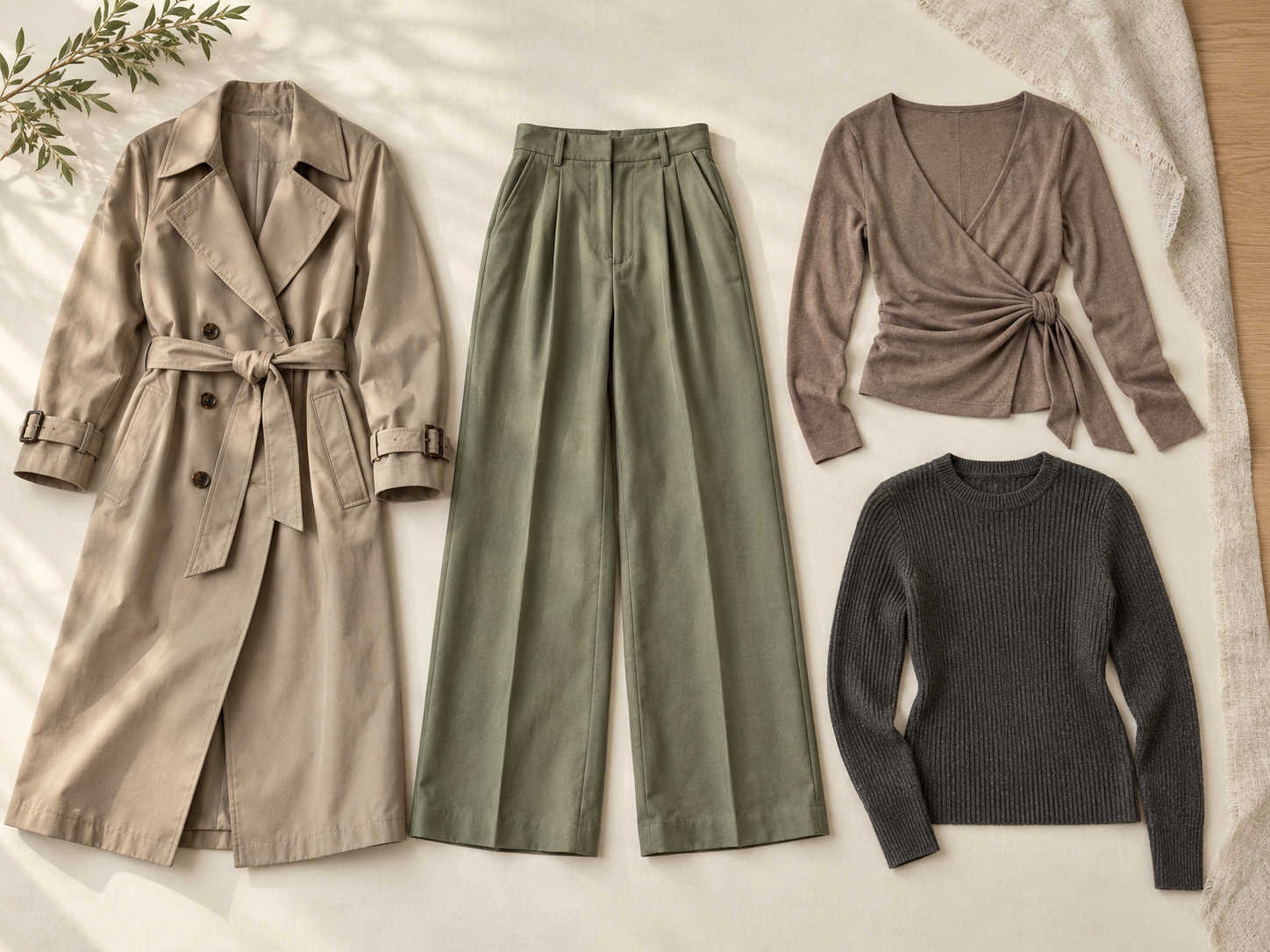
A wrap dress, belted trench, or shaped knit can make the waist seam visible without requiring a tight fit. High-rise trousers place a waistband nearer the natural waist; mid-rise trousers put the break lower. An empire seam places it above the natural waist and changes the visible torso length. Try a fluid wrap against a more structured layer to see whether you prefer a curve-following or straighter outer line. The belt or seam should sit comfortably when you sit as well as stand.
Hemlines and Trouser Silhouettes
An A-line skirt adds movement below the waist; straight trousers keep a quieter line; wide-leg trousers add width from the hip downward. A cropped trouser creates a visible break at the lower leg, while a longer hem can continue the line toward the shoe. Keep the top constant and compare two bottoms in similar fabric weight. This makes it easier to see whether the change you notice comes from the hem, the leg shape, or the drape.
Common Misconceptions and Dressing Nuances
An hourglass label is not a lifetime assignment or a list of prohibited clothes. Measurements and clothing fit can change, and neighboring descriptions overlap. A boxy dress may be exactly the relaxed line you want; a defined waist may suit a different occasion. Color, comfort, fabric, and personal taste remain separate choices from the shape label.
Geometric body-shape guides discuss the outer silhouette. David Kibbe’s Image Identity approach and John Kitchener’s style essences are distinct frameworks with their own concepts. Your bust, waist, and hip relationship cannot establish either system’s result. Explore the separate Kibbe guide and style essences guide for those methods rather than translating an hourglass label into one of their categories.
Frequently Asked Questions
How do I know if I have this body shape or a neighboring one?
Compare the feature that separates them. Pear descriptions place more width at the hips; rectangle descriptions show a gentler waist indent. If your bust and shoulder comparisons disagree, or you sit near a cutoff, both neighboring descriptions can be useful.
Can weight gain or loss change my primary silhouette?
Your measurements and visible outline can change, but there is no fixed pattern that applies to everyone. Recheck current proportions if your clothes begin to fit differently; you do not need to keep an earlier label.
What is the single most flattering clothing formula for everyday wear?
There is no single formula for every person. A practical starting comparison is a comfortable wrap or shaped top with straight trousers, then the same top with a wider leg. Keep the outfit whose balance, movement, and comfort you like.
How does vertical proportion (torso vs legs) affect this shape?
It changes where a waistband, jacket hem, or color break appears, even when your upper-body, waist, and hip relationship stays the same. Compare two rise heights or hem positions and use the body proportions guide for a closer look at vertical balance.
Explore Your Personal Proportions
Begin with your measurements and a mirror check, then compare one styling change at a time: a wrap against a straight cut, or a high rise against a mid rise. If you prefer to start with a photo and a short questionnaire, the body type test is a planned separate flow. Photo analysis and personal results are not available yet.