Body shape guide
PROPORTION / FIT / YOURectangle Body Shape: Proportions, Styling Tips, and Creating Shape
A rectangle body shape, also called a column or athletic silhouette, usually has a bust or shoulder line and hips of similar width, with a relatively subtle inward curve at the waist. You can follow that straight line with a tailored suit or slip dress. If you prefer more waist contrast, compare a belt, peplum, wrap cut, or flared skirt. These are different clothing effects to try, not rules about which shape your body should have.
| Quick comparison | What to notice |
|---|---|
| Shoulders or bust and hips | The upper and lower outlines are relatively similar in width. |
| Waist | The inward curve is less pronounced than in a typical hourglass description. |
| Clothing choice | A column follows the line; a defined waist or volume above and below changes it. |
Understanding the Proportions and Anatomy of the Silhouette
Start with four landmarks: shoulder line, fullest bust, natural waist, and fullest hips. In a rectangle description, the upper and lower outlines align fairly closely, while the waist has limited indentation. “Athletic” is one common nickname, but you do not need to play sports, wear a particular size, or have a particular weight to use the description. The body-shape overview compares the basic horizontal patterns.
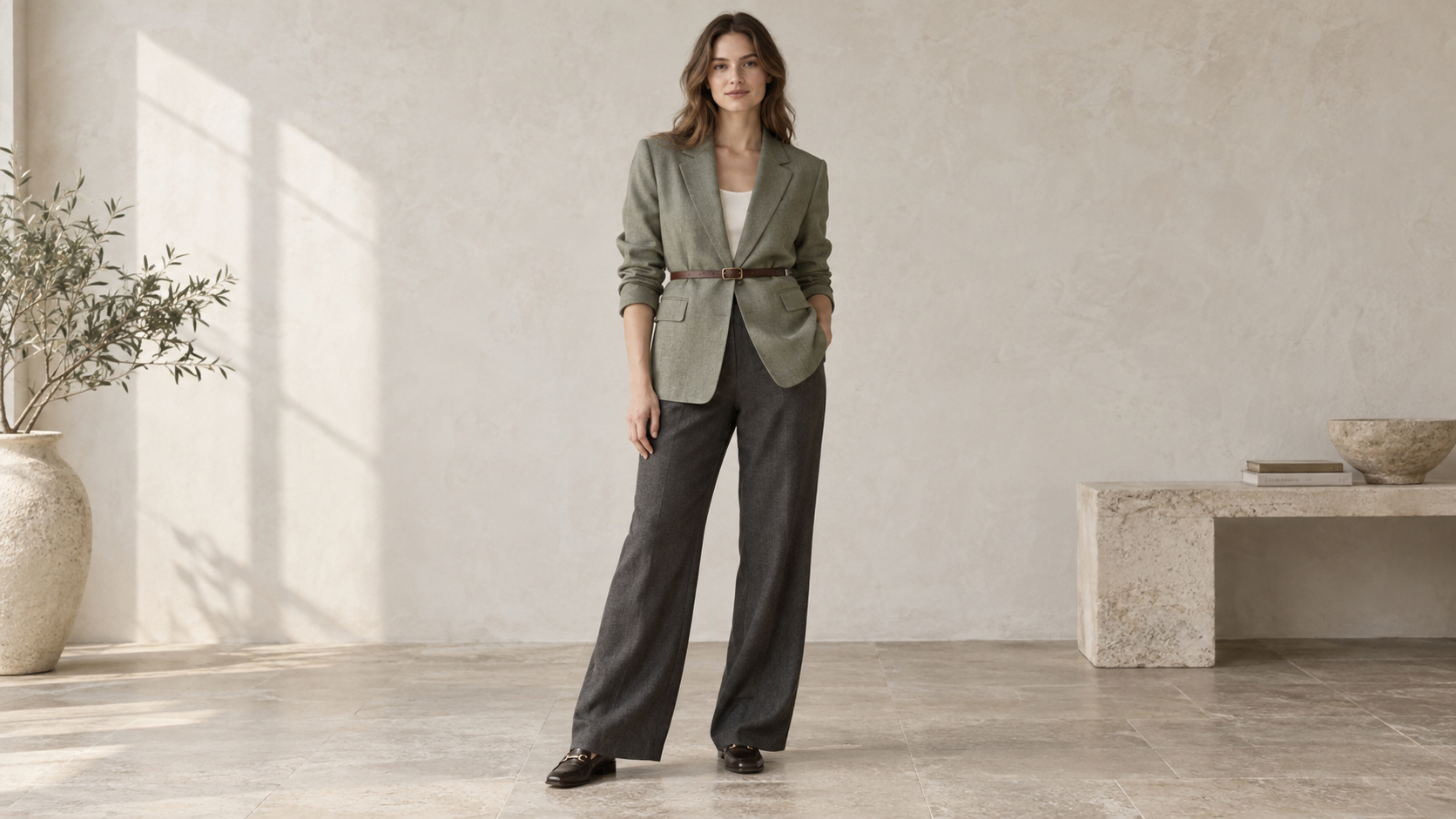
Body weight and dress size alone do not tell you how those landmarks relate. A structured jacket creates an outline of its own; a soft top may follow the body more closely. For a repeatable comparison, measure your shoulders, waist, and hips along with your bust, then look at fit in clothes you actually wear. A photo can help you observe an outline, but pose, lens angle, and garment structure can change its appearance.
Identifying the Silhouette: Key Visual Signs and Formulas
The Concept Wardrobe’s five-shape method uses bust or shoulder and hip measurements within 5% of one another, with the waist less than 25% smaller than the bust, as its rectangle convention. For example, 38-inch hips and a 40-inch bust differ by 2 inches, or 5% of the bust. This is one styling method’s guide, not a universal cutoff or a diagnosis. Its bust-based and shoulder-based comparisons can also yield different impressions.
Look for a fairly straight outline from ribcage toward hips, rather than assuming that every measurement must match. A high or low natural waist, a longer or shorter torso, posture, and ordinary asymmetry affect how that outline reads. The body proportions guide addresses torso-to-leg balance separately.
On a small screen, swipe the comparison table sideways.
| Description | Main horizontal comparison | Useful distinction |
|---|---|---|
| Rectangle / column | Upper and lower widths are close; waist indentation is modest. | A straighter central line is the main cue. |
| Hourglass | Upper and lower widths are also close. | The waist has a more distinct inward curve; see the hourglass guide. |
| Pear / triangle | Hips lead the outline. | The lower width is more prominent; see the pear guide. |
| Inverted triangle | Shoulders or bust lead the outline. | The upper width is more prominent. |
| Apple / round | The midsection can lead relative to the hips. | Compare the central outline as well as shoulders; see the apple guide. |
You may recognize parts of more than one description. Use the comparison to decide which garment lines you want to test, rather than forcing an exact label.
Styling Principles: Balance, Drapery, and Fabric Choice
The Concept Wardrobe rectangle styling guide describes two ways to add waist contrast: draw the middle inward, or add some volume above and below it. A third valid choice is to emphasize a clean column. Test each against your own comfort and the fabric’s behavior when you move.
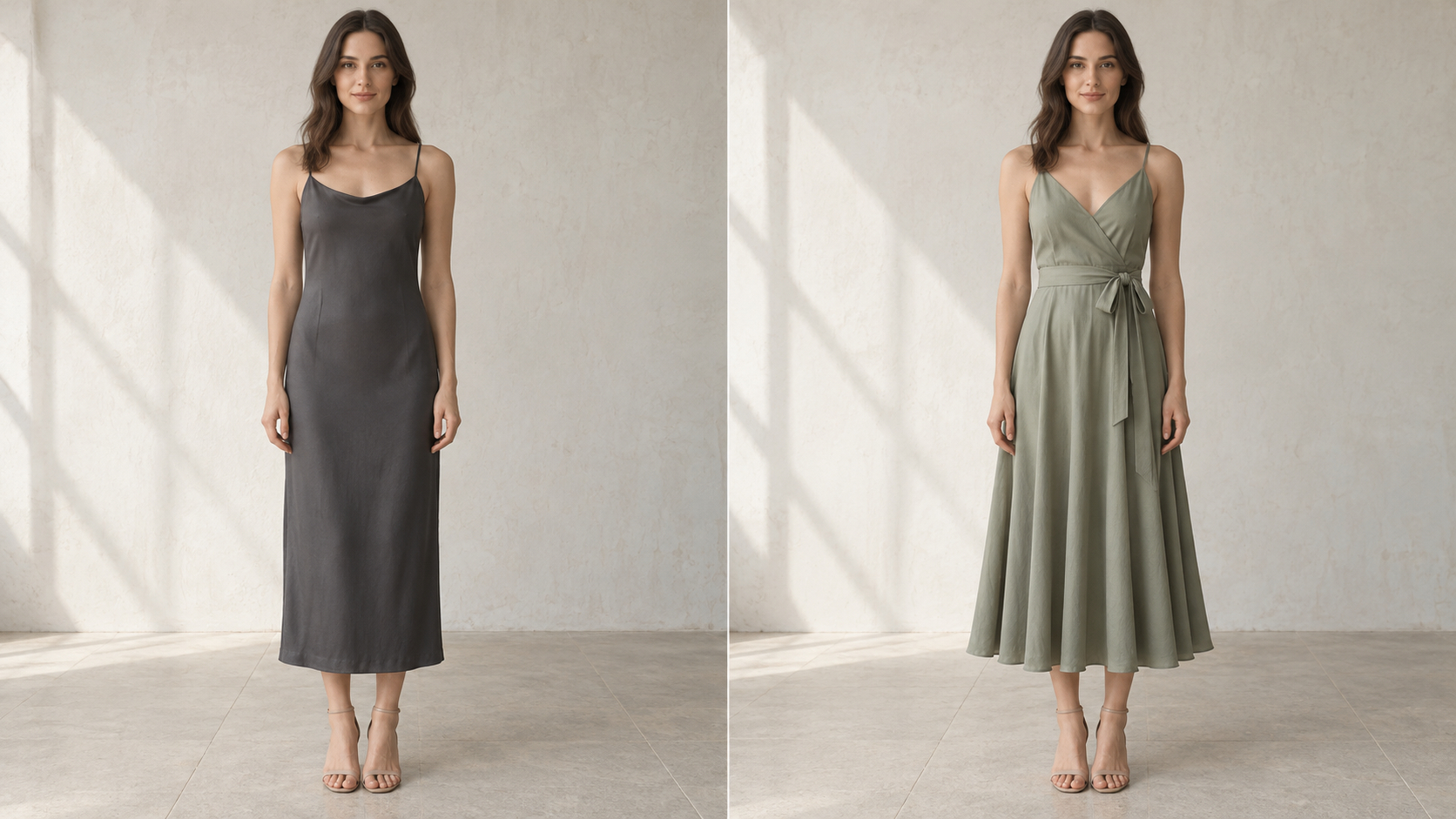
Strategic Necklines and Shoulder Cuts
A V-neck draws a diagonal toward the center, while a boatneck extends a horizontal line toward the shoulders. Try the V if you want to interrupt a straight upper block; try the boatneck if you want more visual width above the waist. Neither effect is automatic: neckline depth, shoulder fit, and bust fit matter. A raglan sleeve makes a diagonal from neckline to underarm and can soften the edge of a conventional shoulder seam.
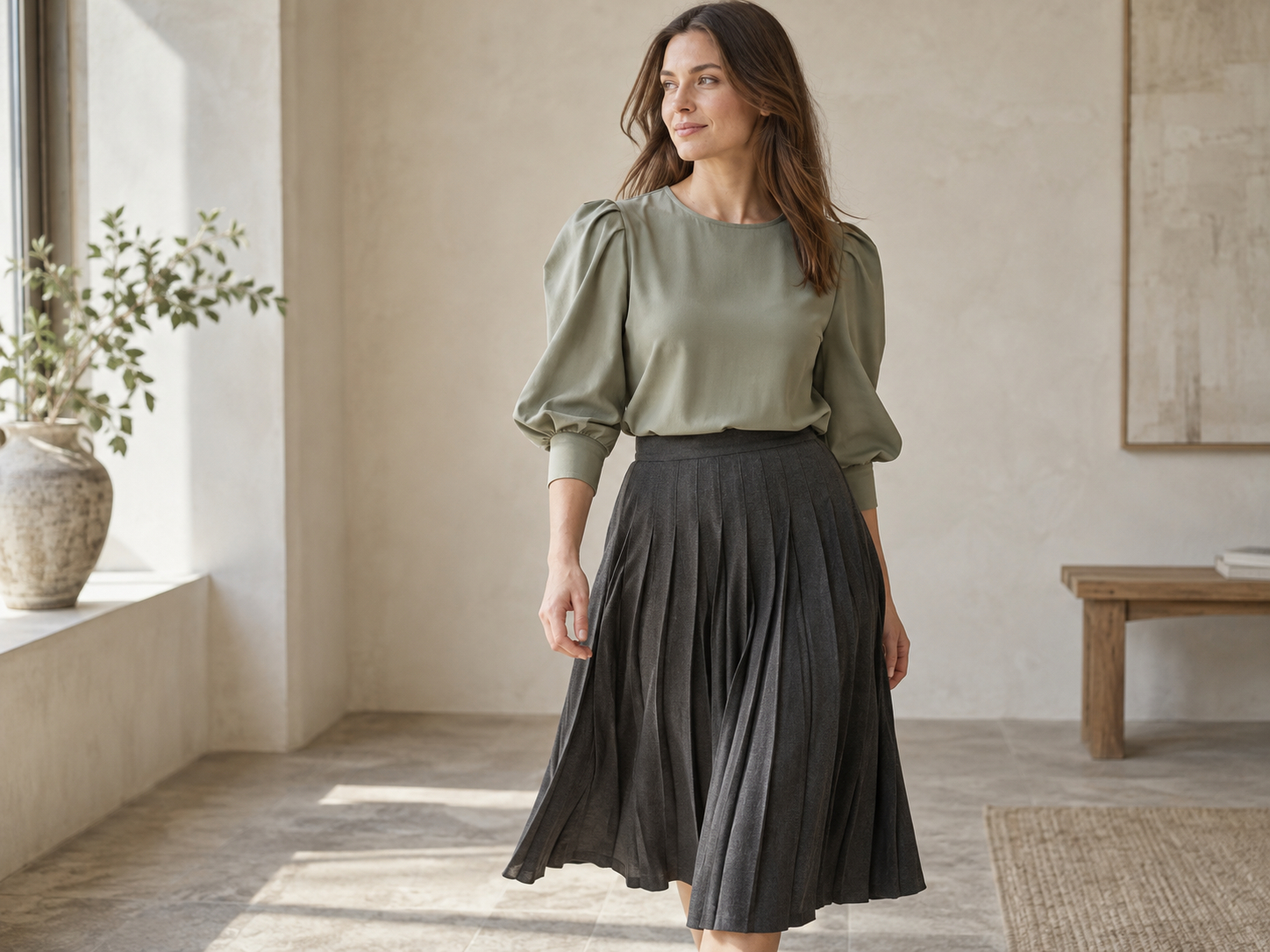
If you want more dimension above the waist, compare a sleeve with modest volume or a top with texture near the bust against a smooth, close-fitting top. Keep the trousers or skirt the same during the comparison so you can see what the upper garment changes. Avoid treating a neckline as mandatory just because a guide names it.
Waistlines and Midsection Drape
A belt or a tailored waist seam pulls a garment inward at the middle. A peplum adds fabric that flares below the waist; a wrap creates a diagonal and lets you adjust overlap. Compare the location and width of a belt with the whole outfit: a narrow belt may make a subtle break, while a broader one makes that break stronger. The image above shows structural volume from sleeves and pleats rather than a tighter waist.
High-rise trousers place the waistband higher on the torso; mid-rise trousers make the break lower. An empire seam sits below the bust. Each changes where the eye sees a horizontal division, but the best placement also depends on torso length, comfort when seated, and whether the fabric pulls or bunches. A fluid wrap should stay closed and comfortable as you move. If you want a straight look, leave the waist unmarked and use a garment that hangs cleanly without excess bulk.
Hemlines and Trouser Silhouettes
A softly flared or pleated skirt adds width below the waist, while a straight skirt keeps a column line. Wide-leg trousers create more lower volume; straight-leg trousers continue the vertical line. A cropped hem makes a visible break above the shoe, while a longer hem can carry the line downward. Compare two hems with the same top and shoes before deciding which balance you prefer.
Fabric changes the result as much as the pattern shape. A stiff, crisp pleat holds volume; a softer pleat collapses closer to the body. A heavy column dress may hang straight, while fluid cloth follows movement. Check the side view and walk a few steps: the garment should create the effect you want in use, not only while standing still.
Common Misconceptions and Dressing Nuances
A rectangle label is not a lifetime assignment, and it does not rule out belts, loose dresses, bright colors, or straight tailoring. Changing measurements and garment fit can change which description feels useful. You may also prefer the architectural clarity of a column one day and a more defined waist another day. Neither is a correction to your body.
Geometric body-shape descriptions compare widths and garment lines. Kibbe image identities and Kitchener style essences have separate terms and methods; a rectangle description does not assign you a category in either. The planned Kibbe guide and style essences guide address those systems independently.
Frequently Asked Questions
How do I know if I have this body shape or a neighboring one?
Compare upper width, hip width, and waist indentation together. A rectangle has a relatively straight middle with upper and lower widths close; an hourglass has a clearer waist curve. Pear and inverted triangle descriptions show a more noticeable upper-to-lower difference. If observations overlap, keep both in mind when testing clothes.
Can weight gain or loss change my primary silhouette?
It can change measurements and the outline you see, though the pattern varies by person. Recheck your current proportions and fit when they change. You do not need to preserve an earlier label.
What is the single most flattering clothing formula for everyday wear?
There is no single formula for everyone. For a defined middle with easy movement, compare a gently shaped jacket or wrap top with a softly flared skirt or straight trousers. For a clean column, try a well-fitting straight dress or matching separates. Choose by comfort and the effect you prefer.
How does vertical proportion (torso vs legs) affect this shape?
It affects where a belt, jacket hem, skirt hem, or trouser rise appears to divide your outfit, even when horizontal widths stay similar. Try two rise heights or jacket lengths and consult the body proportions guide for that separate comparison.
Explore Your Personal Proportions
Start with a consistent measurement method and compare one garment feature at a time. If you would rather begin with a photo and short questionnaire, the body type test is a planned flow. Photo upload and personal results are not available yet.