Body shape guide
PROPORTION / FIT / YOUSpoon Body Shape: High Hips, Pear Distinctions, and Styling Comfort
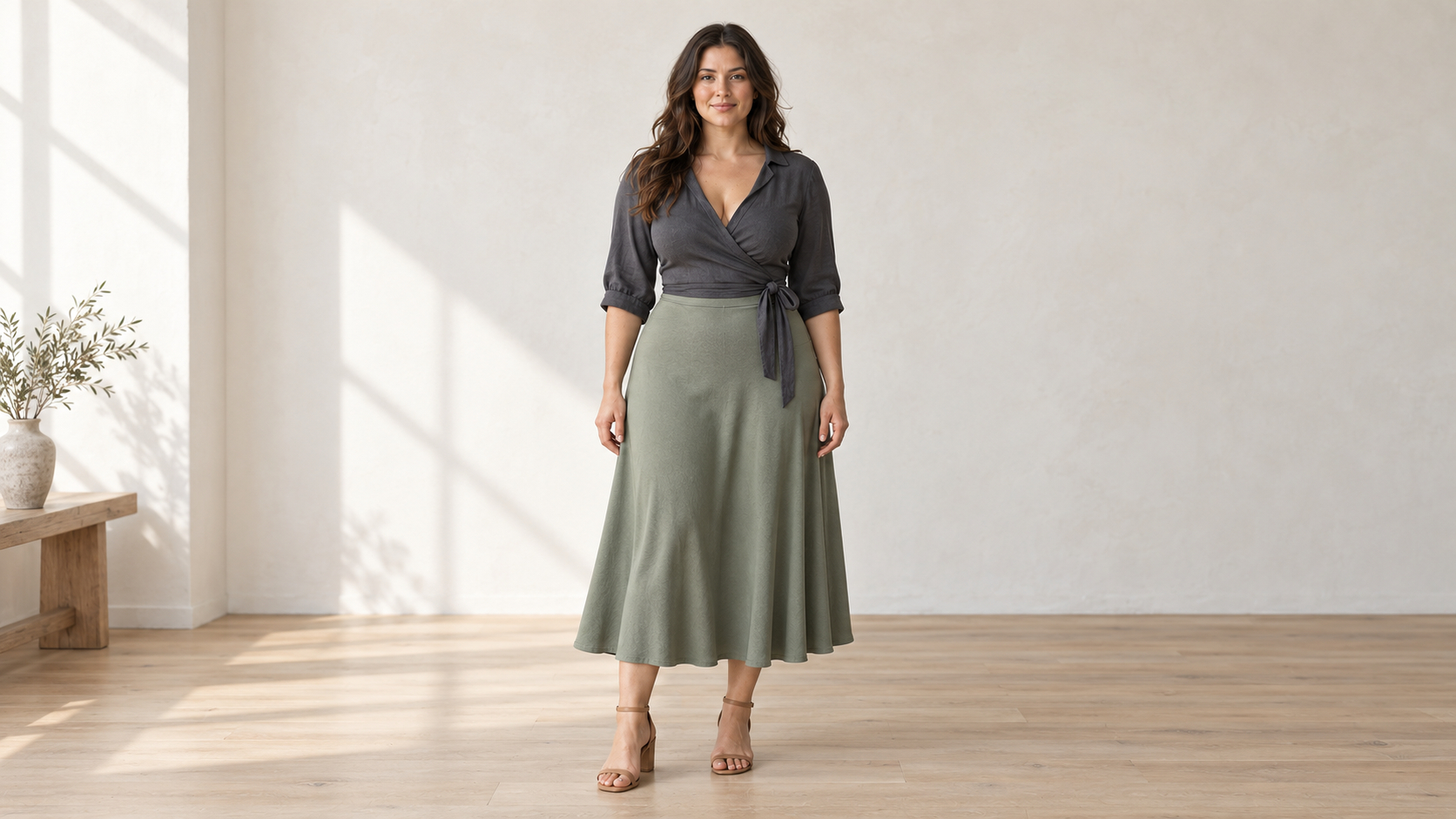
A spoon body shape describes a hip-led outline with a defined waist and a noticeable curve at the high hip, just below the waist. It is often discussed as a variation within the pear family: a classic pear outline tends to widen more gradually toward the lower hip. If a waistband catches at your high hip, look for a comfortable rise and fabric that skims that area. A fluid A-line skirt or a trouser leg that falls smoothly from the hip can create a continuous line. These are styling options, not rules for your body.
| Quick comparison | What to look for |
|---|---|
| Upper body and hips | The hip area appears wider than the shoulders or bust in a hip-led silhouette. |
| Waist and high hip | A defined waist turns outward relatively soon below it. |
| Garment fit | A waistband and the fabric below it need enough room to move without pulling. |
Understanding the Proportions and Anatomy of the Silhouette
Start with four landmarks: shoulders, bust, natural waist, and hips. The shoulders and bust frame the upper outline. The natural waist is the narrower area of the torso; the high hip is the upper curve below it, while the fullest hip may sit farther down. In a spoon description, the line turns outward near that upper curve. The body-shape overview places this detail within the wider set of geometric shape descriptions.
Clothing size and body weight do not describe where a curve begins. A high-hip shelf can also be more or less visible depending on a garment’s fabric and fit. To compare your own outline, measure your shoulders, waist, and hips consistently, note the high-hip area, and check the fit of clothes you already own. A photo or a single tape measurement is only one view of your proportions.
Identifying the Silhouette: Key Visual Signs and Formulas
The Concept Wardrobe’s five-shape method describes a pear pattern when hips are at least 5% larger than the bust or shoulders, with hips the largest and waist the smallest of the three measurements used. That percentage belongs to its pear method; it is not a universal spoon cutoff. For example, if your fullest hip is 42 inches and your bust is 39 inches, the difference is 3 ÷ 39 × 100, or about 7.7%. Compare shoulders separately if you measured them. Then look at where the side outline widens: sooner below the waist suggests the spoon nuance; a gradual curve toward the fullest lower hip suggests a classic pear outline.
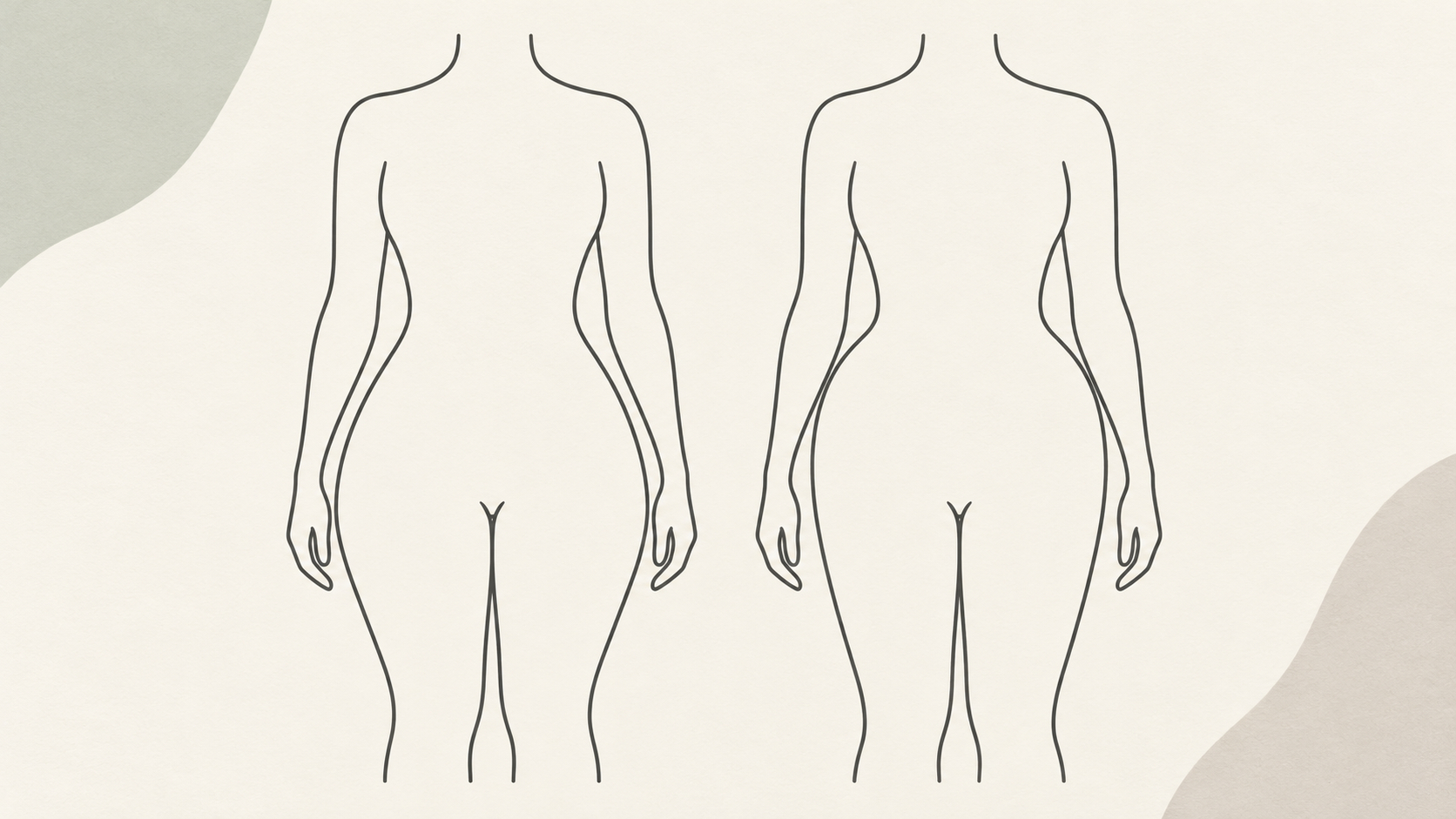
The distinction can be subtle. A higher or lower natural waist, a long or short torso, and ordinary left-to-right asymmetry can change what you see. Vertical proportions describe a different dimension, so a long torso does not cancel a high-hip curve. Compare clothing in a relaxed stance as well as sitting and walking.
On a small screen, swipe the comparison table sideways.
| Description | Horizontal pattern | Where to look next |
|---|---|---|
| Spoon nuance | Hips lead, with a distinct high-hip curve below a defined waist. | Notice where a waistband and upper-hip seam sit. |
| Classic pear / triangle | Hips lead, often with a more gradual widening toward the lower hip. | Compare the pear guide for the shared upper-to-lower balance. |
| Hourglass | Upper and lower areas appear closer in width, with a defined waist. | Compare the hourglass guide if shoulders or bust match the hips. |
| Rectangle | Upper and lower areas may be similar, with a less pronounced waist indent. | Compare the rectangle guide if the waist appears straighter. |
These labels are descriptive tools. A borderline measurement or an outline that changes with clothing does not require you to choose one permanent category. The original FFIT apparel research includes “spoon” among its shape groups, but its measurement framework should not be treated as a self-diagnosis from a photograph.
Styling Principles: Balance, Drapery, and Fabric Choice
Decide which outfit line you want to see before choosing a cut. If you want to draw attention upward while keeping fabric smooth over the high hip, add detail near the face or shoulders, mark the waist comfortably, and let the lower garment fall without catching. The Concept Wardrobe’s pear styling guide discusses upper-body interest and lower-body drape for the broader hip-led pattern. The high-hip fit checks below add a practical refinement; they are not a separate official rule set.
Strategic Necklines and Shoulder Cuts
A boatneck makes a longer horizontal line across the shoulders; a V-neck brings the eye toward the center. A small shoulder detail can add visible width above the hips. A raglan sleeve softens the shoulder edge rather than creating a crisp horizontal line. Try two necklines with the same bottom to see the change clearly. Choose the one that fits your shoulder movement and the effect you want, even if it is not the “balancing” option.
Waistlines and Midsection Drape
A high-rise waistband can sit above the high-hip curve, while a mid-rise band may land closer to it. The better choice is the one that stays comfortable when you sit and keeps the fabric below it from pulling. Look for a contoured waistband, enough ease through the upper hip, or a fabric with gentle stretch. A fluid wrap can follow the waist and then release over the hip. An empire seam sits above the natural waist, changing the apparent torso length; check that its fabric falls cleanly rather than assuming the seam itself solves fit.
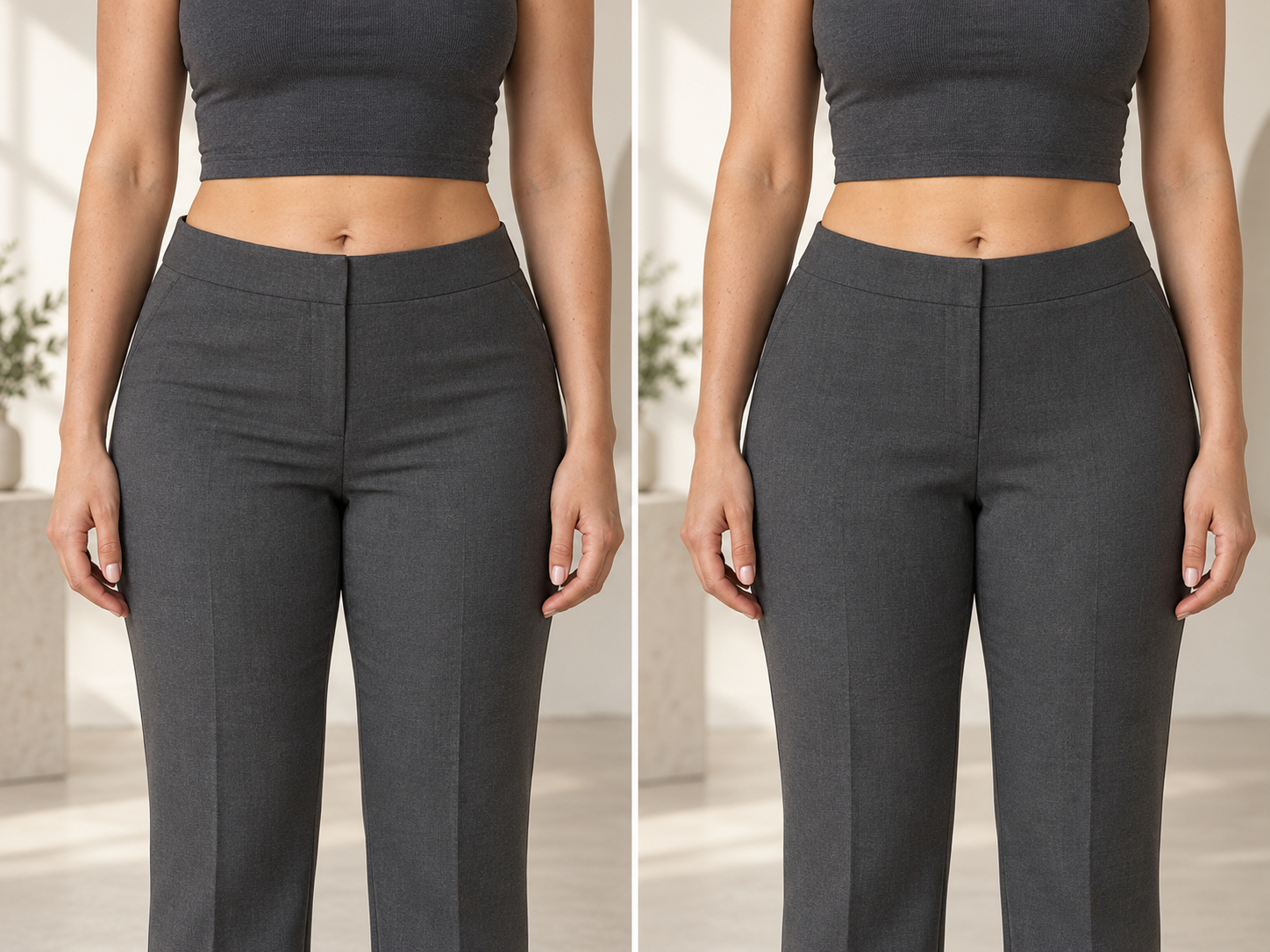
Do not judge fit from a mirror while standing still. Walk, sit, and raise your arms. If the waist gaps but the hip pulls, a smaller size may make the hip fit worse; a different waistband shape or an alteration may be more useful. Fabric weight matters too: a very stiff cloth holds a sharper edge, while a softer cloth may follow the curve more closely.
Hemlines and Trouser Silhouettes
An A-line skirt opens below the waist and can pass over the high hip without a tight horizontal seam. Straight-leg or wide-leg trousers can continue a line downward from the hip; a close-fitting or cropped pair makes the leg and hem break more visible. If you enjoy that emphasis, keep it. For a smoother look, compare trouser legs with similar fabric weight and check that side pockets lie flat. Try skirt hems at the knee and below the knee to see how their stopping point interacts with your own leg length.
Common Misconceptions and Dressing Nuances
A spoon label does not limit you to one color, size range, or outfit formula. Plus-size and smaller-size bodies can both have a high-hip curve; the label describes a relationship between areas, not a clothing size. Weight changes can alter measurements and fit, so use your current garments as evidence for your next purchase rather than holding on to an old category. A bright skirt, a fitted jean, or a bold waist belt may be exactly the emphasis you want.
Geometric body-shape descriptions also do not assign a Kibbe image identity or a Kitchener style essence. Those frameworks ask different questions. The planned Kibbe guide and style essences guide will cover their own terminology; a spoon or pear outline does not determine an answer in either system.
Frequently Asked Questions
How do I know if I have this body shape or a neighboring one?
First compare the upper body with the fullest hip. If the hip area leads, look at the transition below the waist: a higher outward curve suggests the spoon nuance, while a gradual widening suggests a classic pear. If the upper and lower outlines appear similar, compare the hourglass description too. You can use whichever observations help with fit.
Can weight gain or loss change my primary silhouette?
It can change measurements, visible curves, and how a garment sits, but the pattern is individual. Recheck your current proportions and fit when your wardrobe stops working. There is no need to keep a previous label.
What is the single most flattering clothing formula for everyday wear?
There is no single formula for everyone. For a smooth high-hip line, try a comfortable wrap or softly shaped top with straight-leg trousers that fit at both waist and upper hip. Compare that with an A-line skirt or a closer-fitting jean and keep the option that feels right to you.
How does vertical proportion (torso vs legs) affect this shape?
It changes where a waistband, top hem, and skirt hem divide the outfit, even if the hip-to-shoulder comparison stays the same. Test two rise heights and two hem positions, then use the body proportions guide to consider torso and leg length separately.
Explore Your Personal Proportions
Begin with measurements and one fit comparison at a time. If you prefer to start with a photo and a short questionnaire, the body type test is a planned flow. Photo upload and personal results are not available yet.